The BMW M5 Touring: ‘A worthy successor to the original, a car not to mess with, and unique’

BMW’s M5 Touring combines the practicality of an estate with the performance of a 727 hp hybrid V8. With decades of Motorsport heritage behind it, this is a car built for both everyday driving and serious speed. LUX gets behind the wheel of BMW’s latest M5

If you are the kind of person who is inclined to spot cars, cast your eye around any prosperous location in the world and note the proportion of BMWs that also carry a supplementary red and blue badge labelled simply with the letter “M” on their bodywork. You would be forgiven for thinking that the M is simply a fairly random model designator as carried by every car brand – like a D for Tesla or a G for Mercedes.

Follow LUX on Instagram: @luxthemagazine

You would, however, be wrong in one fundamental way. The M stands for Motorsport, and while now it is in many cases simply an indicator of a mainstream BMW model with some extra equipment, its origins and heritage are truly quite special. In the 1970s and 80s BMW had its own racing outfit, and in 1978 built its first and, to date, only supercar, the M1, which used a new racing engine created by its Motorsport division.

Throughout the 80s and 90s, if you bought a BMW with an M on it, you were generally buying a product created by this division in a separate factory, with a handmade racing engine and suspension and other accoutrements to match. BMW supplied M with the body shell, M did everything else.

‘It also has numerous driving modes to suit your mood, skill and geekiness’

The engine and other parts from the M1 were used in the first BMW M5, released in 1984, which took the shell of the executive four-seater, four-door 5 Series sedan and gave it the spirit of a track racing car. It was one of the first times this had ever been done by a car manufacturer, and each new iteration of the M5, and its smaller sibling the M3, would be awaited as eagerly by car enthusiasts as a new Ferrari model line. After all, this was a car that had the performance to match a Ferrari or a Porsche 911, but could also function as a taxi if you wanted it to.

All of that may be lost in the sands of time for today’s consumer, who, in any case, has the choice of electric cars that offer Ferrari-style speed, if not the excitement, for a fraction of the cost.

Read more: Riding with the Porsche 911 C4 GTS Cabriolet

But the BMW M5 keeps going, through iterations that included a wild, V10-engined machine around 20 years ago, and now this latest iteration, posting 727 hp, significantly more than twice the muscle of its 286 hp original ancestor. Like the V10-engined variant of 20 years ago, it is available both as a saloon and as an estate, so you can in theory move your antiques around the country at breakneck pace.

The 727 hp is not achieved, thankfully, solely by an electric motor, but by a twin turbocharged V8 with electric hybrid assistance. The latter fills in the gaps during the times the turbochargers are spooling up – fractions of a second, but that matters in fast driving – and add an enhancement drug-style extra punch when the engine is going great guns.

BMW’s M5 Touring can move your furniture across Europe at frightening speeds

And it certainly does that. This is a car with a passionate sound from its “real” engine, as well as aggressive looks that, very unusually for a wagon, have the roadside YouTubers in London swinging their cameras in your direction. It also has numerous driving modes to suit your mood, skill and geekiness. Set to the more aggressive of these, it shoots around corners sharply and enjoys the challenge of a sweeping country road.

Read more: We visit the E1 race on the water in Monaco

If your furniture frequently needs moving swiftly around tight country lanes, you should be aware that this is a big and heavy car and so trades off some of the agility of its predecessors in favour of sheer power and heft. It’s roomy and comfortable inside, although not as luxurious as the top of the range and bigger 7 Series BMW, and LUX would like to see a couple of extra special touches in the interior to elevate it even further.

All in all, though, a worthy successor to the original, a car not to mess with, and unique.

bmw.co.uk

Share:
Reading time: 3 min

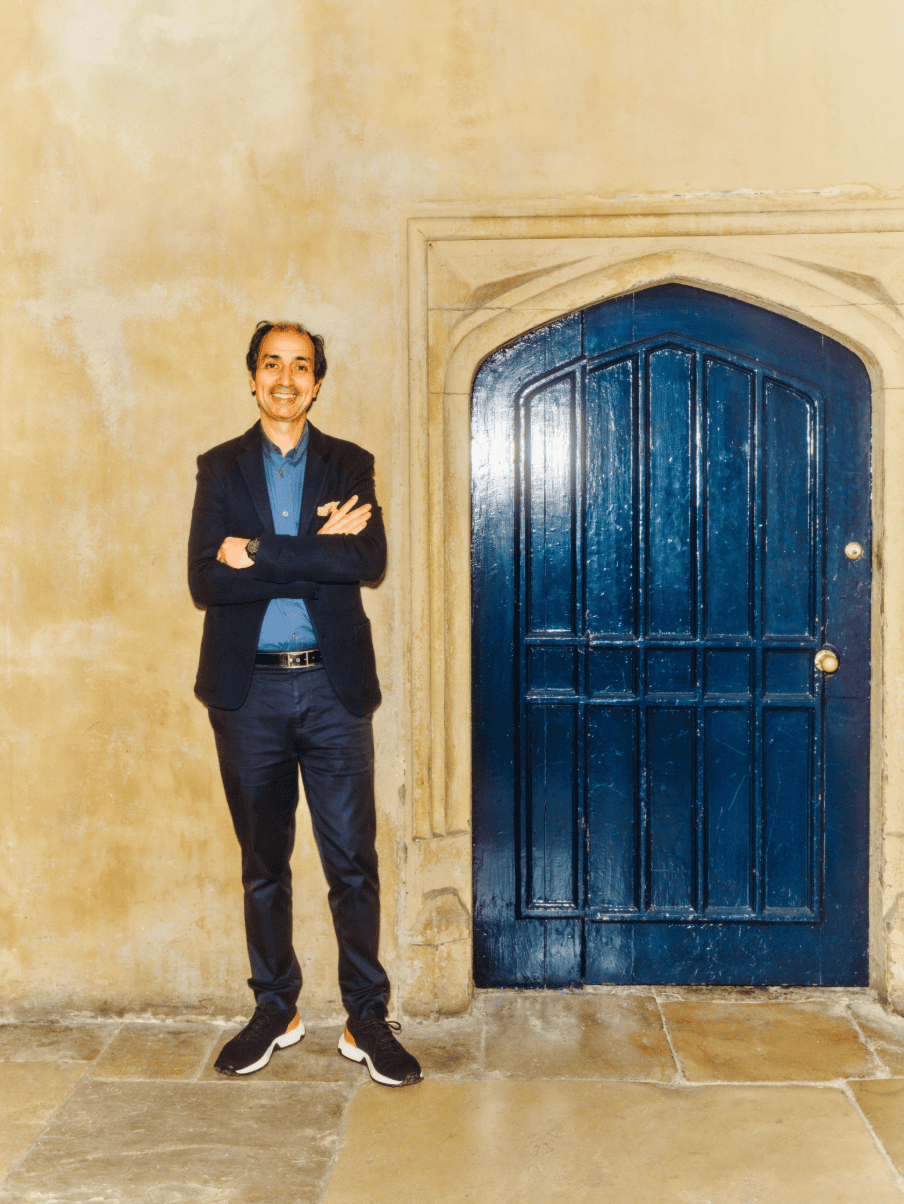
LUX Editor-in-Chief Darius Sanai at dinner at the Oxford Union

Darius Sanai returns to Oxford University to experience an innovative new immersion course into the humanities, ancient and modern, at his alma mater

Returning to university after your experience. Who or what is still there, what has changed? More than that, though, you are in a place that was defined by its people, and by the experiences you had with those people – classes, tutorials, seminars, parties – and none of those experiences can be replicated, even though you are in the same physical space.

Follow LUX on Instagram: @luxthemagazine

Which is what made the new humanities experience at Wadham College, Oxford so engrossing. I attended Wadham as an undergraduate, studying Philosophy, Politics and Economics (PPE). Years later, in 2024, the college launched something called the Wadham Experience, a residential intellectual retreat for leaders.

Darius Sanai returns to his alma mater, Wadham College at The University of Oxford

It invites all comers to apply and go through a selection process, which, while rigorous, is nothing like as challenging as getting into the university as a student. Successful applicants are then immersed in classes, seminars, talks, dinners and other experiences, many of which mirror the life of an Oxford student (and some of which do not, as we will see below).

So it was with great curiosity that I sat in a set of rooms at Wadham dating from the early 17th century, facing an Oxford don (academic) speaking about a subject we would have learnt about as undergraduates, with a group of individuals I had just met. It was just the same as the first term as an undergrad – being immersed in the the kind of curated knowledge that only comes with human experience as an academic in this institution.

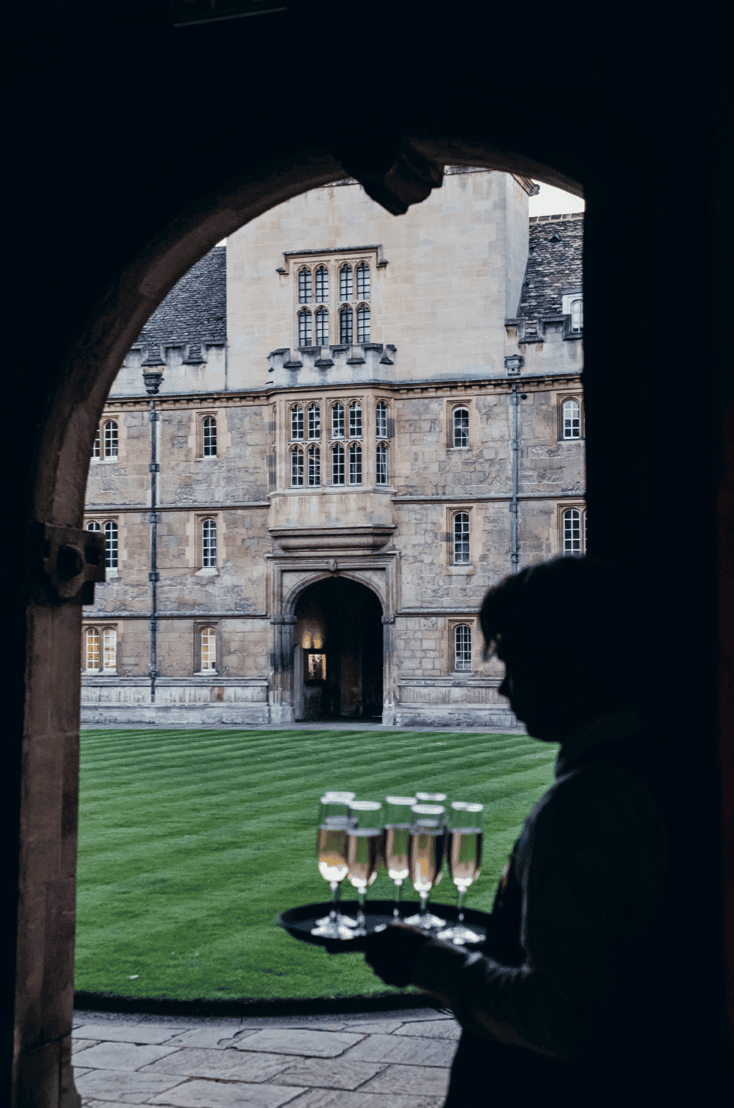
Champagne offered before you make your way across the quad

This was the first morning of the experience, and my fellow “students” – philanthropists, captains of industry and just the curious – were, variously, scribbling notes or listening agog. Polite questions were asked towards the end.

Read more: Mercedes-Maybach S-Class Review

In the coffee break, before coming back to experience more of this new type of Oxford world, I and a couple of other alumni were asked what the difference was between our own sessions on similar topics as undergrads and what we had just seen. Two things, I reflected: I thought the tutor was, if anything, even more engaged and enthused about the process than our (generally brilliant) tutors had been when I was a “real” student.

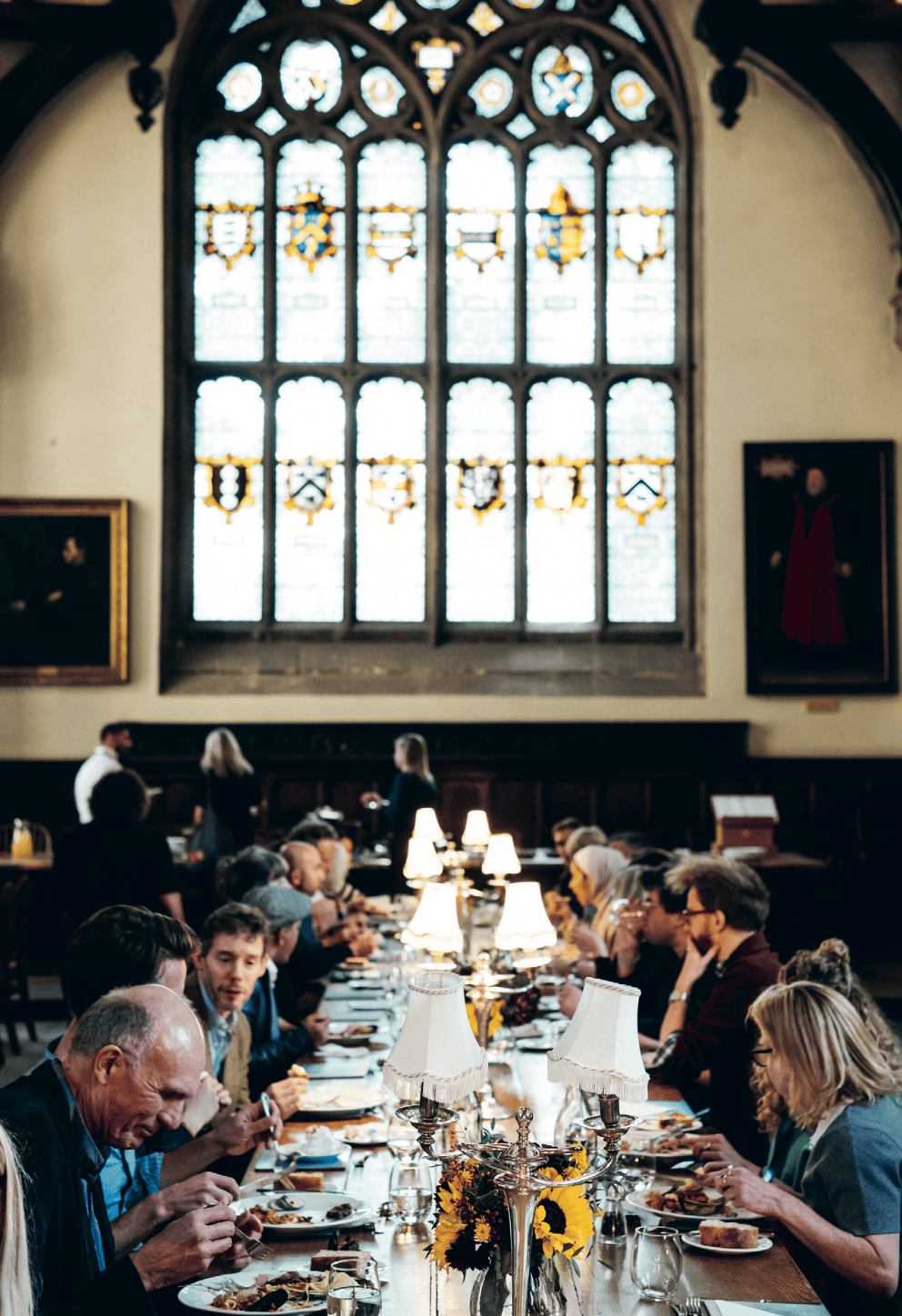
Wadham Experience “students” enjoy dinner with the dons in the college’s Jacobean dining hall

And, secondly, being at Oxford trains you to ask awkward, challenging questions. Despite the fact that the room was full of individuals who were extremely significant in their various fields, the questions were polite, informed and educated, but not challenging, argumentative or awkward. Maybe that would come later.

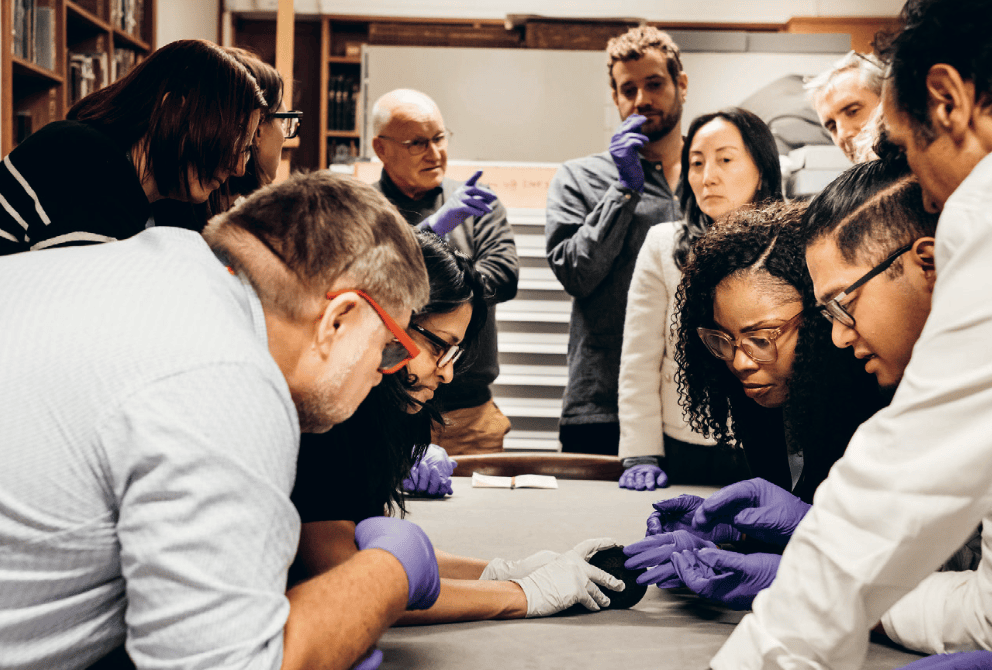
Learning about the humanities cannot just be done in a tutorial, however august the surroundings. Over the next four days, we were taken around the back rooms of the city’s celebrated Ashmolean Museum and given classes on how to differentiate between objects of different eras, and to guess exactly what the function of various artefacts from Greek and Roman times was, by passing them around a table, wearing white gloves, and examining them. A couple of our “students” proved quite brilliant at this, for the rest of us many of these objects, obvious in retrospect, remained a mystery.

Studying Greek and Roman artefacts at the Ashmolean Museum

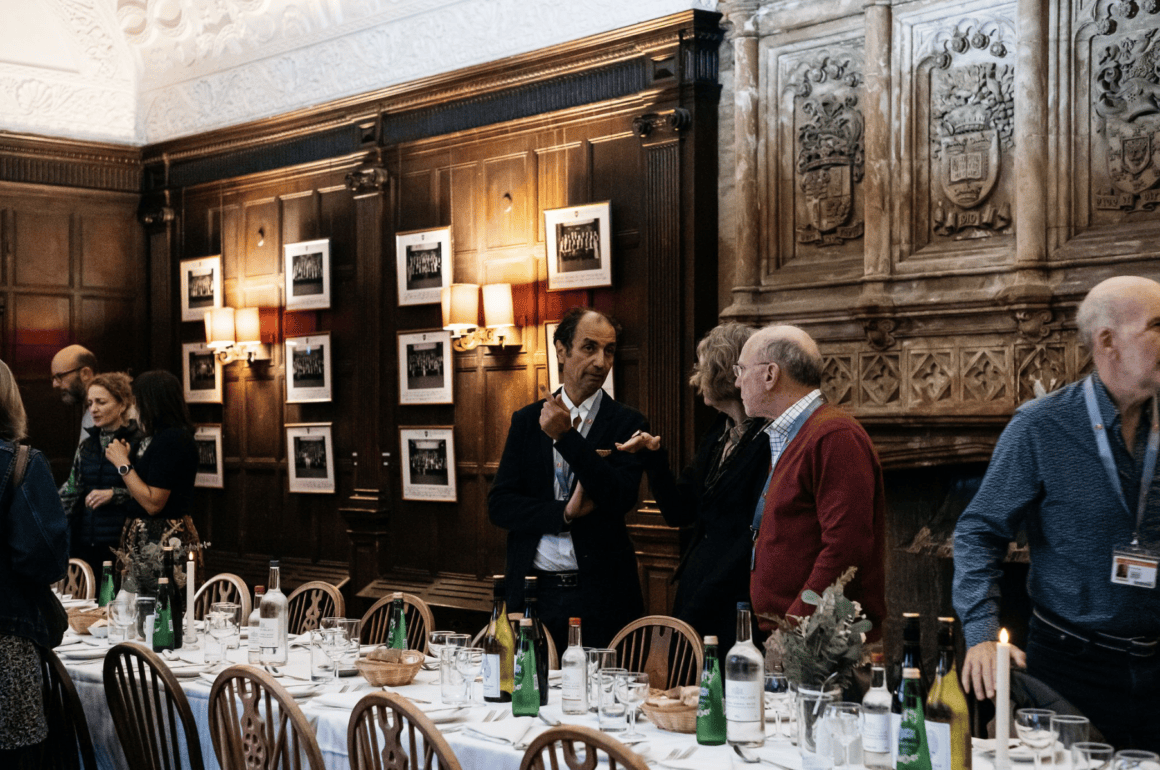
We had dinner at the Oxford Union, a phrase that might make the flesh crawl of many Oxford students, when thinking about this famous but divisive institution that has seen Prime Ministers from William Gladstone to Boris Johnson to Benazir Bhutto debate there as students. For the first-time visitor, the most impressive debating society in the world is astonishing, with photographs of all its significant alumni on the walls and its mini Parliament debating chamber alongside.

Read more: We visit the E1 race on the water in Monaco

A highlight of most evenings was dinner in Wadham College Hall, also dating from the early 17th century and adjoined to the beautiful chapel. It’s a serene space that by dint of not being quite as old as some of the college halls, dating one or two centuries before, is almost overlooked in the rarified Oxford world, where being the second best, or the second oldest, just isn’t really good enough.

Taking new approaches to the arts through the Wadham Experience

The Wadham Experience has been created by my old college partly to increase exposure to the importance and brilliance of the humanities at Oxford and, importantly, of course, to raise funds. There was some worrying about whether it would be attractive to ask people to spend this amount of money on something that is not quite a leadership course and too short to be a further education course. In fact, by all reports, it is a victim of its own success, oversubscribed and with corporations asking for a privatised experience of their own.

I think it is successful precisely because it is not a leadership course and nor is it some second-thought sideline into academia by academic staff who have other things to do. Everyone we came across was not just enthusiastic but enthralled by being part of the course: tutors, museum curators, “students” and college staff. For me, the most special aspect was being back in my old college without any of the stress or social anxiety.

The Wadham Experience offers multisensorial classes to its “students”

I stayed in a rather luxurious bedroom in a building overlooking the second quadrangle of the college. From one of the windows I had a view up Parks Road to the leaves of the parks and the back of Trinity College opposite. After dinner, it was like a retreat. And because the college, is, well, a college, your morning commute was across a quadrangle, whose 17th-century clock was probably gifted by Sir Christopher Wren, architect of St Paul’s Cathedral and a Wadham alumnus.

My only caveat is that Wadham College is historically and famously liberal, which can mean sometimes rather alarmingly left wing. The radical traditional liberal and the hyper left do collide in the college, and if you are on the right of the political spectrum, you should be an open-minded type in order to enjoy it properly. But that’s what education – and the humanities – are all about. Or should be.

I shall be returning to this magical experience, if it’s not all booked up by the LUX community.

we.wadham.ox.ac.uk

Share:
Reading time: 5 min
Alessia Caruso Fendi in Rome

Alessia Caruso Fendi

The doyenne of the Rome fashion family Alessia Fendi speaks to LUX about Cleopatra, Mick Jagger, her insider tips, and her latest venture in the city

Why Rome is the eternal city

It is in an eternal renaissance, always evolving. Rome has everything visitors could want, from beauty and romance to food, history and culture.

Who I’d take on a tour

Cleopatra and Mickey Mouse. The Queen of Egypt was the lover of two of Rome’s most powerful men, and when she first came here in 46 BC there was the largest procession the city had seen. I’d take her through the winding streets of bohemian Trastavere, full of people, restaurants and bars, and home of the Horti di Cesare. I’d show Mickey Mouse how a Disney character would fit perfectly into the frenzy of the city. I’m sure he would speed on a scooter to reach Minnie!

Follow LUX on Instagram: luxthemagazine

My favourite place here

Rhinoceros Roma is a place like no other in the city. It was founded by my mother, Alda Fendi, in 2018. The gallery shows works by artists from Michelangelo to Picasso, and there are 25 luxurious apartments for guests. It was designed by French architect Jean Nouvel and has a vibe where new meets old, luxury meets state-of-the-art tech. It’s a special haven near many of the city’s most beloved historic sites.

Rhinoceros Rome gallery

Rhinoceros apud Saepta by Raffaele Curi in the Rhinoceros Roma gallery

My ideal dinner guests

I’d host Barbara Jatta, Director of the Vatican Museums, and Mick Jagger for dinner at Rhinoceros Roma’s new rooftop restaurant, Entr’acte. It combines breathtaking views over Rome’s red rooftops with delicious cuisine.

My favourite Roman dish

Coratella is a typical dish that dates back to ancient times. It is a combination of lamb offal, artichokes, white wine, garlic, olive oil, rosemary, salt and black pepper.

The Entr’acte terrace in Rome at dusk

The Entr’acte terrace at dusk

Michaelangelo or Leonardo?

I’d have to say Michelangelo. He is one of the city’s most prominent artists and there are many examples of his genius here, from the Sistine Chapel and the Pietà in St Peter’s, to the Piazza del Campidoglio.

If you have one afternoon in Rome…

Go to the Baths of Caracalla – you will be amazed by the Roman architecture. Then dash to the Colosseum, Circus Maximus and relax at the Palatine Hill. Rome is very romantic The perfect place to propose is Giardino degli Aranci. The park has wonderful views across the city. Then celebrate with a meal at Entr’acte.

Old meets new in a sitting area in a Rhinoceros Roma apartment

My dream collaboration

I wish I’d worked with Issey Miyake to glorify his mix of craft, materials and technology through colours and geometries. I’d love to show his collections at Rhinoceros Roma. Italian artists I am looking at now I admire Pietro Ruffo, for his intricate pieces into which he incorporates ethical issues, with symbols such as dragonflies. I love Alessandro Piangiamore, whose beautiful works imprint flowers and leaves on concrete slabs. Alberto Di Fabio’s huge representations of the cosmos and the natural world are awe-inspiring.

Read more: Fausto Puglisi Interview: Refashioning Roberto Cavalli

One place I’d love to visit

Porquerolles, an island in the Parc National de Port-Cros in the Mediterranean. It’s been on my list for ages for its beauty and serenity. Coming from Rome, I am always on the lookout for quiet places to recharge in.

Find out more: rhinocerusroma.com

This article was first published in the Spring/Summer 2023 issue of LUX

Share:
Reading time: 3 min
President of LVMH watches Jean-Claude Biver with friends and colleagues

Chairman of Hublot Jean-Claude Biver believes in making luxury an experience, pictured here with athlete Usain Bolt

Jean-Claude Biver with Hublot friend Usain Bolt

The luxury industry needs to adapt to the biggest generational change in retail history. How? By going back to the future, says our columnist Jean-Claude Biver

LVMH President, Jean Claude Biver portrait image

Jean-Claude Biver

Two, three, or five hundred years ago, luxury was a real experience. Luxury, when it originated, involved people who would come to your home; and you would end up buying from them. The store would come to you. You still have this in Japan, where retailers send representatives to the homes of extremely wealthy people, making luxury a real experience. When someone comes into your home with their collection you can have your wife and your kids there. It’s a totally different experience.

When you are in a shop, you have other customers around you; there’s no privacy, and it’s noisy. Luxury was treated that way in the past, then it became a more marketed product, more accessible; and somehow we lost the origin of the experience.

Follow LUX on Instagram: the.official.lux.magazine

And nowadays, as we have a lot of accessible luxury, people are rediscovering inaccessible luxury, which is the luxury that is very individualised when you have a lot of unique pieces only for you and your taste. People are going ‘back to the future’ to this experience; it is a very old way to treat luxury, which was forgotten in the crazy years of the 1980s and 1990s to the 2000s. And now it is coming back, also for the younger generation. Because when they buy luxury they want to have an experience. If you buy without that, you are just making an exchange, a deal.

Hublot brand ambassadors Bar Refaeli and Dwyane Wade pictured with chairman Jean-Claude Biver

Jean-Claude Biver with Hublot brand ambassadors Dwyane Wade and model Bar Refaeli

If I give you 10 dollars and you give me 10 pounds of chocolate, where is the profit? It is just an exchange for you. But what if you don’t get just chocolate back, but also an experience? Somebody explains to you the different kinds of chocolate, how it is made, and why the Swiss started to put milk in it, at least you get a little experience, because you get a little bit of knowledge.

Luxury timepiece by Hublot in collaboration with Ferrari

The Hublot Ferrari Unico King Gold watch

Young people want individuality, they are ready to buy T-shirts for £150 from Supreme. These are extremely, extraordinarily expensive, but they are ready to queue up because they want to individualise, to have a T-shirt that their friends don’t have. They will queue up for the brand Off-White, for Virgil Abloh, they are ready to do anything and that is a new trend. We never thought that T-shirts could be sold for £150 or £200, and that young students would queue up to buy them. My son queued in Zurich for a pair of Yeezy shoes, and when the shop opened, he was in position 15 yet they told him, “Sorry, we’re out of stock now!” You have people sleeping in the street to get a pair of Nike shoes made in China. They are ready to do that because they get individualisation, they get a kind of exclusivity, they can differentiate themselves; they get something that others cannot get. Today, people want more of what money cannot buy, or even what you cannot get even if you have money. That’s the attraction and what gives value to a product today.

Traditional luxury brands are also threatened today by the distribution network. The young generation thinks that luxury brands’ stores are boring, or they don’t feel at ease in these kind of stores. So the first thing we in the luxury industry must adapt are our stores, the design, the way people are welcomed, the way we sell in the stores. We need a totally new attitude if we are to attract this new generation. We need to study, what is this generation like, what does it want? For my generation the car was the symbol of freedom, but today, this generation are not interested in driving. If we don’t adapt, if we don’t talk their own language, how can they understand us? This is the biggest generational change in consumption that I have seen in my lifetime.

Read more by Jean-Claude Biver: True luxury is unique and eternal says LVMH watch president

All this is a big challenge, and many CEOs are not ready to start learning when they are 50 or 60, simply because they think they know it already. But we have to reinvent the model.

Stéphane Lambiel pictured with Jean-Claude Biver at the Polo Gold Cup in Gstaad, a Hublot luxury experience

Jean-Claude Biver with friend of the brand Stéphane Lambiel at the Hublot Polo Gold Cup Gstaad

If you can make your own pair of Nike shoes for $100, you might wonder why you are not able to contribute to the design of your watch, which you might buy for $5,000. Individualisation is something that will take off in the future for the luxury industry. And at the same time, it is much more difficult to be different, to be unique and to be the first, in our industry. Information circulates rapidly from one brand to another, as soon as you think you are the first to have something, it lasts three months and then somebody else does the same. The dynamic and the time frame is such that it is extraordinarily difficult to maintain a distinctive position.

Jean-Claude Biver is president of LVMH Watch Brands and chairman of Hublot

Share:
Reading time: 4 min
Desert polo in Jaisalmer Indian desert
Luxury tent in desert under starry night

Camping under the stars in the desert. Image by Wei Pan

Geoffrey Kent is a pioneer of luxury travel and the founder of the multi-award winning Abercrombie & Kent global travel operator. In his most recent column for LUX, Mr. Kent explains why the most luxurious travelling experiences are truly transformative.

Over the past decade the definition of luxury has changed. It has become much more flexible with an emphasis on experiences and personalised service, rather than the mere physical trappings of luxury. From the opulence of a palatial hotel to the serenity of waking up to a spectacular sunrise in a simple mountain refuge, I believe true luxury is the privilege of discovery, adventure, relaxation and insight, enjoyed in a context that perfectly suits the experience. Seamless service, safety and security are a given. But it is the unexpected that inspires a sense of wonder and elevates an adventure into a true luxury experience.

Follow LUX on Instagram: the.official.lux.magazine

There are some places that are just so exceptional that they have come to define luxury. These run the gamut, from African safaris to expedition cruises in Antarctica, but their commonality is that they are transformative experiences that do more than just take you to a new place, they challenge your understanding of the world. I have found that this kind of travel is a powerful way to induce the sort of shift in thinking in which creative breakthroughs spontaneously arise.

Desert polo in Jaisalmer Indian desert

A man poses with his camel for desert polo in Jaisalmer, India. Image by James Houston

Guests define luxury as having an authentic experience – an encounter that is true to the place and its traditions, incorporating elements of the past and reflecting the local culture. Spending time on a tropical island is appealing, but luxury guests want more than that. They want to get out and explore, experiencing authentic cultural traditions that do not reflect Western values. Your life will change when you are immersed in a culture so dramatically different from your own and reach a new understanding of how life is lived in another part of the world.

African safari in the golden light of dusk

African safari at dusk. Image by Sergey Pesterev

Recently I met a couple on the beach who recognised me. They told me that despite the money they spend on their holidays, they always feel richer when they get home.

Read next: Art auctioneer Simon de Pury on the rise of the online art market

For discerning travellers, it’s not about checking places off a list – it’s about making connections through unique local experiences not found in a guidebook. It might be a camelback safari to an Indian desert camp, enjoying a hotpot dinner in the home of a Tibetan family in China’s Yunnan province, or taking a private cooking class in the Mercato Centrale in Florence with a local chef. It will be these kinds of inspiring encounters you’ll share with friends and family when you return – not the gold-plated Corinthian capitals in your hotel suite.

Geoffrey Kent is the founder, chairman, and CEO of Abercrombie & Kent

Share:
Reading time: 2 min
Mexico city shoppping street
Joe Sitt interview

Joe Sitt, President and CEO of Thor Equities

Joseph Sitt, President and CEO of Thor Equities, sits atop a luxury property, retail and advisory empire that straddles the western hemisphere. His company owns and develops prime retail property throughout the US, as well as Latin America and Europe. The portfolio and development pipeline of the New York-based company, which he founded in 1986, is in excess of US $18bn.

He is also known as something of a luxury visionary: unlike many property companies, his firms (he also runs Thor Retail Advisors, a leading retail agent and consultant; and others) work closely with fashion and luxury brands to ‘place make’, transforming the areas they are based in. Like LUX, he also believes in mixing high luxury with creative emerging brands to create an atmosphere of discovery as well as indulgence. LUX Editor-in-Chief Darius Sanai caught up with Sitt on one of his whirlwind visits to London about the rise of LA, Mexico, and the future of luxury retail.

LUX: Tell me about the rise of LA as a destination.
Joe Sitt: There is physically no more room in San Francisco for office space and for homes, for rental buildings and retail. So, much of that industry is migrating to LA because it’s also on the coast and it’s got better weather. It’s also got more culture and things happening, so there is a lot of migration there, and a lot of wealth being created in LA. And you are getting a lot of second home owners (from the San Francisco area) who are buying in LA.

Between the businesses migrating their technology and the second home owners there, the revitalisation and reactivation in LA is tremendous. You can see also that new restaurants are incredibly successful. And it’s not just coming into LA proper. It’s also coming from down below for example into Santa Monica and Venice Beach. You have tech companies like Snapchat whose headquarters are based over there.

The other aspect of it is the creative industries in LA. Some real fashion is coming out of there for the first time in quite a while. Secondly, the movie industry. For the first time the movie making business is a real profitable business for film makers, writers – salaries are going up tremendously for all of them and for anybody affiliated with the industry.

The tech industry has so much wealth and power and it has the “funny money”, because their stock prices are so high; for example the FANGs – Facebook, Amazon, Netflix and Google – their stock prices are so high that they are throwing money very aggressively at almost anything. And that is crossing with the fact that the biggest thing that all of those tech companies need, and that they don’t have the ability to do within their tech shops, is actually content.

So now what you have is, if someone is making movies in LA you actually have a shot at a bidding war between Amazon, Netflix, etc. Even Snapchat have announced that they want to be buying and delivering content. That’s creating a really exciting time for the LA market for the people in all forms of the creative industry. A combination of wealth and creatives.

LUX: And in parallel the visual arts has revived there in the last 10 years.
Joe Sitt: Yes. For example, my friends at the [Helly] Nahmad gallery, who are the largest owners of Picassos in the world, now see how many people are coming from the West Coast to consume their products in New York. So they are opening their third outpost: they’ve got London, New York and are now looking to the West Coast. You’ve got [Larry] Gagosian who’s got his New York Gallery, he sees where the zip codes are where he’s shipping his product to. So while people are opening up shop in San Francisco, to get to the wealth proper a lot of them are really looking to the arts district in LA.

Read next: Japanese restaurant, Sake No Hana brings blossoms to Europe 

LUX: Do you see the emergence, despite Donald Trump, of LA and Mexico emerging as one entwined retail and luxury zone?
Joe Sitt: Very much so. I look at Mexico as a big new frontier in luxury fashion. A tremendous amount of wealth has been created in that country. In terms of those people who think that Donald Trump’s policies are going to hurt Mexico…I will throw you a curveball and show you how he’s actually getting the opposite result from what people think would happen and perhaps what he intended. I will give you two examples.

One, is in terms of the border in terms of trade as well as in in terms of immigration and how they actually play out. Sometimes when you shoot a bullet when it comes to policy you don’t know who the victim is going to be. The trade announcement forced a tremendous amount of devaluation in the Mexican Peso. The Peso went from around ten pesos to the dollar ten years ago to twenty two recently; so about half. The net result of doing that was making Mexico as a country and as an exporter more competitive.

As a result of making them more competitive from their currency it increased America’s trade deficit with Mexico dramatically over the last quarter. The opposite of what everyone expected to happen in that first quarter. The second thing that occurred with regard to the second policy, immigration, also had an unintended consequence; which is as a result of being tighter on the border for immigration, US companies have started to create tech centres in Mexico. In Guadalajara, and in Tijuana for those companies in San Diego who just want to be able to cross the border and travel 45 minutes to their foreign teams.

So now you’ve seen an incredible resurgence of business and activity in both Guadalajara and Tijuana in Mexico for the tech industry as a result of those tough policies. It’s a place so close to the United States and you can house all of the greatest foreign minds in the world.

Mexico city shoppping street

The Ferragamo store on Masaryk street in Mexico City

LUX: Mexico has been seen as an outlier in terms of luxury retail.
Joe Sitt: It takes time for a market to react to some of things I’ve mentioned. It’s now waking up. I feel that the entire luxury market has been sleeping at the wheel regarding the Mexico opportunity. And so now they are just waking up to it. Those who are waking up to it are finding success in the market place. But it takes time for them to mobilise.

LUX: Can you tell us your vision for what you’re doing there, because it’s a long term play.
Joe Sitt: We are attacking it from multiple prongs. One of course is just bringing luxury retail there, and creating a platform for it to come to, for the first time. We sparked the revitalisation a street called Masaryk and in an area called Polanco, in the heart of Mexico City. In the old days it was an Upper East Side kind of marketplace that was starting to become abandoned and is now revitalised.

LUX: And is that now going to be the Rue St Honoré of Mexico?
Joe Sitt: Yes exactly right. You’re starting to see it. Hermès, Ferragamo, Gucci and Goyard just opened there. So you’ve got some great brands already.

LUX: Was this through you?
Joe Sitt: We were the spark that brought it all together.

Thom Sweeney

Thom Sweeney SS17

LUX: Integrating investment in emerging fashion brands and developing districts seems pretty for a property company. What’s behind it?
Joe Sitt: Candidly, it’s more of a passion. Yes, there are financial benefits of being on the ground floor of some of the most exciting brands and investing with them or representing and aiding them. Yes, there will be financial reward, probably in years to come when a Thom Sweeney explodes and goes next level or a Drakes or an Edward Green or a Maison Bonnet. But for me, more than anything else, at this stage in my career I am looking for things that I enjoy personally. And I enjoy young and exciting luxury brands and helping them achieve their potential. I get my personal thrill vicariously through their success.

Read next: Labassa Wolfe on the contemporary tailoring experience

LUX: Is your ideal scenario that they grow up to be the next Moynat, Vuitton, Hermès?
Joe Sitt: In some cases yes, in some cases no. For some, Maison Bonnet, the eyeglasses company, we are going to help them make the move from Paris’s first and only little artisan shop to executing in London. It’s about growing the business but not necessarily overgrowth or creating a Goliath.

LUX: And is the long term that you are buying, building and selling them?
Joe Sitt: I have to be careful in terms of conflict so I can’t say which ones I invest in. Other than to say when I do make investments in them I am focused on very very long term. It’s not to buy and sell. It will go wherever the visionary wants to take it, who’s owning the business, will we ride with this vision. In terms of our advisory business, our goal for these companies is to help them reach whatever their potential is, or is meant to be. Some of them it’s meant to be a very large business, some of them it’s not. We do the same thing with tech related businesses. I mentioned Warby Parker [an eyewear company], we were with them from the start, opening all of their first locations. Helping them understand the challenges of physical retailing versus internet retailing.

LUX: You are a property person. But is retail moving online?
Joe Sitt: There will be challenges in terms of distribution for people to buy things online for many years to come. And buying direct is not a new invention. We had catalogue prior, it was just a different medium for doing it. Someone would get the catalogue to their house and then they would order by telephone; or later order through emaiI. I look at online as another modem to deliver a product to a consumer. When it comes to commodities, it’s easy enough push a button and buy it on the internet. But does the internet mean that Nike should not open up more stores? We’ve found the opposite. I worked with Nike in New York, myself and a partner, for the first flagship store in Soho on the corner of Spring Street and Broadway. They are doing two incredible flagships that are costing them mega millions of dollars to build. Why are they doing that in the year 2017 with all the talk of tech and internet sales? Because they realise for a brand, it works arm in arm. People want the experience of a brand. The same way people are talking about restaurants and experience and enjoying that aspect of it, it’s the same thing when it comes to a brand. I want to go to Nike and not just see pictures on the internet. I want to touch the product, I want to try it on I want to interact with it.

Maison Bonnet

Maison Bonnet’s Palais Royal Salon in Paris. Image by JYLSC

LUX: You have done some transformative retail schemes over the years. What are the challenges when you have an area like this that has got great potential but you need to change things? Do you get resistance?
Joe Sitt: There is always resistance. I always say that the secret to knowing when a project is going to be great is the greater amount of resistance. We enjoy both. We like doing things in established high profile tourist destinations as well as cool emerging areas like Wynwood in Miami, Venice Beach in California, and all of these creative markets all over the world that we think need and deserve luxury exposure as well.

Read next: Luxury in the foothills of the Himalayas

LUX: Do you think that monolithic luxury malls as are opening in China and elsewhere, where everything is a luxury brand and nothing else, will change? Will people want more of a mix in there?
Joe Sitt: Yes. That’s boring. Even if it’s great luxury brands it’s not what the consumer wants. As a consumer it gets more and more sophisticated. You see that in their taste they want something that is more eclectic.

LUX: A bit of discovery?
Joe Sitt: Yes. It could be restaurant discoveries, specialty shops, boutiques, perfumeries, candle shops etc. Intermixed with the luxury brands and that’s what creates the most successful environment for a luxury brand.

LUX: What’s the most exciting area of luxury and fashion for you?
Joe Sitt: Menswear is so exciting, much more exciting than womenswear, still very much an untapped market, with brands we’ve referred to today, Thom Sweeney for example, in years to come that could explode. I think that food, F&B, restaurants etc. have tremendous potential. Look at a market like London, if you were here 15 years ago the restaurant scene was horrific. It’s come along light years. I think other markets are going to expand to a much greater degree.

Last, but certainly not least is destination. I think people are remaking what the word ‘resort’ is, as hospitality and a destination. I think people are stating to get really creative. People crave creative.

Share:
Reading time: 11 min