


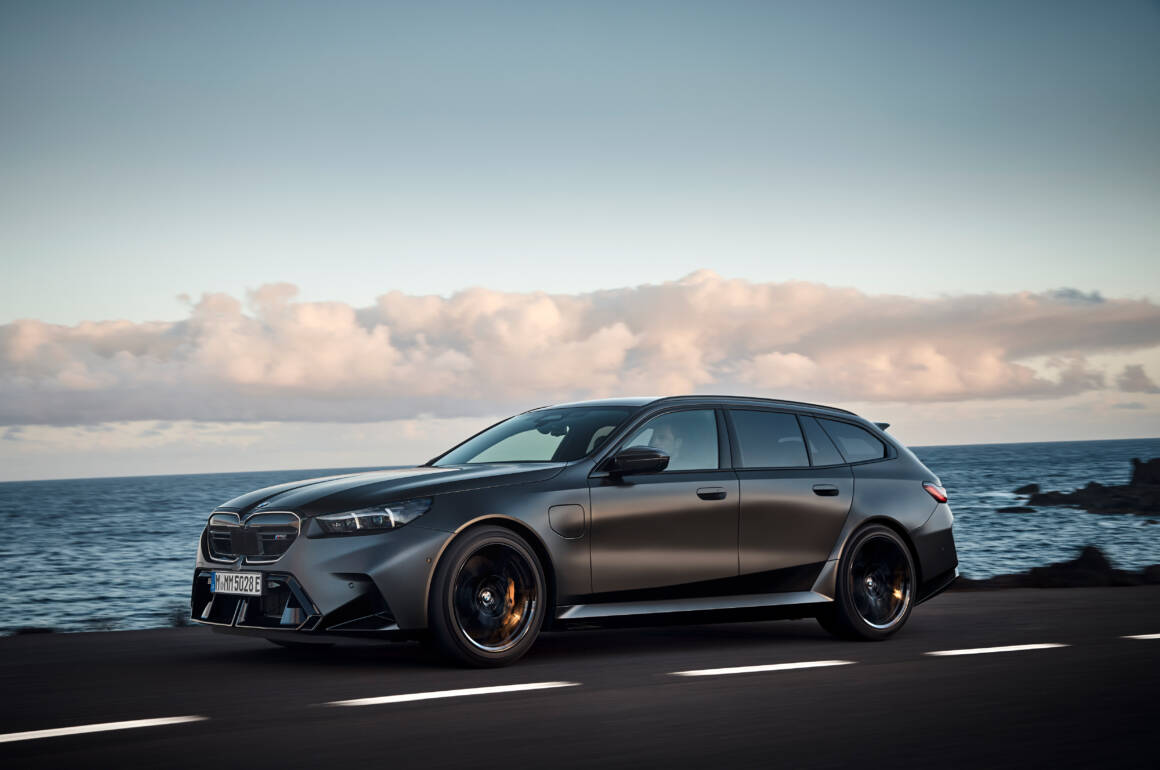
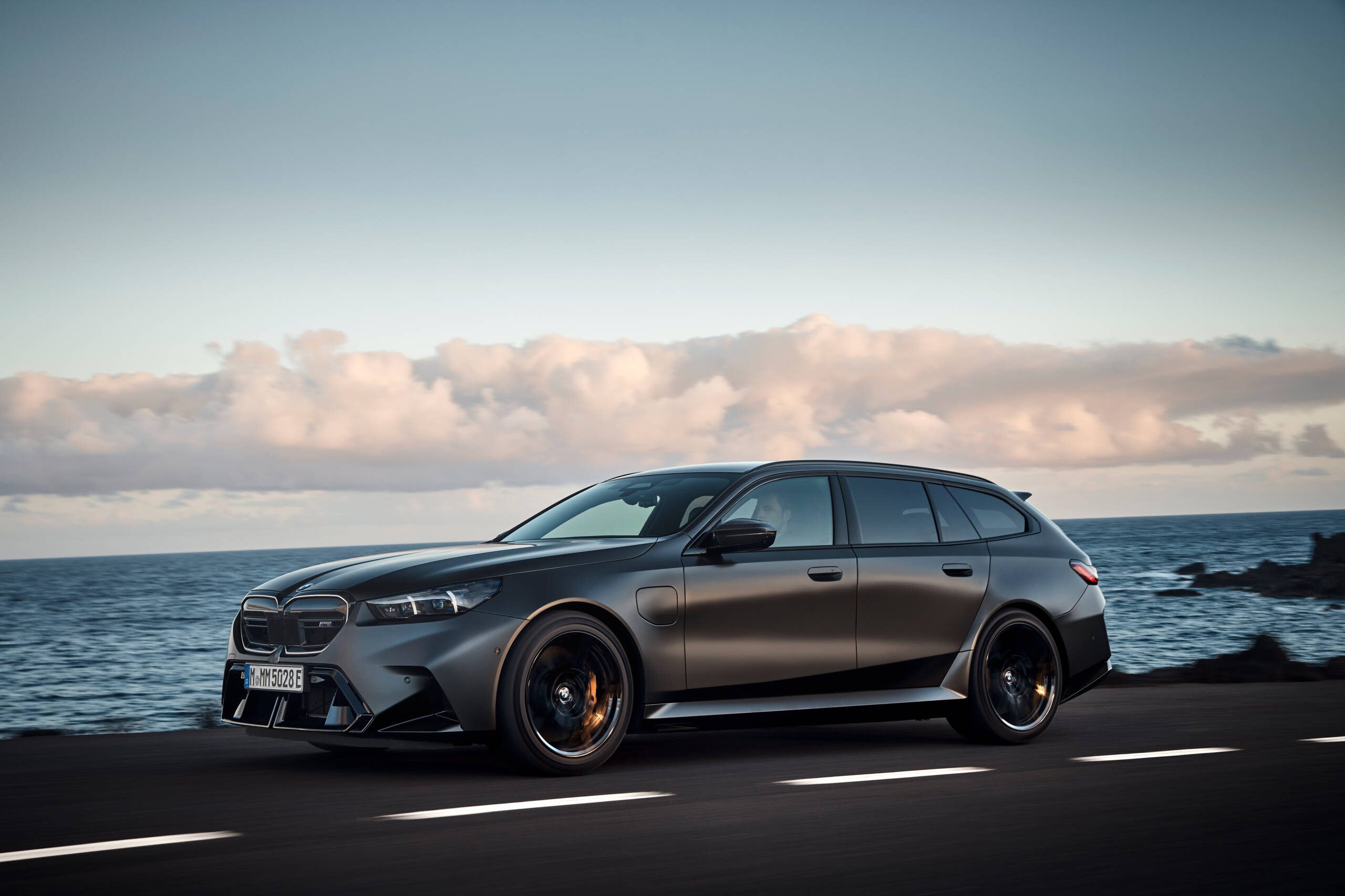
The BMW M5 Touring: ‘A worthy successor to the original, a car not to mess with, and unique’
BMW’s M5 Touring combines the practicality of an estate with the performance of a 727 hp hybrid V8. With decades of Motorsport heritage behind it, this is a car built for both everyday driving and serious speed. LUX gets behind the wheel of BMW’s latest M5
If you are the kind of person who is inclined to spot cars, cast your eye around any prosperous location in the world and note the proportion of BMWs that also carry a supplementary red and blue badge labelled simply with the letter “M” on their bodywork. You would be forgiven for thinking that the M is simply a fairly random model designator as carried by every car brand – like a D for Tesla or a G for Mercedes.
Follow LUX on Instagram: @luxthemagazine
You would, however, be wrong in one fundamental way. The M stands for Motorsport, and while now it is in many cases simply an indicator of a mainstream BMW model with some extra equipment, its origins and heritage are truly quite special. In the 1970s and 80s BMW had its own racing outfit, and in 1978 built its first and, to date, only supercar, the M1, which used a new racing engine created by its Motorsport division.
Throughout the 80s and 90s, if you bought a BMW with an M on it, you were generally buying a product created by this division in a separate factory, with a handmade racing engine and suspension and other accoutrements to match. BMW supplied M with the body shell, M did everything else.
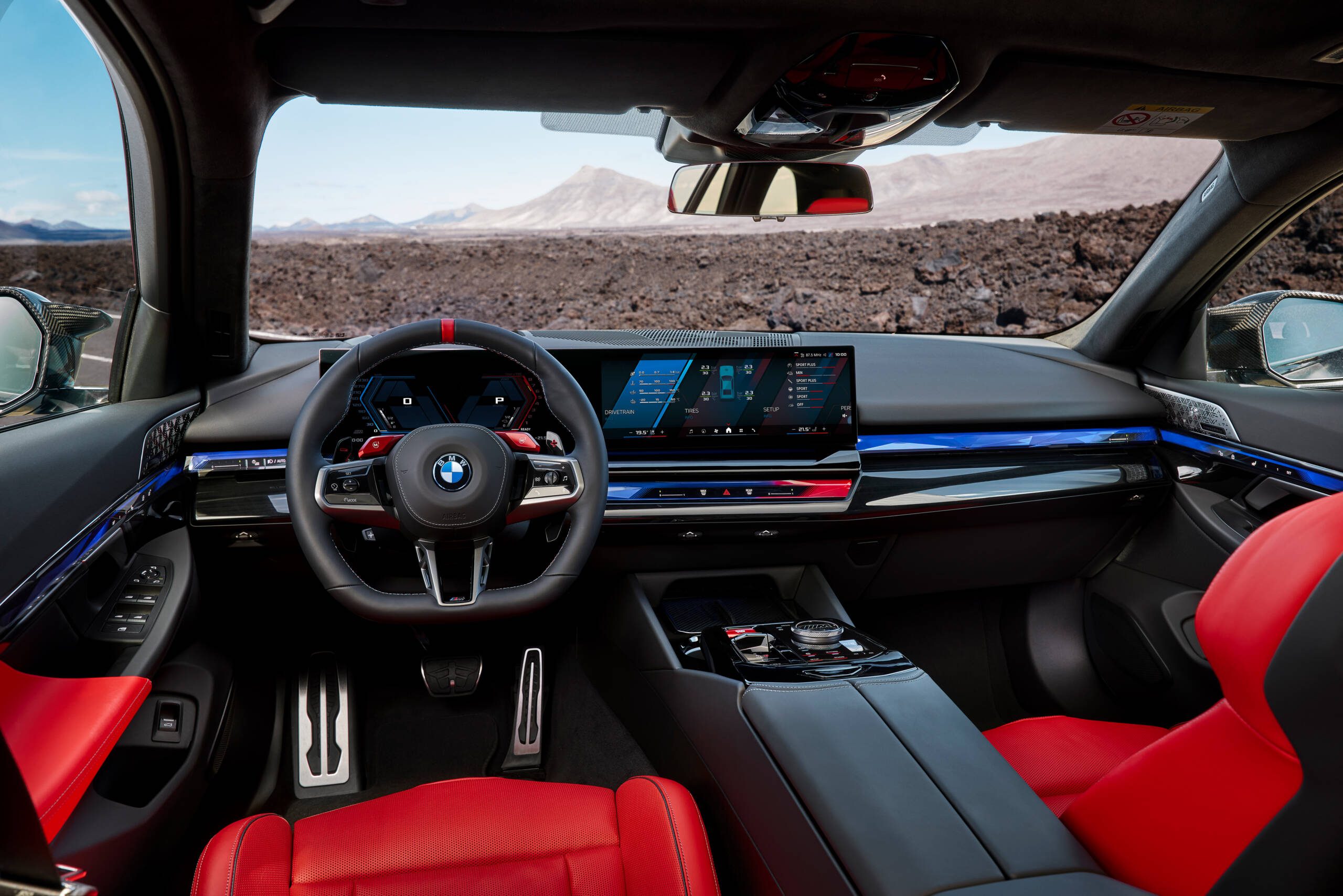
‘It also has numerous driving modes to suit your mood, skill and geekiness’
The engine and other parts from the M1 were used in the first BMW M5, released in 1984, which took the shell of the executive four-seater, four-door 5 Series sedan and gave it the spirit of a track racing car. It was one of the first times this had ever been done by a car manufacturer, and each new iteration of the M5, and its smaller sibling the M3, would be awaited as eagerly by car enthusiasts as a new Ferrari model line. After all, this was a car that had the performance to match a Ferrari or a Porsche 911, but could also function as a taxi if you wanted it to.
All of that may be lost in the sands of time for today’s consumer, who, in any case, has the choice of electric cars that offer Ferrari-style speed, if not the excitement, for a fraction of the cost.
Read more: Riding with the Porsche 911 C4 GTS Cabriolet
But the BMW M5 keeps going, through iterations that included a wild, V10-engined machine around 20 years ago, and now this latest iteration, posting 727 hp, significantly more than twice the muscle of its 286 hp original ancestor. Like the V10-engined variant of 20 years ago, it is available both as a saloon and as an estate, so you can in theory move your antiques around the country at breakneck pace.
The 727 hp is not achieved, thankfully, solely by an electric motor, but by a twin turbocharged V8 with electric hybrid assistance. The latter fills in the gaps during the times the turbochargers are spooling up – fractions of a second, but that matters in fast driving – and add an enhancement drug-style extra punch when the engine is going great guns.
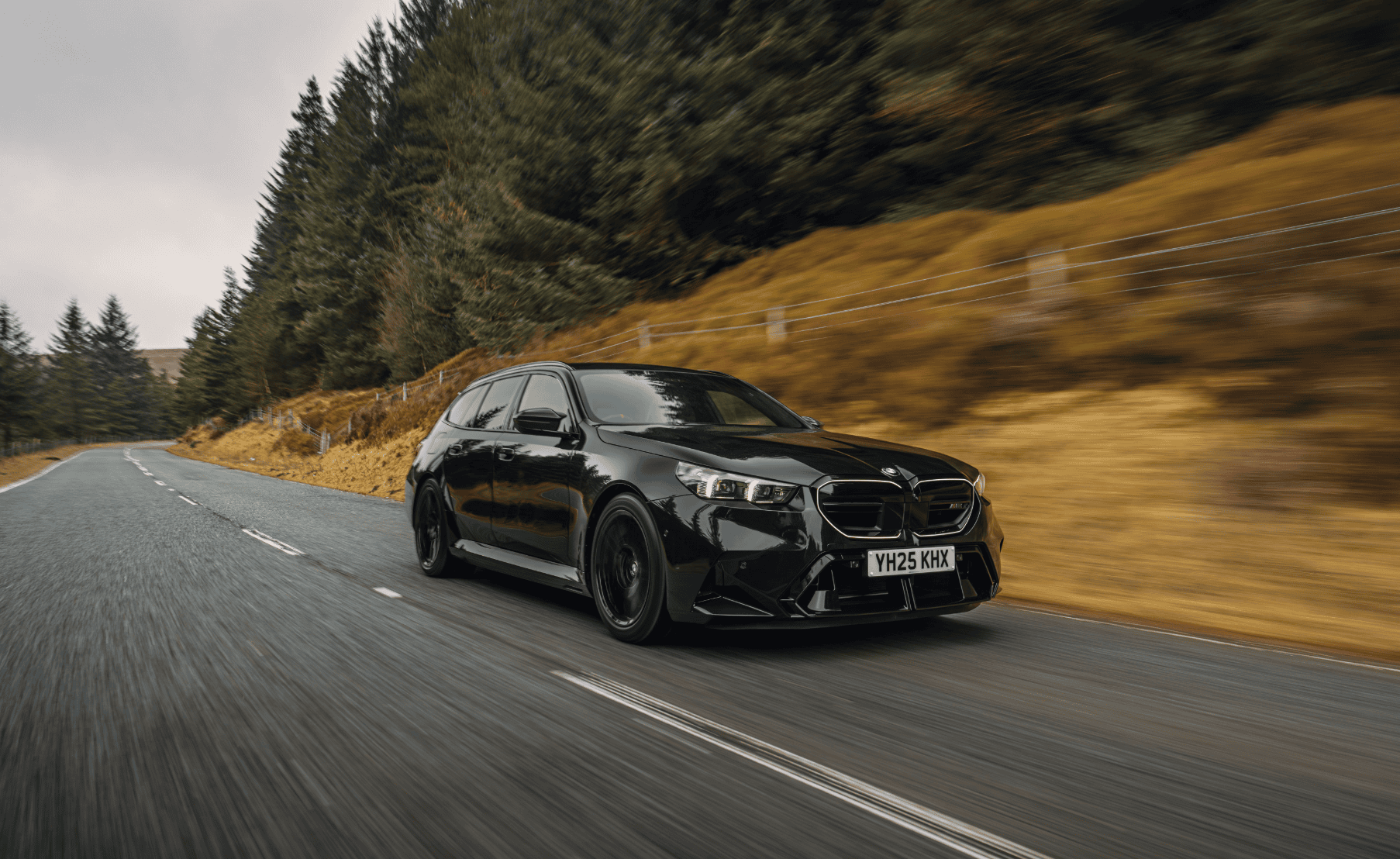
BMW’s M5 Touring can move your furniture across Europe at frightening speeds
And it certainly does that. This is a car with a passionate sound from its “real” engine, as well as aggressive looks that, very unusually for a wagon, have the roadside YouTubers in London swinging their cameras in your direction. It also has numerous driving modes to suit your mood, skill and geekiness. Set to the more aggressive of these, it shoots around corners sharply and enjoys the challenge of a sweeping country road.
Read more: We visit the E1 race on the water in Monaco
If your furniture frequently needs moving swiftly around tight country lanes, you should be aware that this is a big and heavy car and so trades off some of the agility of its predecessors in favour of sheer power and heft. It’s roomy and comfortable inside, although not as luxurious as the top of the range and bigger 7 Series BMW, and LUX would like to see a couple of extra special touches in the interior to elevate it even further.
All in all, though, a worthy successor to the original, a car not to mess with, and unique.





Recent Comments