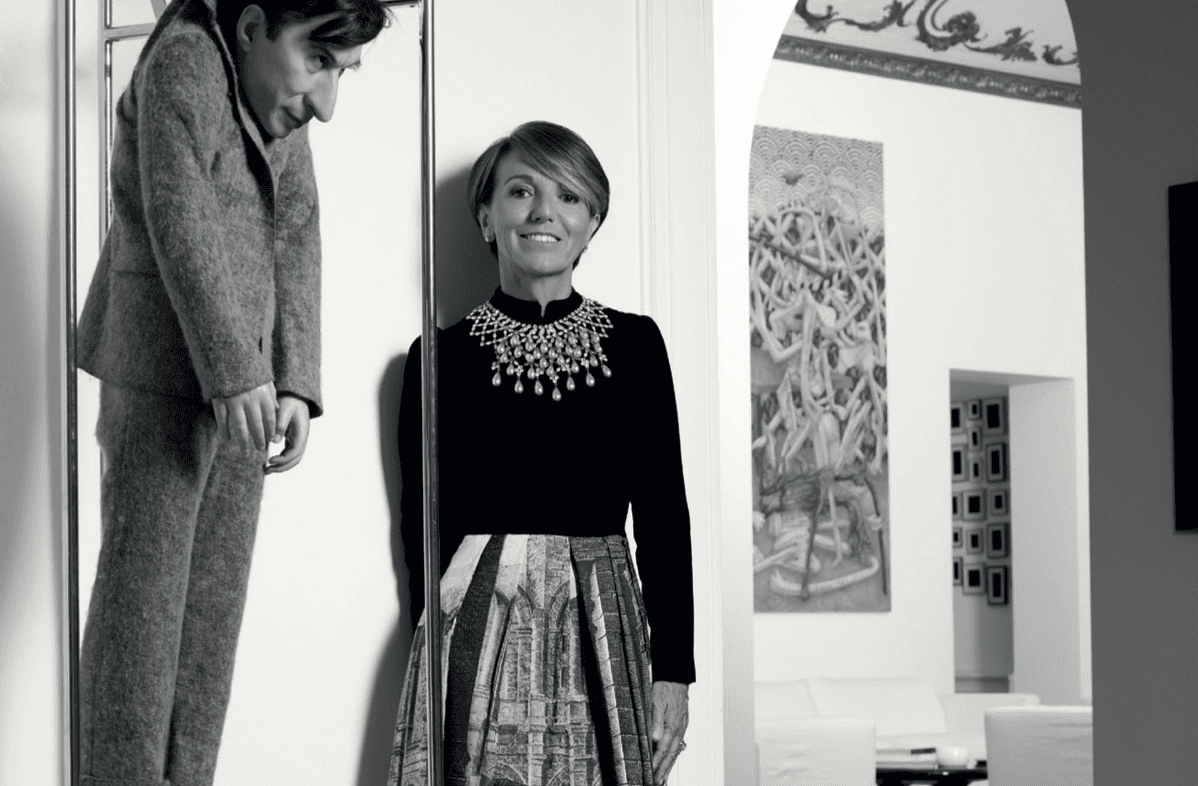
Patrizia Sandretto Re Rebaudengo with We are the Revolution, 2000, by Maurizio Cattelan
, from her own collection

One of the world’s leading art philanthropists and patrons, Turin-based Patrizia Sandretto Re Rebaudengo is a leading light of Italian contemporary art, Here, she shares the inside track on six artists who have caught her eye this year

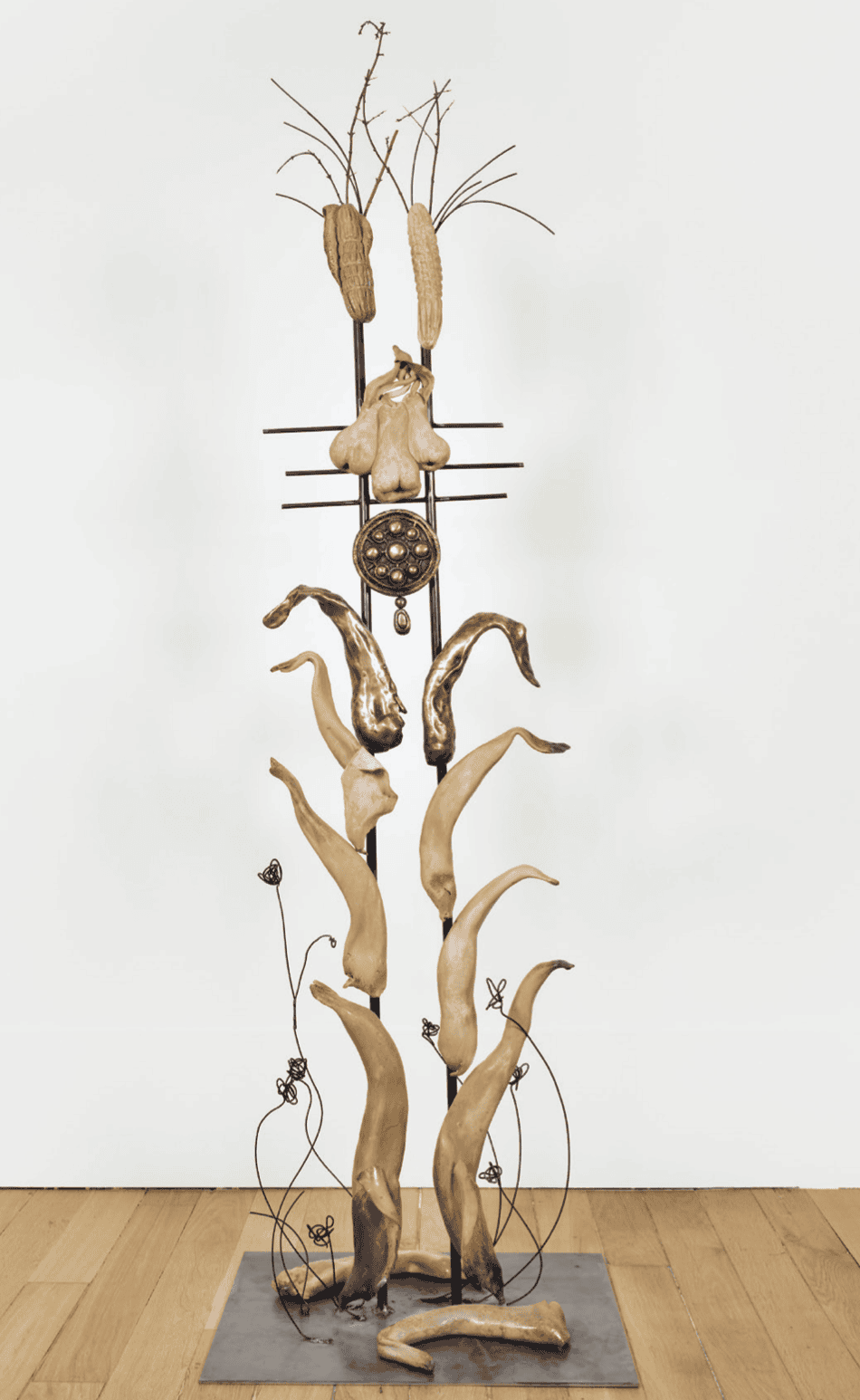
Benni Bosetto (B. 1987, Merate, Italy)

With a practice ranging from drawing and sculpture to installation and performance, Benni Bosetto is one of the Italian artists I have been following with the most interest and I have also collected her works. I believe her research around the theme of the body, explored from an original perspective, is attuned to the current global tendencies.

Saturday Total Eclipse, 2021, by Benni Bosetto

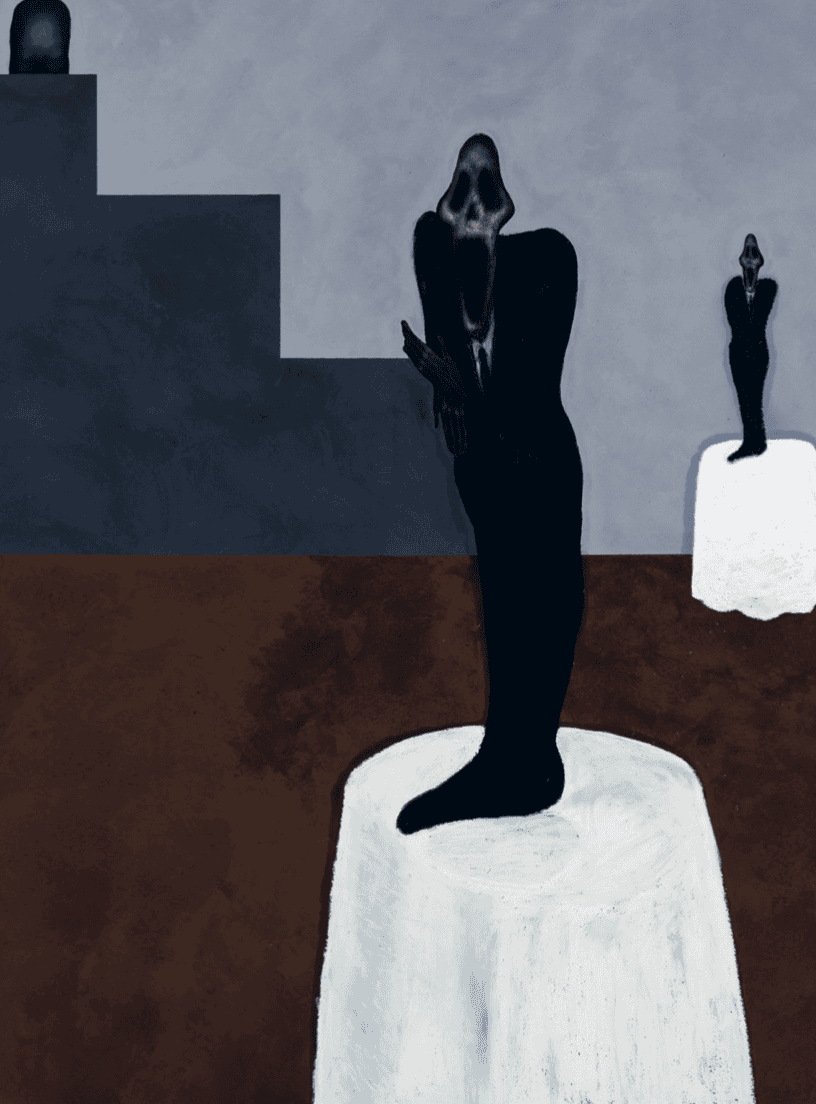
Jem Perucchini (B. 1995, Tekeze, Ethiopia)

The works of Jem Perucchini, an Italian artist born in Ethiopia whose first institutional solo exhibition I presented at the Fondazione Sandretto Re Rebaudengo in 2025, harmoniously combine references to the Renaissance and the 20th century, with Byzantine influences derived from his Ethiopian origins.

Follow LUX on Instagram: @luxthemagazine

I am fascinated by the way his paintings evoke a spirituality that draws on classical and ancient sources, interpreting them from a contemporary perspective.

Anemone (The Letter), 2024, by Jem Perucchini

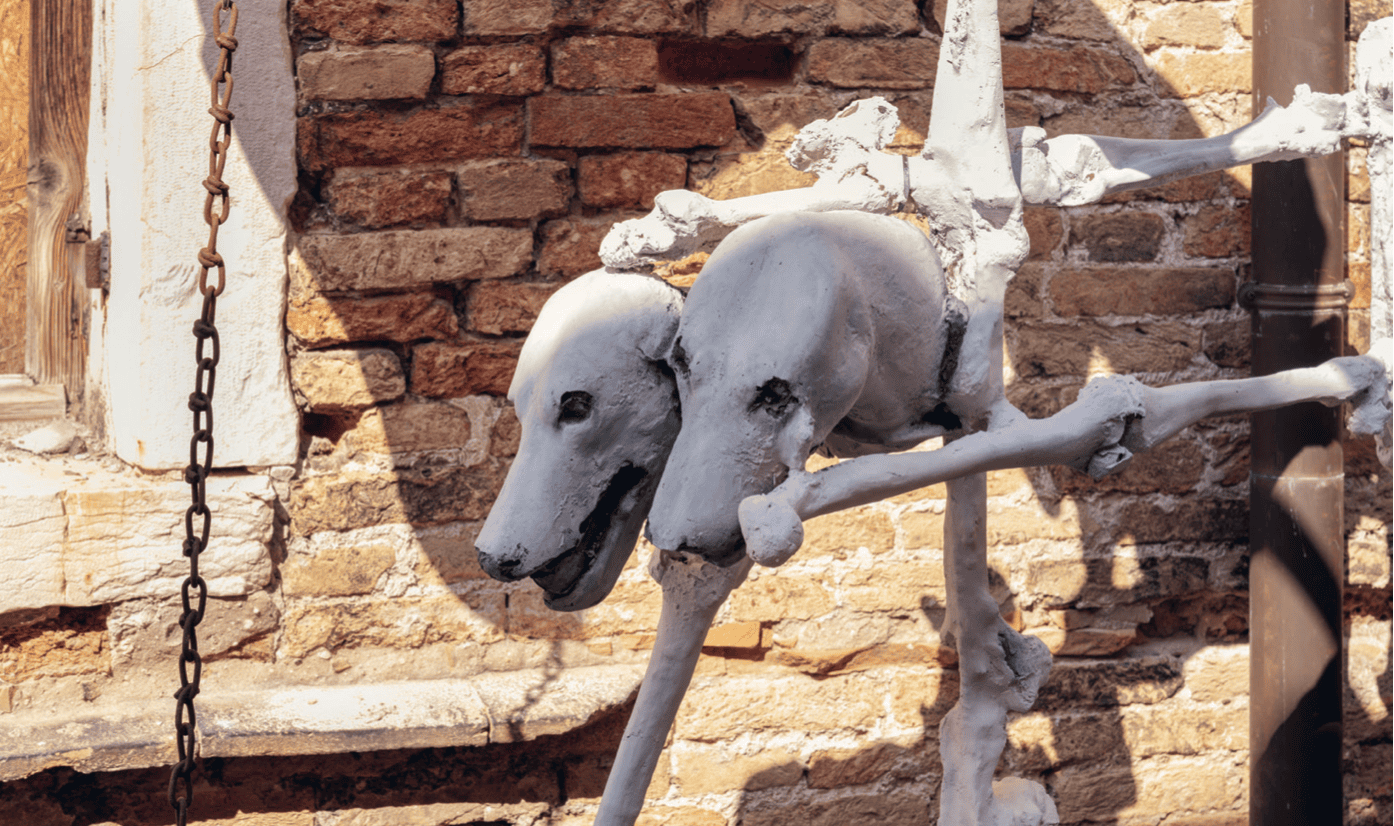
Giulia Cenci (B. 1988, Cortona, Italy)

Giulia Cenci is one of the young Italian artists who have received considerable international acclaim in recent years, having exhibited at institutions such as the Venice Biennale, the High Line in New York and Mudam Luxembourg.

In her work she innovates the language of sculpture, mixing recycled materials with dust, resins or aluminium and often working on impressive site-specific projects. I have supported her practice by co-producing her installation for the 59th Venice Biennale in 2022 and acquiring works for my collection.

Scalata, 2021-2022, by Giulia Cenci

Pol Taburet (B. 1997, Paris, France)

Among the stars of a new generation of painters, Pol Taburet is a French artist of Guadeloupean origin who has captured global attention with his paintings populated by timeless figures.

Read more: Mercedes-Maybach S-Class Review

I was so immediately impressed by his powerful imagery – a combination of influences from Caribbean traditions, classical Western painting and contemporary culture – that I organised an exhibition of his work with Fundación Sandretto Re Rebaudengo Madrid at the Pabellón de los Hexágonos, curated by Hans Ulrich Obrist.

Desire and Stones, 2025, by Pol Taburet

Xin Liu (B. 1991, Xinjiang, China)

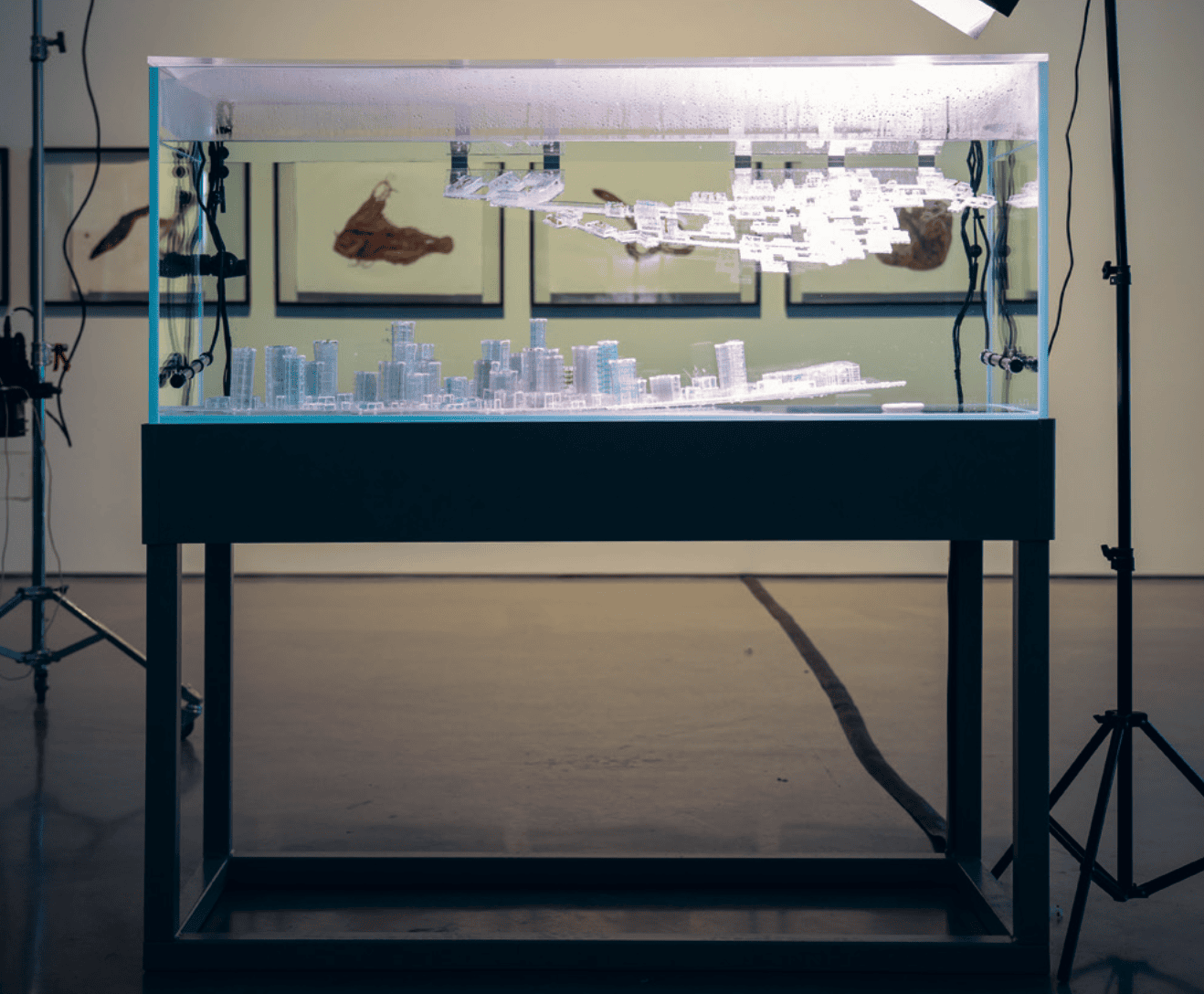
A Chinese artist and engineer, Xin Liu presents a new exhibition at the Fondazione Sandretto Re Rebaudengo this spring, in collaboration with K11 Art Hong Kong. I am interested in her practice because of its connection with ecology and sustainability.

Experimenting with hi-tech materials, she produces incredible sculptures that transform over time by activating chemical process or biodegradation.

The Permanent and Insatiable, 2025, by Xin Liu, installation view, Moody Center for the Arts, Houston

Adji Dieye (B. 1991, Milan, Italy)

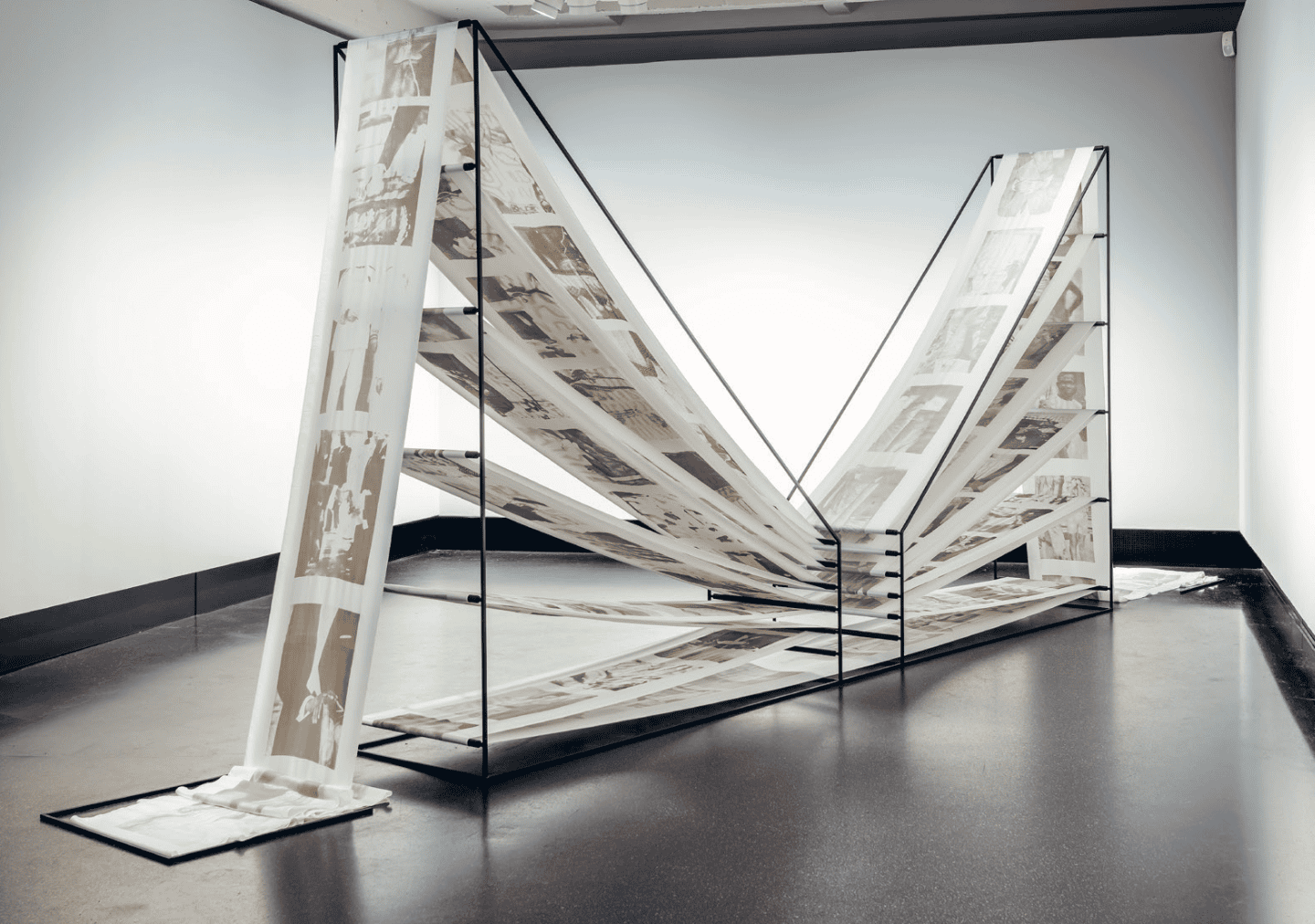
The Italian Senegalese artist Adji Dieye investigates the founding narratives of nation states and their current influence on personal and collective identities. For me, the strength of her work lies in its political, research-based background and in her combination of photography and sculpture.

Read more: Four Seasons Hotel Istanbul at Sultanahmet Review

She prints images on fabric, creating installations that reflect on colonial and postcolonial history. The Fondazione Sandretto Re Rebaudengo will be holding a solo exhibition of Dieye’s work in September 2026, in collaboration with Associazione Genesi.

From Culture Lost and Learned by Heart, 2021, by Adji Dieye, installation view, C/O Berlin

Works can be viewed through fsrr.org

Share:
Reading time: 3 min

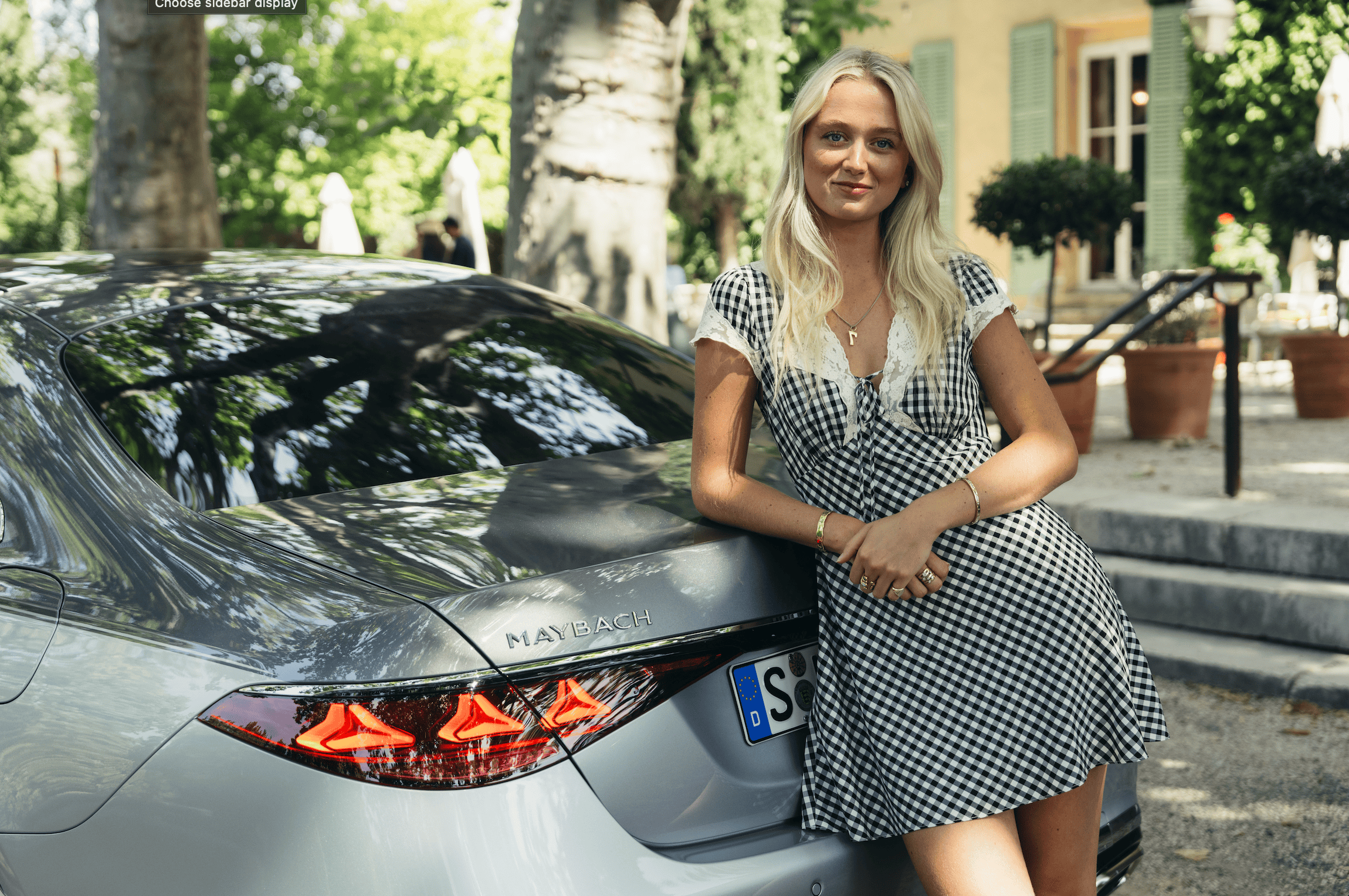
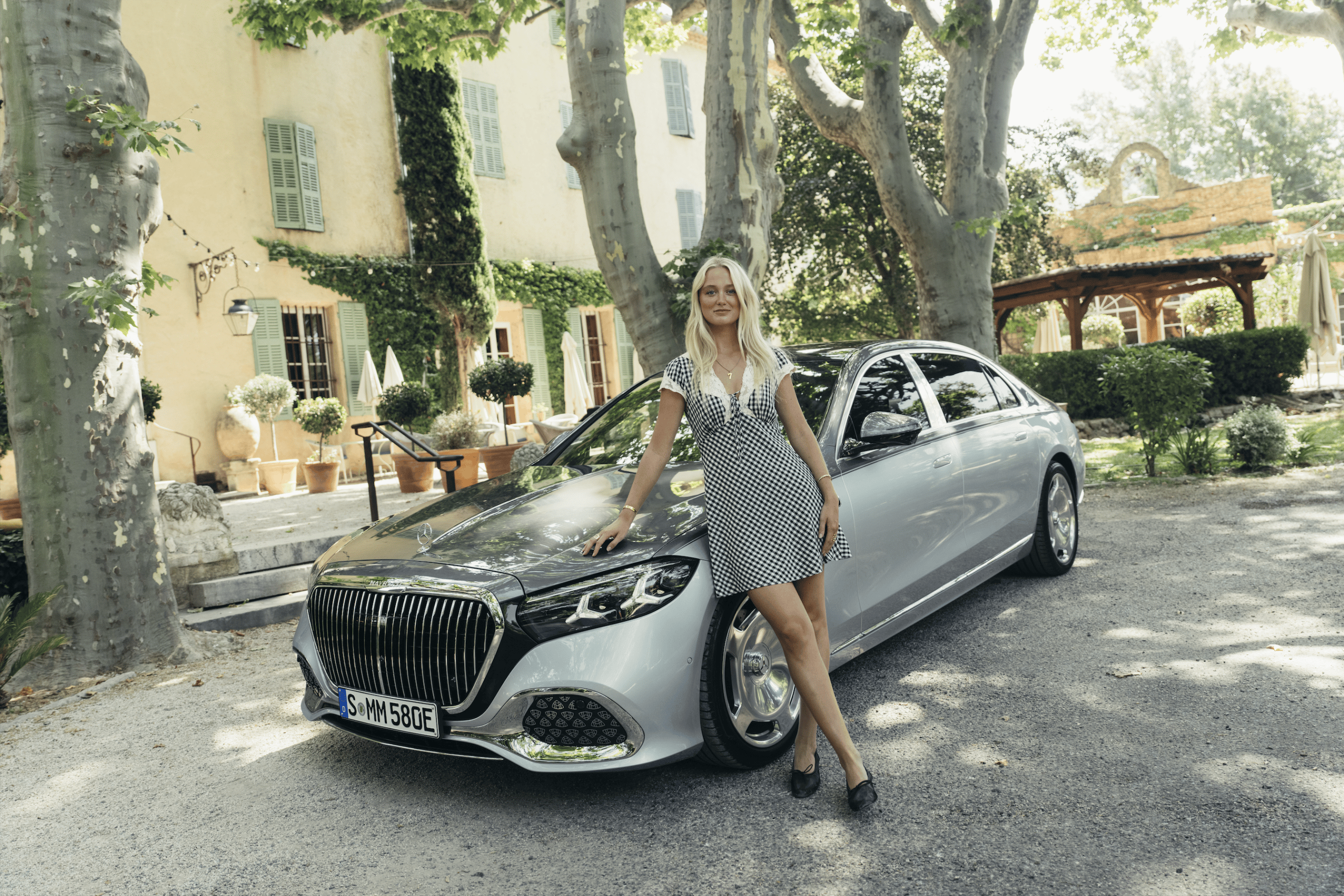
LUX Correspondent Annie Preston with the Mercedes-Maybach S-class

LUX’s Annie Preston swaps her chic little Mini for 5.3 meters of rolling serenity in the form of a Mercedes-Maybach S-class

I drive a Mini convertible. It is small, it is nippy, it is the sort of car you can park anywhere in London if you squint hard enough and believe in yourself. So, when I was invited to the media launch of the new Mercedes-Maybach S-Class, I felt a bit like a Shetland pony owner being handed the reins of a Grand National winner. What, exactly, was I meant to do with all this car?

Follow LUX on Instagram: @luxthemagazine

The answer, as it turns out, is very little, and that is precisely the point. The Maybach asks you to occupy it. Sliding into the rear cabin for the first time, doors closing themselves with a soft, ceremonial hush, I understood immediately that this was not a car built for me to do anything to it. It was built for it to do things for me.

The Mercedes-Maybach runs on a V-eight-cylinder engine, producing up to 450 kilowatts and 850 newton metres

Which brings me to the horsepower, because one must be responsible. Under the bonnet of the range-topping Mercedes-Maybach sits a newly evolved V-eight-cylinder engine producing up to 450 kilowatts and 850 newton metres plus 205 newton metres, numbers that mean, in practice, that this cocoon of calm, roughly the weight of a small elephant, can still put a smug little Porsche in its mirrors if the mood takes it.

There is even, in selected markets, a V12 still on offer for those who consider eight cylinders a personal insult. My Mini, for context, has four cylinders and an opinion about speed bumps. The Maybach simply does not acknowledge that speed bumps exist.

LUX correspondent Annie Preston with the Mercedes-Maybach

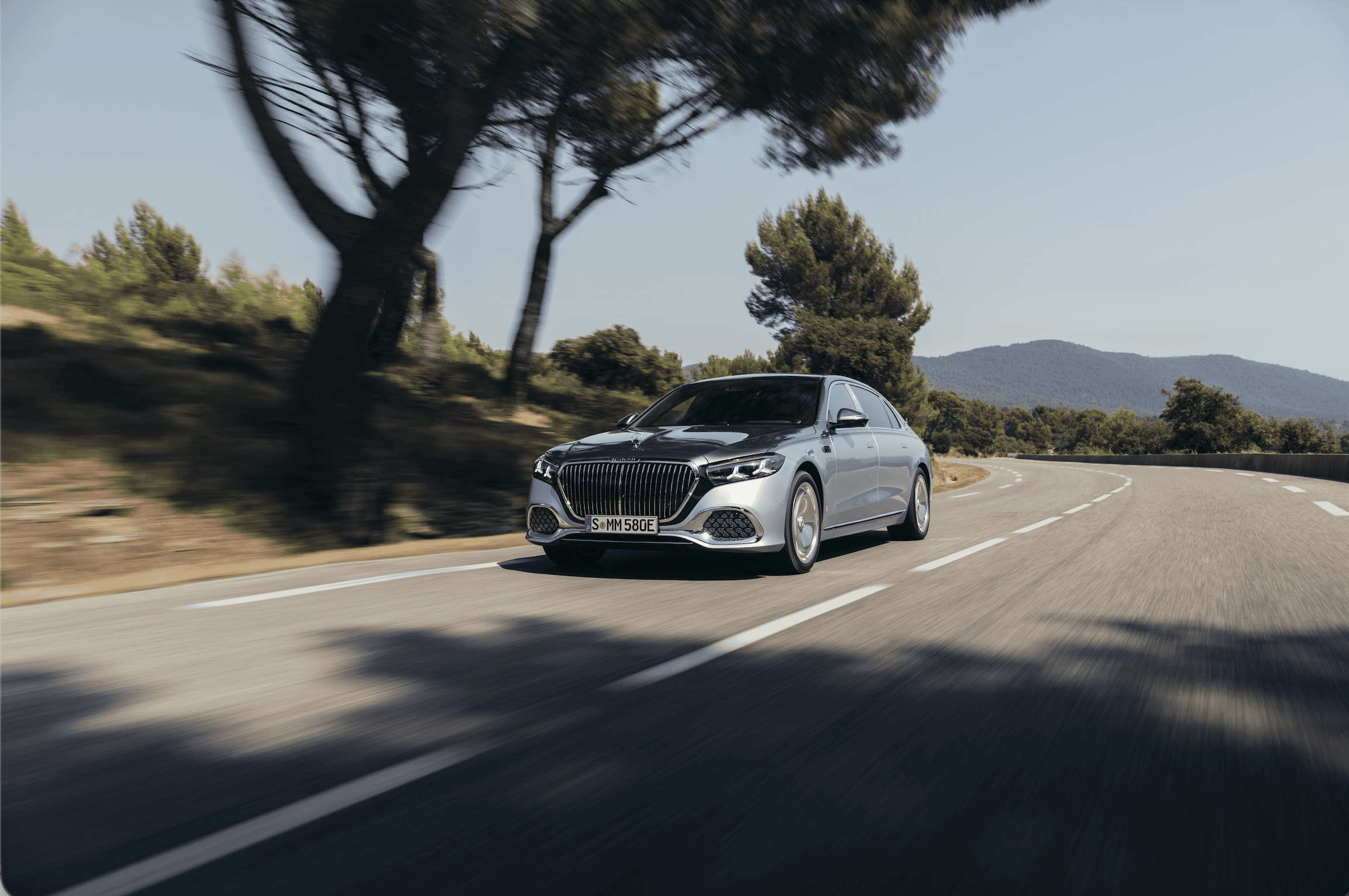
The launch took place along the rolling hills of the Côte d’Azur, which felt right for a car that seems to regard tarmac as more of a polite suggestion than a surface. There was a moment, somewhere between one sun-soaked bend and the next, where the road dipped, and the Maybach simply absorbed it, not so much driving as gliding, the faintest bounce underneath us like a boat easing over a gentle swell rather than a car meeting the road at all. I will say nothing else of the day itself, other than it involved a great deal of sitting very still, gliding along as if on water, and being thoroughly content about it.

Read more: A trip to D Maris Bay

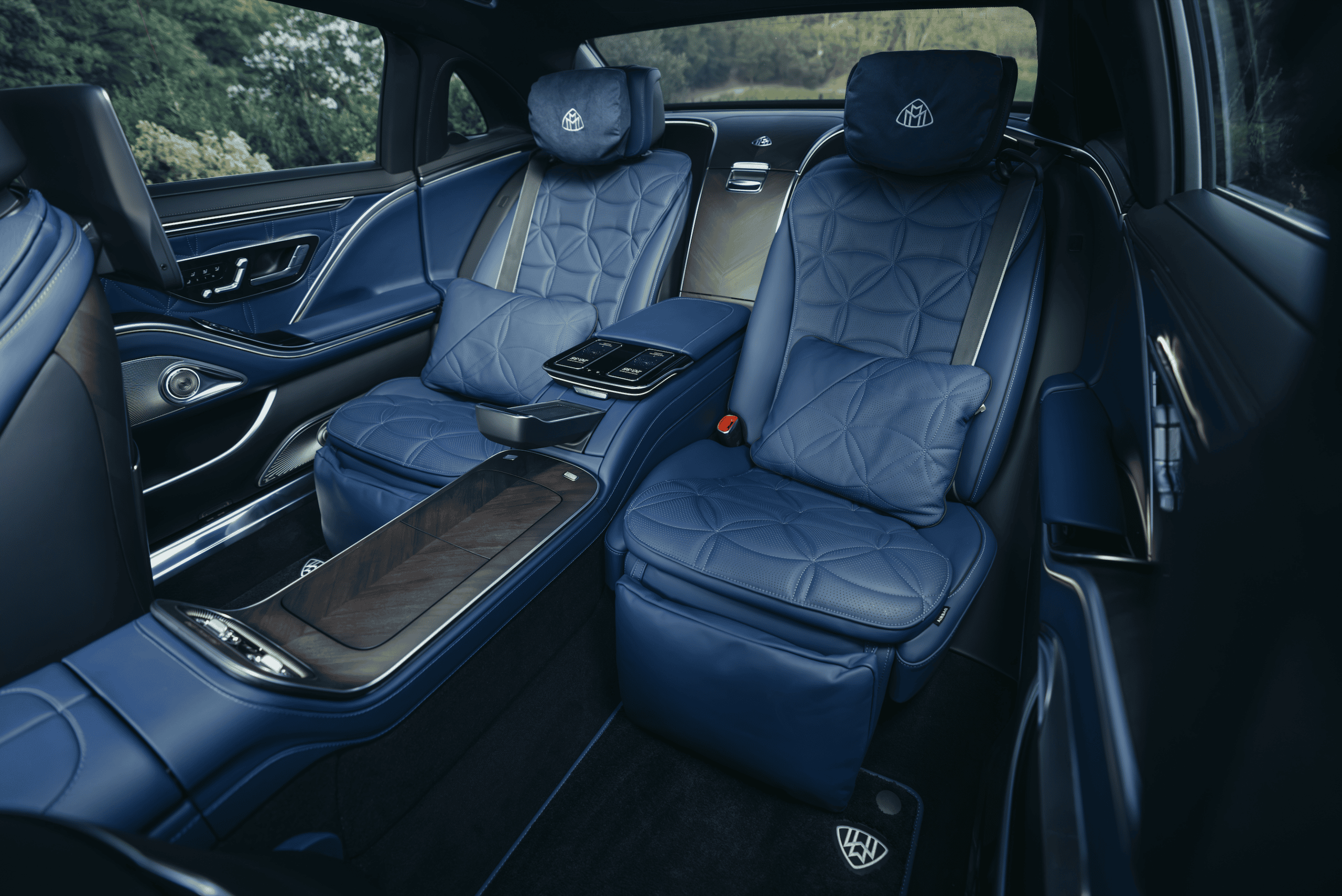
Inside, the Maybach cocooning effect, Mercedes’ own term, and one I now use unprompted in conversation, is achieved through a small orchestra of materials. There is newly available leather-free upholstery, including a high-grade “Mirville” textile, paired with deep white piping and open quilted diamond stitching, which felt suspiciously like sitting inside a very expensive cloud.

The interior of the Mercedes-Maybach is described by Mercedes as “cocooning”

Open-pore oak trims the centre console; the rear seats come with their own climate zones, their own screens, their own small kingdom of buttons, which I did not touch for fear of accidentally ejecting myself. Silver-plated Robbe & Berking champagne flutes sit in bespoke holders behind the rear armrest, kept perfectly chilled by a dedicated refrigerated compartment, a detail so unnecessary, so gloriously over-engineered, that I found myself rather moved by it.

Ambient lighting shifts through 199 LEDs and 64 individually selectable colours, including a rose-gold hue that appears, rather charmingly, to have been invented specifically to flatter the Maybach badge on the steering wheel. The new MBUX Superscreen glows beneath the dash like something from a very tasteful spaceship, and the whole cabin hums with the sense that someone, somewhere, has thought about this rather harder than is strictly necessary, which, in the world of Maybach, is rather the entire point.

Annie Preston took the Mercedes-Maybach for the ultimate ride through the hills of Côte d’Azur

This is a throne room on wheels, endlessly considerate of the person sitting in the back, that our readers will always find themselves in, whether gliding to a gallery opening or being delivered, unhurried and unruffled, to dinner. I was simply testing it out on their behalf.

Read more: Linder through the highball glass

I may not be trading in my Mini anytime soon. But I will admit that reversing out of the car park afterwards, back to my small, cheerful convertible, felt for one brief moment rather like stepping out of a Luxury hotel suite and back into a rather charming tent.

mercedes-benz.co.uk

mercedes-maybach.com

Share:
Reading time: 4 min

The airy and historic lobby area

The majestic Four Seasons Istanbul in Sultanahmet is a quiet sanctuary shouldered by the city’s historic marvels. Darius Sanai checks in

Follow LUX on Instagram: @luxthemagazine

Those who have been to Istanbul, presumably including the original Byzantine and Islamic conquerors, will have noted that, despite its many undoubted wonders and thrills, this is not an easy city to navigate. The modern city, in any case, sprawls on two sides of what is basically a sea, and each side itself is split into distinct and distant areas of interest. A fascinating city it certainly is, a walkable one it is not.

Which is why it was such a pleasure, privilege and surprise to stay at the Four Seasons Hotel, Istanbul at Sultanahmet. Slightly unbelievably, this hotel is situated in a palatial building literally next door to the celebrated Hagia Sophia mosque (until 700 years ago a Byzantine church), the Blue Mosque and Topkapi Palace, the three greatest and most unmissable sights in what was once Constantinople. This is, in fact, the only truly walkable area of Istanbul. It is so close to these landmarks that you could easily zip wire into any of them, although the security officers patrolling the area would probably have something to say about that.

The palatial exterior of the Four Seasons Hotel, Istanbul at Sultanahmet

Arriving at the Four Seasons Sultanahmet from the hub of the city is an utterly tranquil experience. It is a boutique hotel, and you are greeted by your personal receptionist and taken up to your suite to sign in, via a delicate garden courtyard with plenty of shelter from the summer sun. Our suite had views over the courtyard to the tops of a few historic buildings nearby. There was not a sound apart from the birds.

Read more: A trip to D Maris Bay

The interiors of this palazzo (part of it was once a prison, although you would never guess) are artfully done, with clusters of paintings and prints along the corridors. It feels as if you are in the home of an aristocrat. Downstairs, the spa is probably the most pleasant luxury hammam experience in the world. A hammam, an old Turkish experience combining elements of Roman spa baths and much else, is always an invigorating experience but not always a luxurious one. Here, it is both, as you have your own wet solarium to yourself where you lie on a warm marble bed and are scrubbed, washed, exfoliated and splashed by your hammamiste. Much more involving and, we thought, relaxing than any regular spa experience.

The hotel’s bi-level Beyzade suite

The restaurant, Avlu, is delightfully located in a pavilion in the courtyard, sheltered in summer and warm in winter. The Tarhana soup and Topkapi chicken were highlights of the modern Anatolian menu. On the following night, just as enjoyable, in the boutique-like bar area elevated slightly above the courtyard, we experienced beautiful service accompanied by the find of our stay – a dry, focused Turkish sparkling rosé wine from the Ankara region, which we felt was more than a match for any rosé Crémant, and more interesting to boot.

Read more: A sojourn in Egypt

In our minds, the Four Seasons Sultanahmet (there is another, bigger Istanbul Four Seasons on the city’s main waterfront, with more facilities including a swimming pool) is a city resort with a distinctly peaceful, holiday air. Unlike some city resort hotels, it is not trying to be a business hotel for some and a leisure hotel for others. It is a place where you can go to get away from it all, right in the middle of the oldest part of Istanbul, with city walls, and a few paces from three of the world’s most historic wonders.

fourseasons.com/sultanahmet

Share:
Reading time: 3 min

Retreating to the cyprus studded hills of Tuscany, LUX Editor-in-Chief Darius Sanai checks into Villa San Michele, following its major renovation

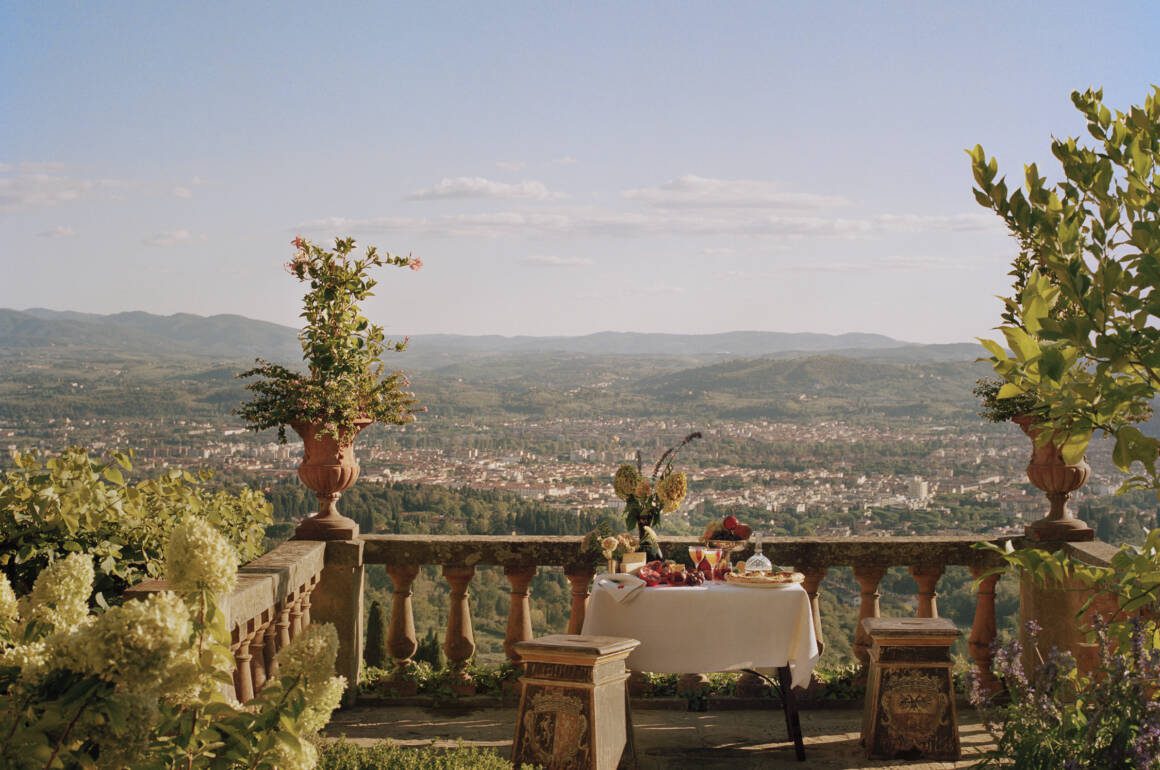
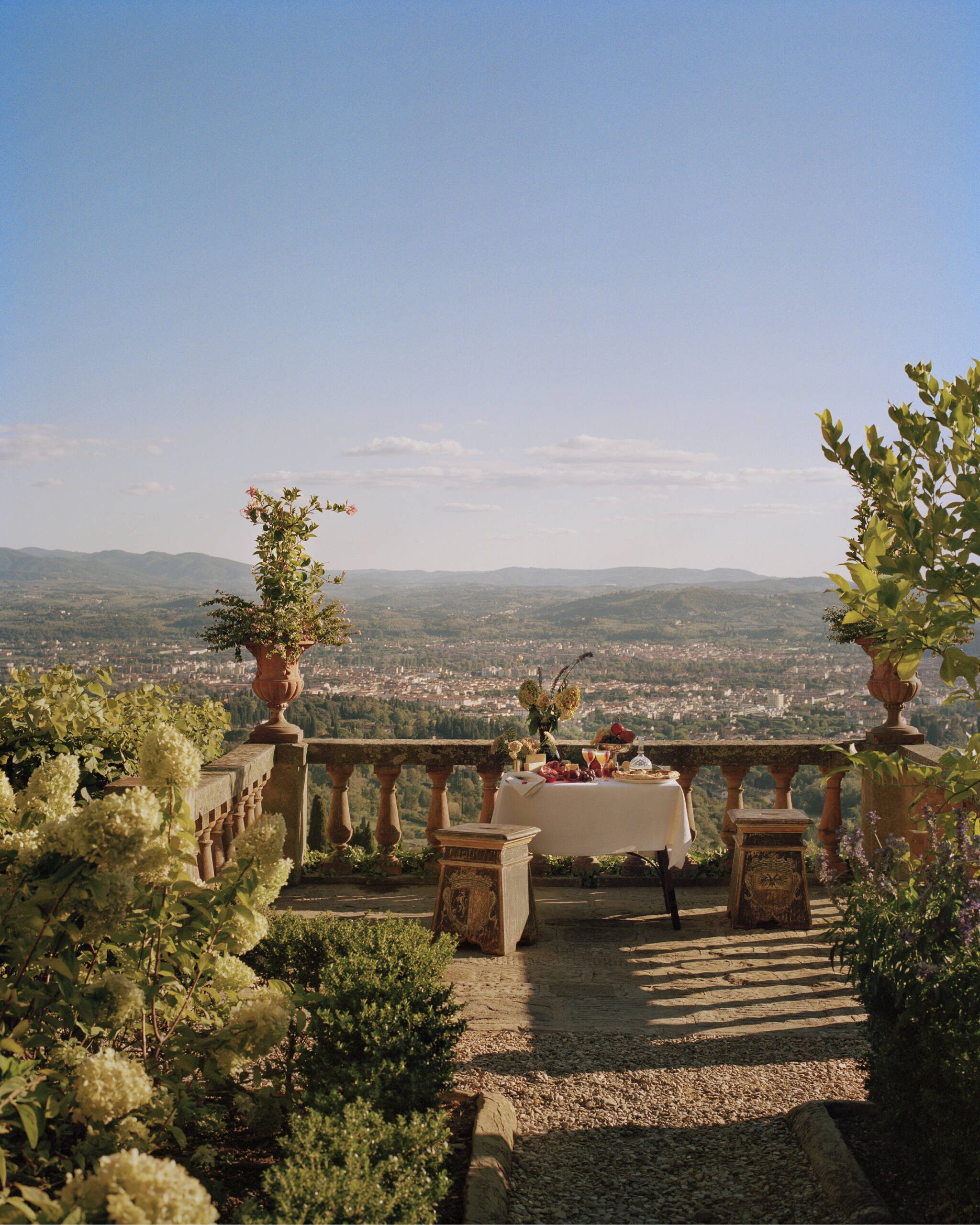
One of the most celebrated hotels in the world just got even more sublime. Anyone who has stayed at the Villa San Michele in Fiesole, above Florence, may be forgiven for thinking there wasn’t much to improve, and when your hotel was once a Renaissance-era monastery that watched down on the Medicis from its perch above the city, any refresh has to be done with the ultimate harmony.

Follow LUX on Instagram: @luxthemagazine

The reopening, with 39 completely redesigned suites and rooms, sees even more of a focus on Tuscan craft, new menus from the breathtaking restaurant with terrace, and a brand-new Guerlain spa that even Lorenzo de Medici would be envious of. The Tuscan views, gardens and woodlands remain the same.

villa-san-michele-florence

Share:
Reading time: 1 min

A view of Silence beach, where guests at D Maris Bay can enjoy the idyllic scenery

Nestled between the Aegean and Mediterranean seas, D Maris Bay offers a masterclass in understated luxury. From secluded beaches and world-class dining to designer boutiques and cinematic arrivals by yacht, this exclusive retreat in Turkey blends privacy, refined hospitality, and immersive experiences into one of the Mediterranean’s most coveted escapes. LUX Correspondent Maria Webster reports

There’s something undeniably cinematic about arriving at D Maris Bay. Perhaps it’s the winding drive through the Datça Peninsula, where the landscape begins to dissolve into impossible shades of turquoise and deep Aegean blue, just as the Mediterranean Sea meets the Aegean in a quiet, almost imperceptible collision of two worlds. Or maybe it’s the feeling that the resort exists in complete isolation, folded into its own private stretch of coastline where the outside world seems to fade out entirely at the edges of the land. That remoteness is precisely what gives D Maris Bay its rare sense of exclusivity – a place shaped around privacy, discretion, and the kind of escape sought by high-profile guests wanting distance from public attention.

Follow LUX on Instagram: @luxthemagazine

Life here unfolds at an entirely different pace. Mornings begin slowly with the scent of pine trees and wild Cretan rockrose drifting through open terraces, accompanied by the soft rhythm of the sea below. I stayed in a room with a wonderfully calming atmosphere and uninterrupted views across the bay – the kind of place where mornings were spent quietly with a cup of coffee, listening only to birdsong in complete silence as the coastline slowly came to life. Breakfast at The Terrace easily stretches into late-morning coffee overlooking the bay, while swims become long, unhurried rituals rather than brief interruptions to the day. There’s a natural fluidity to life at D Maris Bay that makes even the busiest schedules feel impossibly far away.

World-class dining at D Maris Bay includes Manos, a restaurant where the atmosphere carries a distinctly Greek spirit – celebratory, expressive, and deeply rooted in tradition

What struck me almost immediately was how even the arrival experience reflects that same atmosphere of effortless discretion. The resort is uniquely equipped to welcome guests by land, sea, or air, with its own private helipad and dedicated mooring facilities for yachts arriving directly at the bay. Guests can move seamlessly from boat to suite within moments, reinforcing the sense that every detail has been designed around privacy and ease. For those arriving by private jet, helicopter transfers from Dalaman or Bodrum airports transform what could be a logistical journey into something cinematic in itself, skimming across the coastline before descending directly into the resort in just under half an hour.

One of D Maris Bay’s most distinctive qualities is the variety of its beaches, each with its own atmosphere and personality. Bay Beach acts as the social heart of the resort – elegant, expansive, and vibrant, where the clarity of the water feels almost surreal. Silence Beach x Zuma offers the opposite mood entirely: quieter, more contemplative, where the soundtrack narrows to wind, water, and distant movement across the bay. At Manos Beach, the energy shifts again into something more celebratory, particularly in the evenings when music, cocktails, and dining spill naturally towards the shoreline.

Meanwhile, La Guérite Beach brings a distinctly Riviera-inspired atmosphere, balancing beach culture with polished Mediterranean glamour. Maris Beach sits closer to the heart of the resort, offering a more classic, relaxed shoreline experience, while Hidden Beach feels more tucked away and secluded, a quieter pocket that feels slightly removed even within the resort itself. Alongside these are smaller coves and platform-style areas that offer pockets of near-complete privacy, allowing guests to move between very different atmospheres without ever leaving the coastline.

Food plays a central role in that rhythm. Dining at D Maris Bay feels less like moving between restaurants and more like travelling through different experiences and cultures over the course of a stay.

The terrace during sunset at Zuma, which offers contemporary Japanese dining

On my first evening, I visited Zuma, one of the world’s most recognised contemporary Japanese dining destinations. As the sun disappeared behind the bay, the entire atmosphere seemed to shift into another register entirely. There was an understated glamour to the room – elegant, international, quietly electric – with beautifully dressed guests moving between tables as the scent of expensive cigars and refined perfumes lingered in the warm night air.

What makes Zuma so compelling is the precision behind it all. The menu balances restraint with boldness effortlessly, from beautifully delicate sushi and sashimi to robata dishes layered with smoky depth and texture. Every plate feels intentional without ever appearing overworked, perfectly suited to long evenings that unfold slowly by the sea.

Read more: Linder through the highball glass

Yet it was D Maris Kitchen that stayed with me most personally. In contrast to the international polish elsewhere, it offers something far more grounded and soulful -an intimate expression of Turkish culinary heritage. Led by Chef Turan Hantas, the restaurant feels deeply personal, shaped by a genuine reverence for local ingredients and traditional flavours. His passion for Turkish cuisine is evident in every detail, from the careful sourcing of produce to the quiet precision of each dish. Meals begin with vibrant mezzes and fresh seasonal salads before moving into beautifully executed grilled dishes rich with smoke and layered flavour. Everything feels honest, generous, and deeply connected to its surroundings. Then, at the end of the meal, comes a simple but meaningful gesture: a glass of traditional Turkish tea, grounding the experience in something comforting and familiar.

The Dior boat, which offers guests at D Maris Bay a private luxury mode of travel

Lunch at Aurora Capri brought an entirely different mood. With more than 130 years of history behind its name, the restaurant carries a quiet confidence that mirrors the spirit of Italian coastal dining itself. It became one of those effortless afternoons where lunch slowly dissolves into late afternoon conversation without anyone noticing the time pass. What stood out most was the simplicity of the menu – beautifully executed pizzas with unmistakable Neapolitan character, vibrant salads, and ingredients chosen with genuine care. Even the tomatoes, brought directly from Capri, carried a sweetness and depth that subtly transformed the dishes. It gave everything a sense of authenticity, as though a small piece of the island had travelled across the Mediterranean with them.

The cocktail menu follows that same spirit of understated Italian ease. Aurora Peach Bellini felt like the obvious choice: light, fragrant, uncomplicated, and perfectly suited to a long seaside lunch where time begins to loosen its grip.

Read more: The heart of London’s art circuit at the Royal Academy

Another memorable evening unfolded at Manos, where the atmosphere carries a distinctly Greek spirit – celebratory, expressive, and deeply rooted in tradition. What began as a relaxed dinner, gradually evolved into something far more immersive as live music filled the space and guests were drawn closer together by the energy of the evening. At one point, plates were broken in celebration, a gesture tied to wishes and shared joy that felt far more cultural than performative. What makes Manos memorable is not simply the spectacle, but the feeling of participation – the sense that you are not merely watching the evening unfold, but becoming part of it.

Fashion, too, feels naturally embedded into the world of D Maris Bay. Dior’s Riviera aesthetic subtly shapes parts of the resort, from the atmosphere around the Dior pool, where guests drift between loungers and refreshing turquoise water beneath the Mediterranean sun, to the beautifully designed Dior boutique hidden within the property. More than retail spaces, the boutiques feel like extensions of the resort itself – relaxed, sun-drenched, and carefully curated.

The Dior pool at D Maris Bay, offering guests a private retreat with views of surrounding nature

Informal, the resort’s boutique space, in particular stood out for its thoughtful edit of designers and artisanal labels, including pieces by master jeweller Sevan Bıçakçı alongside beachwear brands such as Eres, Mantero 1902, and Cult Gaia. It never felt overtly commercial, instead, shopping became another continuation of the resort’s aesthetic language.

And then there are the evenings – perhaps the most memorable aspect of all. Across the resort, signature cocktails created in collaboration with world-renowned Italian mixologist Giancarlo Mancino, arrive polished and inventive. The Terrace becomes especially atmospheric after sunset, when the bay itself feels woven into the experience. Its cocktail menu takes a playful yet refined approach, with each signature drink inspired by a different country, transforming the menu into a kind of global journey through flavour and presentation. It’s a subtle detail, but one that perfectly reflects the resort’s international sensibility while remaining grounded in its coastal setting.

What D Maris Bay understands so well is that modern luxury is defined by atmosphere, pace, and emotional immersion. Somewhere between the stillness of the sea, the discreet glamour, and the sense of complete removal from the outside world, the resort achieves exactly that.

dmarisbay.com

@dmarisbay

@jvprinternational

#beyondwords


Share:
Reading time: 7 min

Four Seasons, Singapore offers a terrace pool, gym set, and longevity centre to guests

Like any city, Singapore has its phases when different parts of its desirable areas are in vogue. For a while, both Marina Bay and Sentosa were seen as the places to stay for the first-time luxury visitor. And while they have a lot going for them, wandering out from the Four Seasons Hotel, Singapore made us realise that Orchard, the city’s original luxury area, still has a lot going for it, too

Follow LUX on Instagram: @luxthemagazine

For starters, you are right in the centre of things, not on the edge of them, with luxury shopping and restaurants on your doorstep and the general joie de vivre of being in the centre of a world city.

‘One night we went to Nobu, overlooking the Japanese garden, more characterful and atmospheric than some of the Nobus we know’

And given that it is in the most expensive area of one of the most expensive cities in the world, the Four Seasons has an astonishing amount of both variety and space. The third floor, something of an eagle’s nest above the city – this is a very green area, looking down at the treetops – is something of a hub for the hotel guest.

To one side is a big outdoor pool and terrace with treetop views. To the other, an excellent gym set in its own Japanese garden and one of the world’s most respected longevity centres, if you can foresee a really long stay at the hotel. For upper-tier guests, there is also the club lounge, with its rotating menu of snacks all day and champagne and cocktails, artfully presented, complementary. Our room, far higher up, had a stunning view across the city.

The lobby welcomes guests into a space that fuses art deco and Singaporean design

It is the dining, though, that also makes the Four Seasons stand out. One night we went to Nobu, overlooking the Japanese garden, more characterful and atmospheric than some of the Nobus we know, with cuisine of the usual standards. On the next, we had an even more immersive experience of the wider region at the hotel’s atmospheric Chinese restaurant, Jiang-Nan Chun.

Read more: Linder through the highball glass

Obviously, Singapore is a way from China, but its history and culture meet in parts and the Cantonese cuisine was worthy of Hong Kong or Guangzhou. We also enjoyed the refined, quiet but purposeful atmosphere and superb service, as well as our midnight stroll around the quiet streets of Orchard afterwards.

fourseasons.com/singapore

Share:
Reading time: 2 min