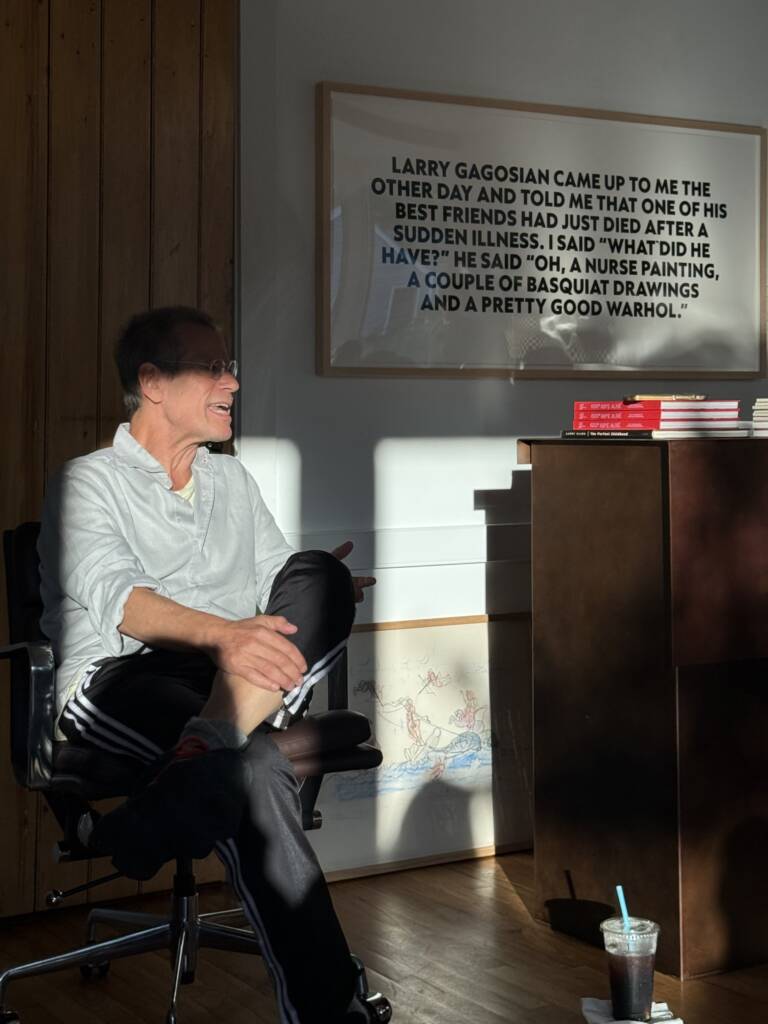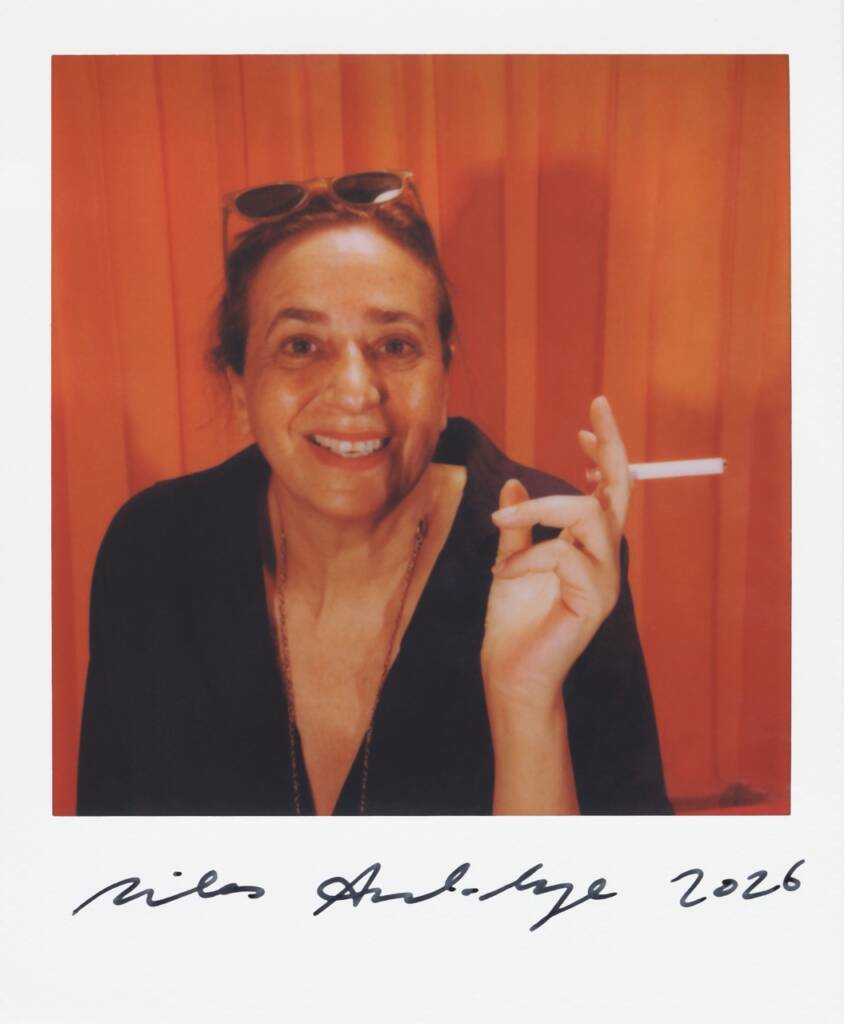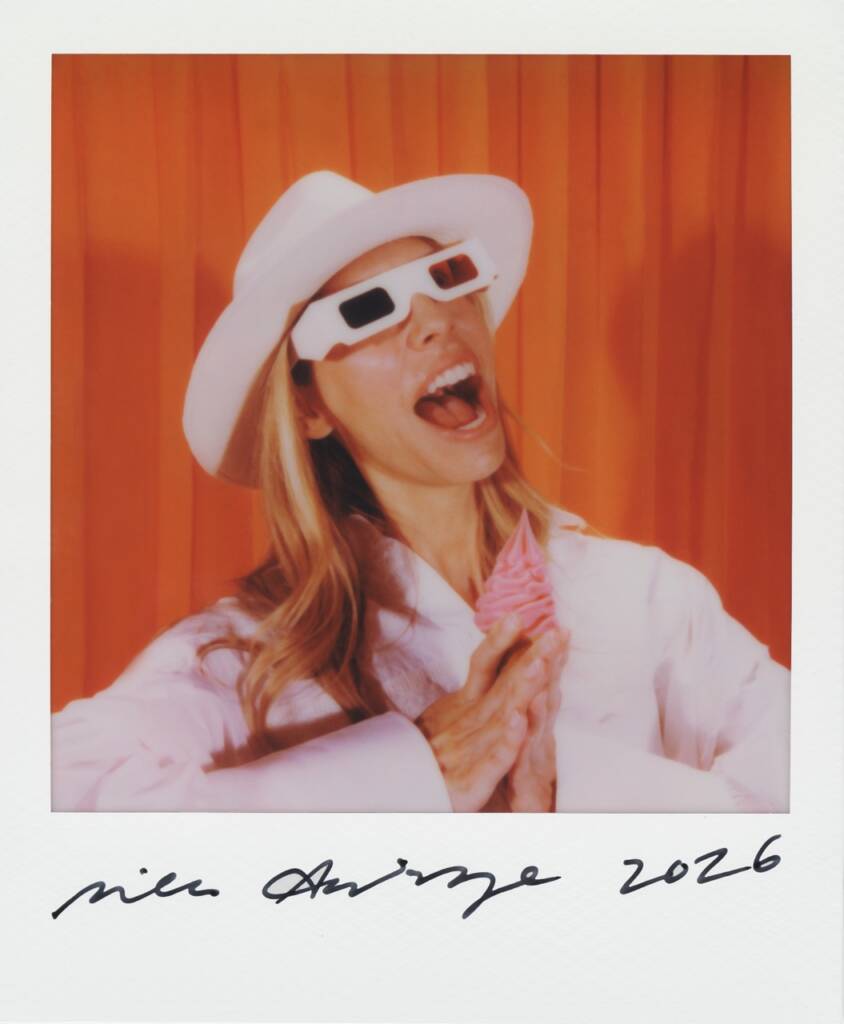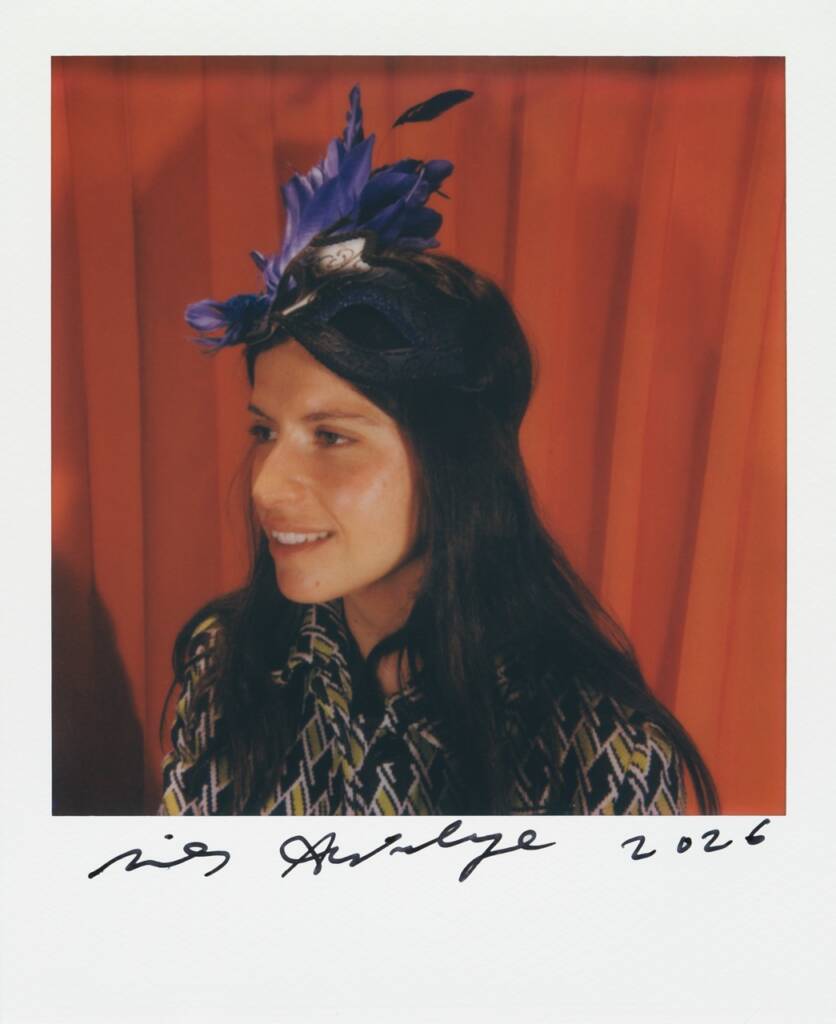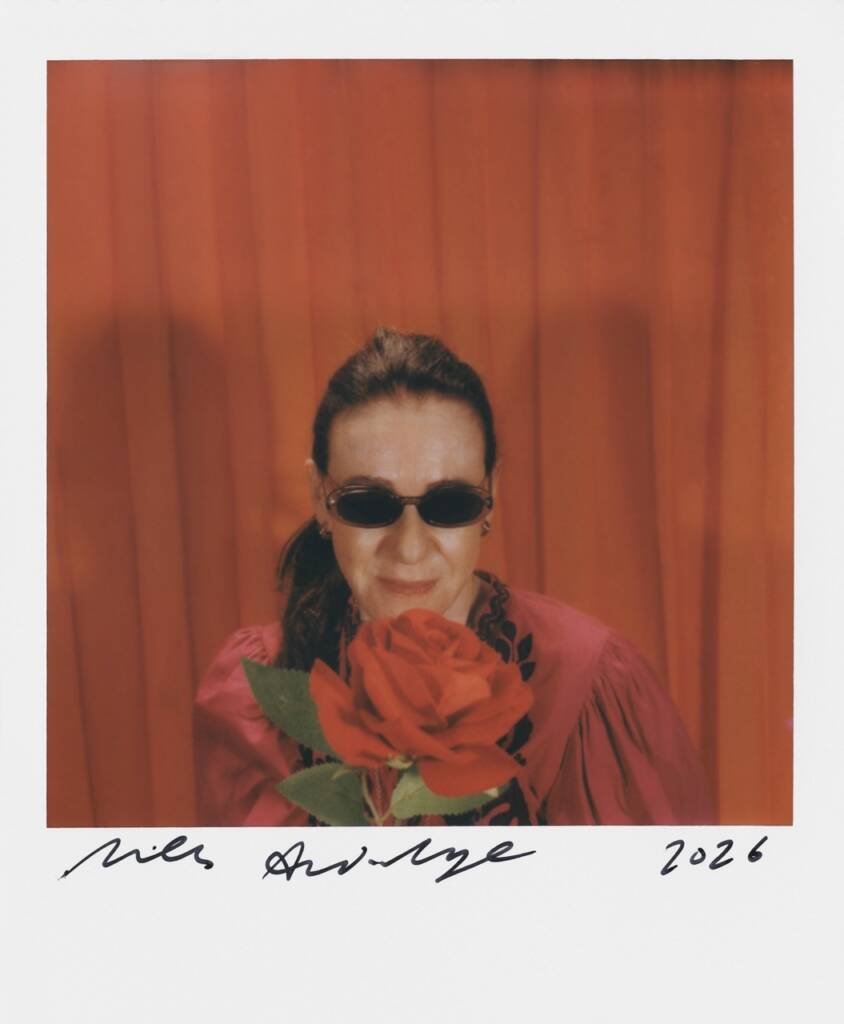
“Autocrats, extremists and fascists hate art. Art is a threat to them because it humanises the people they demonise”, Arch Hades photographed by Jon Gorrigan, 2026

Having rocked Venice with a solo exhibition during the Biennale, artist and poet Arch Hades unveiled Happening, a play about how artists can resist fascism, during Frieze London. More shows follow around the world. Thoughtful, intellectual and with a powerful moral compass, she speaks with curator and impresario Clayton Calvert about writers, geopolitics and propaganda

Follow LUX on Instagram: @luxthemagazine

Clayton Calvert: How and when did you begin to pursue life as an artist? Did you start by writing or have you always worked in various media?

Arch Hades: It didn’t begin with artistic intention, but I have been keeping diaries for nearly two decades now. At an early age I realised my memory is garbage (my therapist keeps calling it “dissociative amnesia”) and, while I cannot recall years of my life, at least I wrote it all down as it was happening, so I can revisit those journals whenever I want. I kept the habit, it’s one I enjoy, and now a great volume of my work is the product of fastidious journalling, so I’m glad I put in the time. When you read widely and write frequently, you organically find yourself drawn towards a particular style or type of expression, and the moment I began to feed on confessional, Romantic, lyrical poetry, I knew I somehow must become a poet. I must become willing to risk embarrassment in pursuit of human connection.

Read more: Maryam Eisler interviews Kenny Schachter

CC: What is your artistic process like? How do you determine which ideas to explore as well as which concepts work well together?

AH: Everything starts with language. If I feel like I have nothing, that I am nothing, I still have words. I can ride language as if on horseback, and it can take me anywhere, including more deeply into myself. To write one book, I have to read at least 20. The more I read, the more I can write. To paint one picture, I have to look at a hundred different visuals and see what my mind retains, what I keep coming back to and why. All the art objects I make, the sculptures and the soundscapes, originate from my poetry. The paintings originate from a mixture of existentialism and whatever else I’m experimenting with at the time, or whatever I’m influenced or moved by. I wish I had a formula regarding which concepts work well together visually! But this process is largely intuitive. To start, I must explain to myself what idea I want to express in a painting and then figure out how to best translate that visually. It’s an ongoing wrangling. Goodness knows it doesn’t always work.
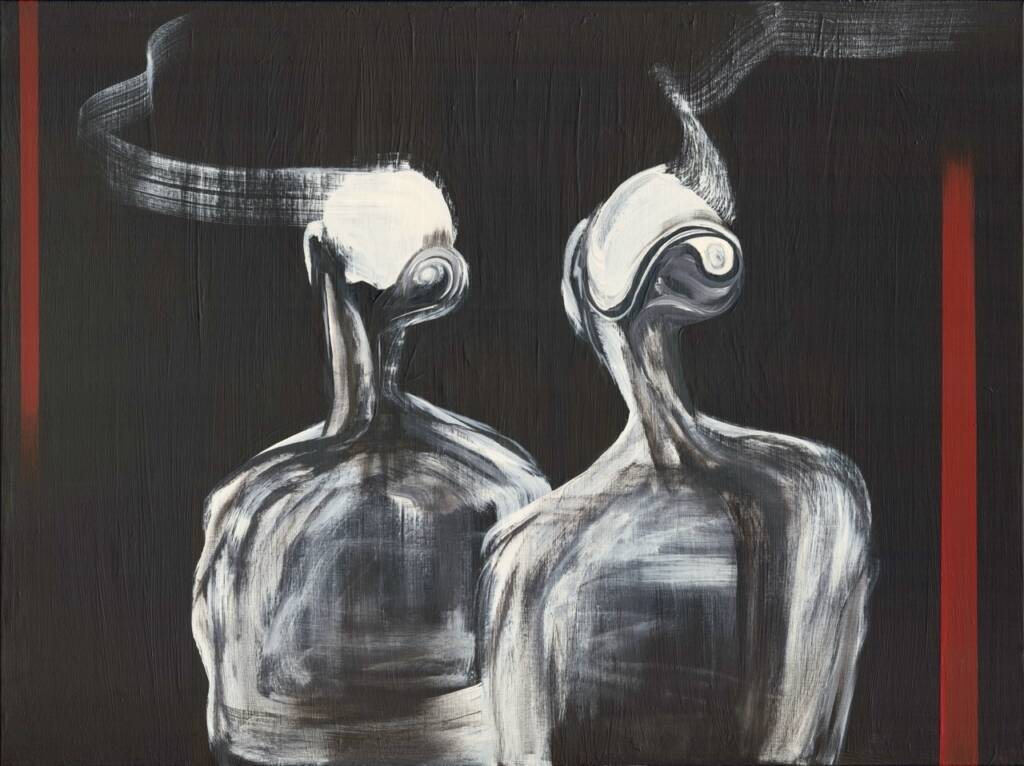
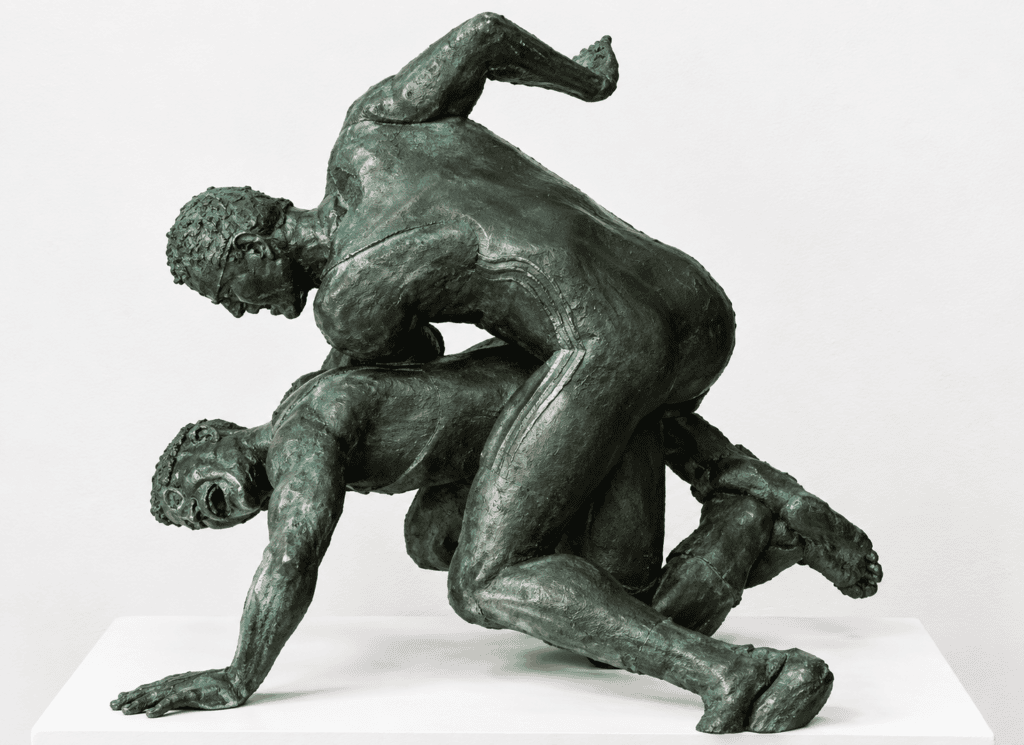
Pair, 2024 by Arch Hades

CC: Who are some of your greatest inspirations as artists and writers?

AH: In terms of writers: Somerset Maugham, Kurt Vonnegut, Joseph Brodsky, Mary Oliver. In terms of artists: it fluctuates (currently, I’m knee-deep in Byzantine iconography), but the staples are Francis Bacon, René Magritte, Franz Sedlacek. In terms of performance: Alan Shore played by James Spader. Before performing live, I binge-watch his best closing arguments backstage as a ritual.

CC: How does your work as a poet overlap with your painting, sculpture and performance practices?

AH: First, whatever the work is, it has to be honest – that comes from poetry. Half the poet’s job is to embrace radical honesty. The other half is to do it well, in an original, interesting way. If I find a thought, feeling or idea is best expressed in an object, sculpture or installation, I do my best to figure out how to best imbue it with my written word. None of my work is subtle. But nothing has ever achieved greatness by being subtle.

Read more: Pirelli HangarBicocca in Milan shows Aki Sasomoto and Luciano Fabro

CC: What do you hope to achieve with your latest project, Happening?

AH: With the rising tide of right-wing extremism, info wars and fear mongering propaganda in a viral, digital era, I hope Happening will convey at least one way individuals can resist autocracy. There are, in fact, many ways we can resist what seeks to crush us. And we must remind others that even if they lick boots, they are more likely to be crushed by those boots than be the ones wearing them.

We must remember that autocrats, extremists and fascists hate art. Art is a threat to them because it humanises the people they demonise in order to seize power and control. Art is a threat to them because it reminds the individual of their autonomy, by deepening empathy and widening our perspectives. Art reminds people that power resides where we believe it resides. And that the nature of evil is nothing more than a lack of empathy.
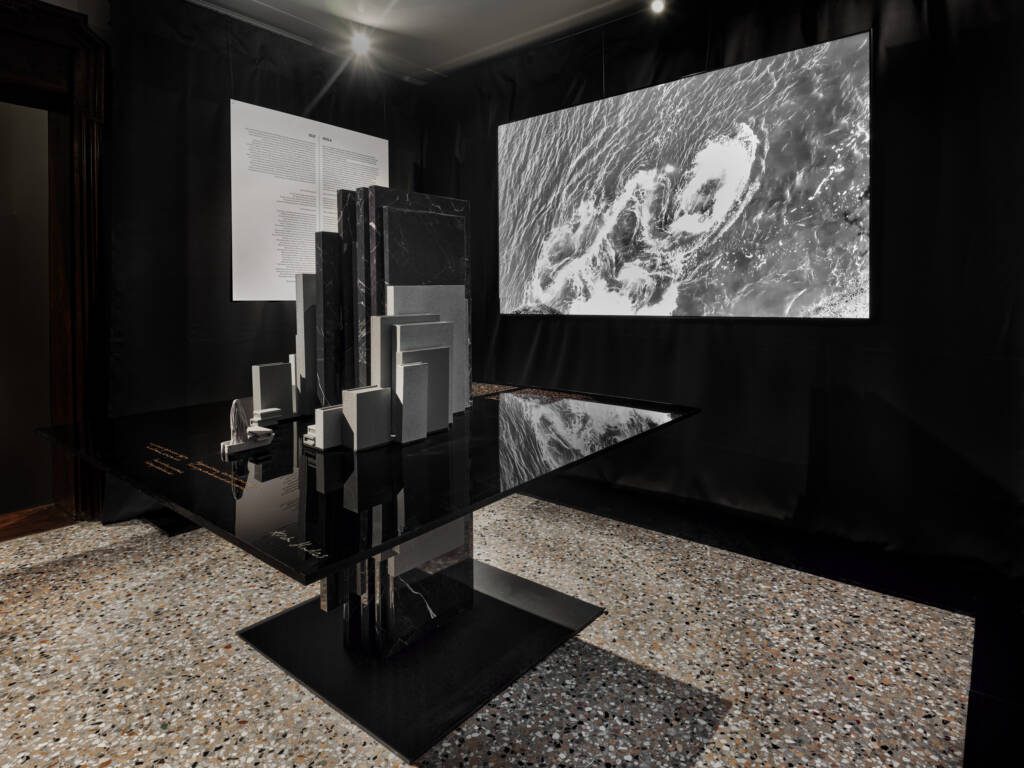
Isle, 2024 by Arch Hades at her solo exhibition Return/Ritorno, Venice, 2026

CC: Do you believe that propaganda is something people need, want and yearn for?

AH: I agree with Jacques Ellul that propaganda is something people have room for. The real power of propaganda is not to convince, but to give you a sense of belonging. It isn’t just foisted from above, it’s a by-product of a breakdown of community, a remedy for loneliness in a society where we have diminishing control over our lives. Propaganda can give you both a community and the illusion of individual agency. It satisfies a need to belong. One of my ongoing purposes in life is to draw attention to the fact that art can provide us with belonging and community. Art, after all, is a product of community itself.

CC: Are you disillusioned with democracy and the current global geopolitical climate?

AH: I’m certainly disillusioned with the current state of politics in late-stage capitalism, which is why I stepped away from politics in the first place. After years in Westminster, I had a Farnsworth “I don’t want to live on this planet any more” moment. But my devotion to democracy has not wavered. Democracy is a dawdling beast, and the wheels of justice and progress spin slowly, but they still spin. Happening is my ode to democracy, my serenade. It’s the main reason for all the freedoms in my life, and all the richness that comes with said freedom.

CC: Your work Return/Ritorno also included provocative text excerpts as well as engaging prompts like: “Am I what I regret? Am I my doubts? Am I my secrets?” Do you have any answers to those questions?

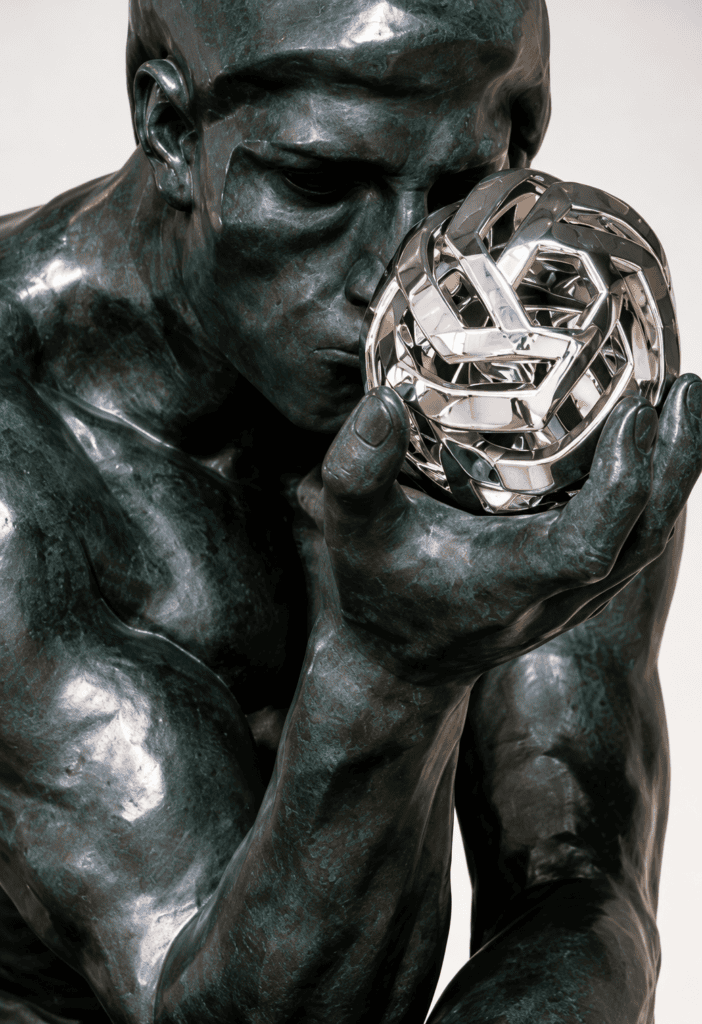
AH: I feel pretty lucky that I live with three regrets, no secrets and most of the doubt is fleeting. But the answer to the riddle of my Sphinx sculpture, which is imbued with many questions directed at what the self can be, is: “You are the sum of your choices”. You are not responsible for what life throws at you, but you are responsible for what you do with it. At any time, you can make different choices and create a different self. Sphinx is my ode to existentialism.

The Witness, 2022 by Arch Hades

CC: What role can art play in the betterment of society? Can it also have an adverse effect?

AH:For me, art will always be an essential in life. If you don’t connect with bigger things (like art, or nature, or love), you will make the mistake of believing you are the big thing.

Read more: Miles Aldridge’s 15 Minutes of Fame Polaroid Project

CC: Do you have moments of self-doubt as you work, and does the process of making art help resolve these?

AH: I shall answer this question by giving you two excerpts from my diary this month: Thursday 6th August, I’ve been painting all day. I feel marvellous. Everything is light again. Monday 10th August, Doubt. Misery. Everything I’m painting is unimaginative to the point of garbage. I am garbage. I am trash. Derivative. Contrived. I need a coffee. But, hey, sometimes you just need a coffee, a break, and then pick things up the next day.

CC: What would be your dream exhibition or project?

AH: Great question. I have a specific exhibition I would love to put on soon (installation! soundscapes! poetry! art objects!), because I’m finally ready to let go of something I’ve been keeping to myself for too long. For too long these memories have felt like a gun I would load myself, and I’d pray for it to jam, and it never would. It’s time to put it all down.

Sphynx, in Venice, 2026

CC: Do you believe your art to be an extension of yourself or a mirror for society?

AH: I hope both. I’m certainly influenced by my environment and I am a tiny part of society. But I hope what I put out there, as an extension of myself, can, in turn, influence other tiny parts of society.

CC: What do you hope is your work’s long-term impact?

AH: I’ll be content if what survives of me is love.

‘Happening’ is on show at No. 9 Cork Street from November 26th – December 19th 

archhades.com

Share:
Reading time: 7 min

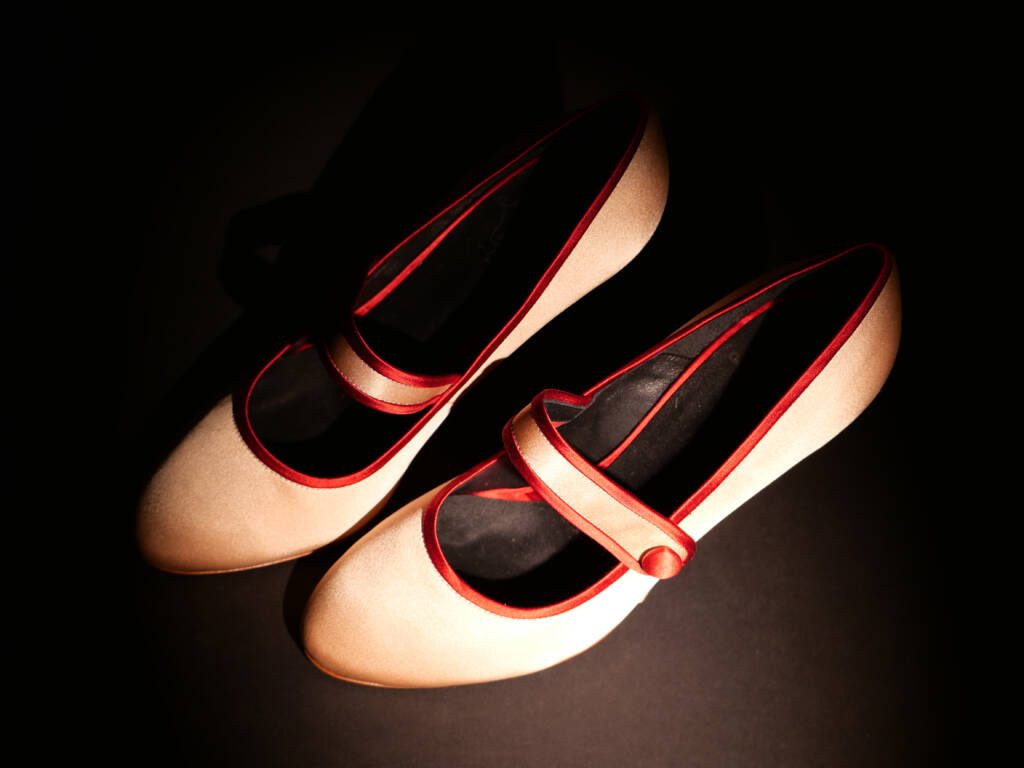
Spearheaded by footwear legend Elizabeth Rickard Shah, Atelier Satur brings Shah’s passion for craftsmanship to the fore, with an artisanal and personalised approach to luxury footwear

Follow LUX on Instagram: @luxthemagazine

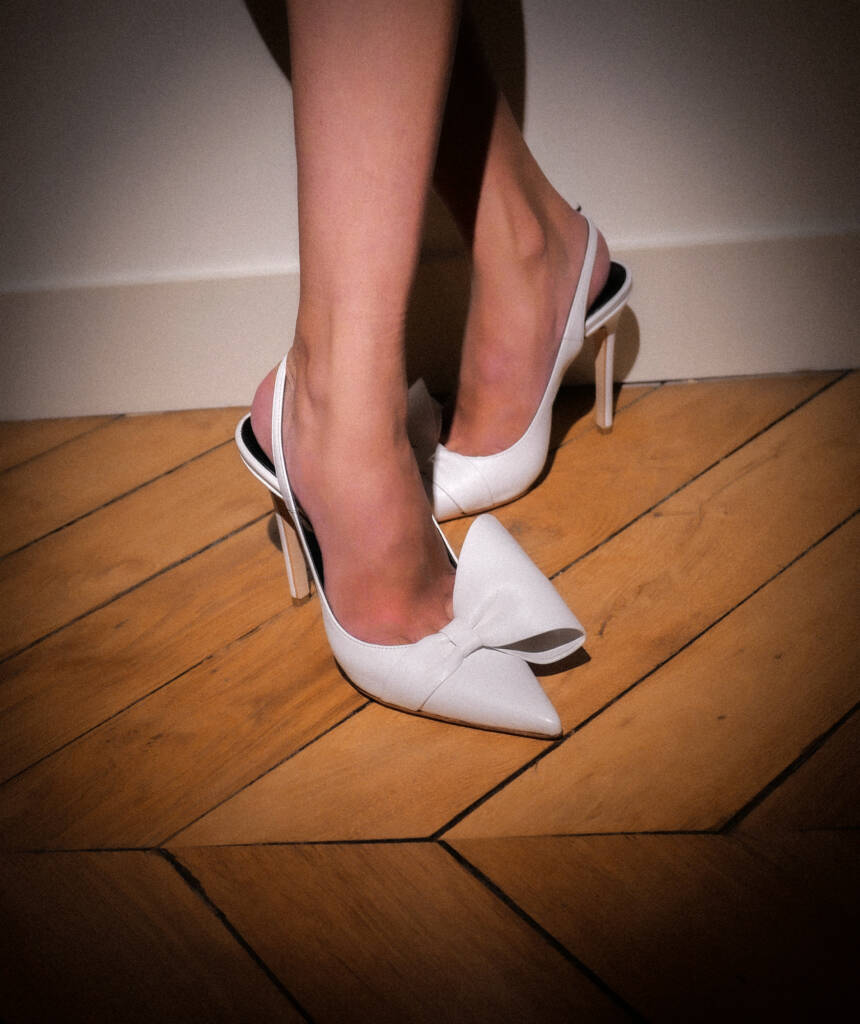
With a working background spanning major brands like Giorgio Armani, Emilio Pucci and Sonia Rykiel, this recent venture is a culmination of Shah’s experience and expertise within the industry, proposing the simplest and ultimate luxury; bespoke shoes, designed by herself and crafted in Italy.

The brand follows on the heels of Rickard Shah, Elizabeth and her husband Binith’s joint venture which reached enormous success in the nineties, offering refined, tailored shoes to the likes of Kate Winslet and Drew Barrymore.

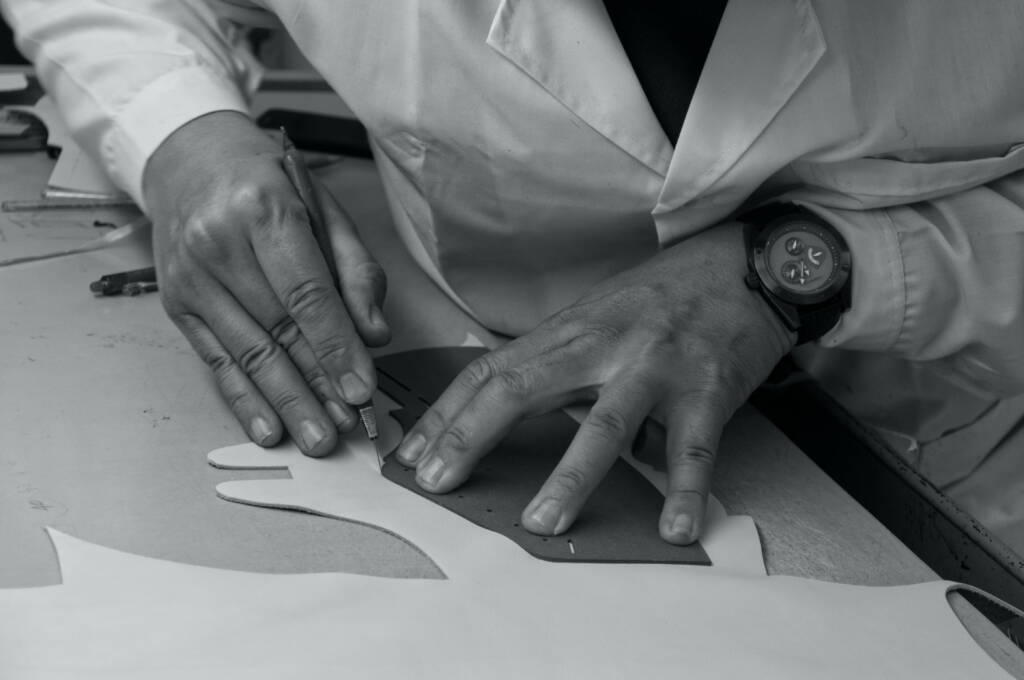
Once Elizabeth designs the shoes around the client’s specific dimensions and preferences in colour and fabric, the shoes are produced in Italy by artisans

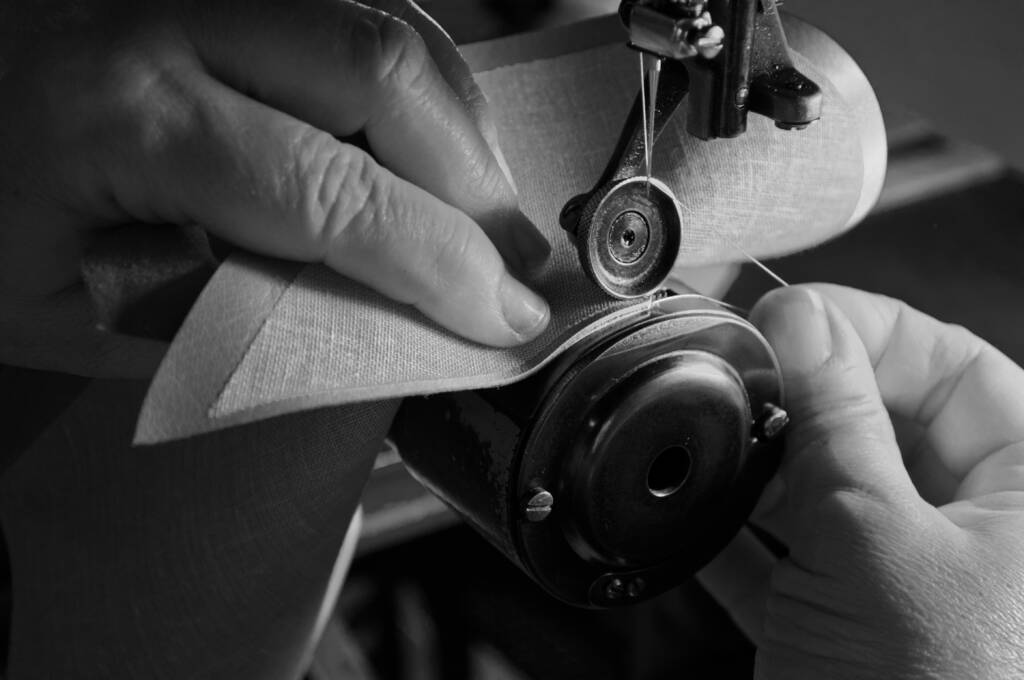
Working on a more artisanal scale, Atelier Satur is a love letter to a bygone era of  shoemaking, drawing bespoke practices to ready to wear. Clients are offered a variety of fabrics, leather and colours to chose from, and can have the shoes tailored to the exact dimensions of their feet. Shoes made on demand take within 2-3 weeks to be made, whereas those made to measure will take around 2-3 months.

Read more: The LUX Patina Art Residency awards its 2026 winner

The production of the shoes in Italy, wherein lies of course a rich shoemaking tradition, underlines the brand’s sense of responsibility towards honouring artisans and their expertise. Shah has made the deliberate, if atypical choice of not investing in traditional marketing, Instagram campaigns or influencers, directing that money instead to the Atelier’s artisans.

Fast fashion’s never ending growth has made quality craftsmanship increasingly less synonymous with luxury brands. Atelier Satur on the other hand, is making an elegant, refreshing case for expert craft.

ateliersatur.com

Share:
Reading time: 1 min

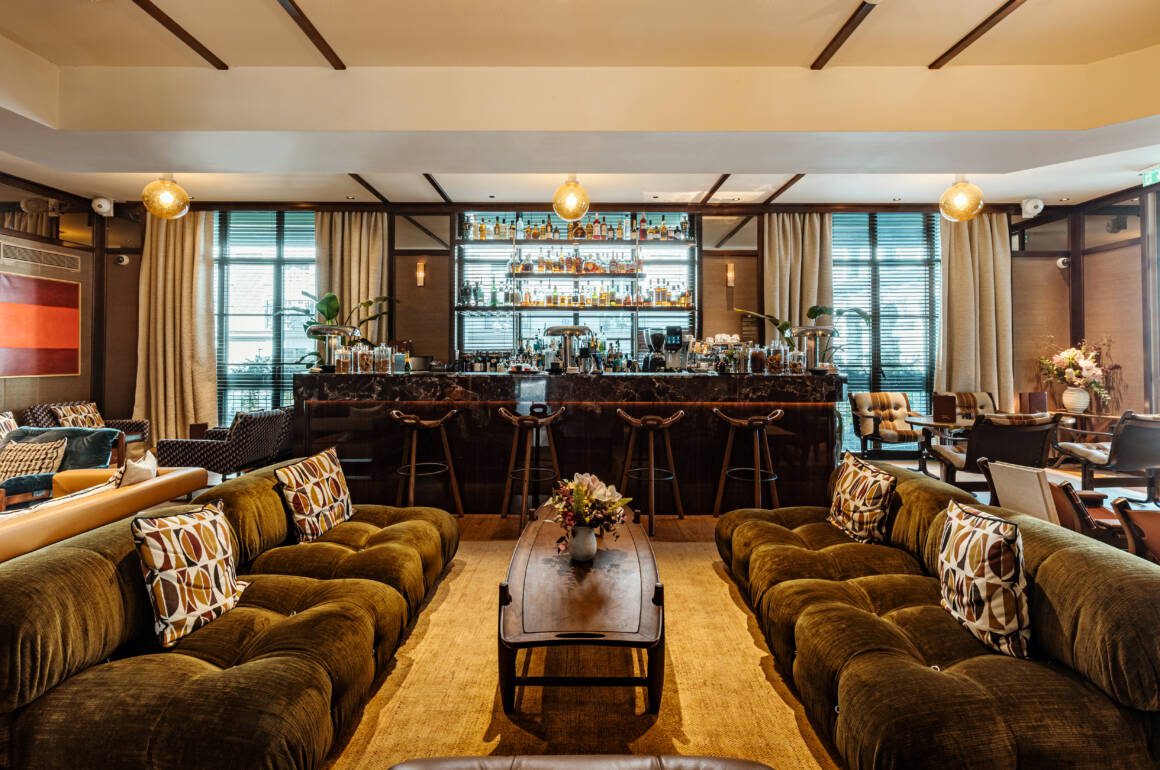
The Norman’s bar is a celebration of modernist design that maintains an intimate, ‘local’ feel

Just off the Champs-Elysees in a quiet street, The Norman combines top-tier design values, luxury service, an intimate feel, and a sense of belonging for anyone with a perspective on style

Follow LUX on Instagram: @luxthemagazine

Any discerning luxury traveller knows the grand Paris hotels, which are the best of their type in the world.

What we didn’t realise, until we visited the Norman, is that Paris also has the best of a different category of luxury hotel – boutique/design/contemporary, or however you want to categorise it.

First off, the Norman is not a boutique hotel in the rather abused sense of the term, a bunch of rooms connected by an on/off receptionist. It’s a dramatically redeveloped 97 bedroom property just off the Champs Elysees, with reception staff that greet you professionally.

Inspired by the work of Norman Ives, the hotel is a tranquil stay despite being but a few steps from Arc de Triomphe

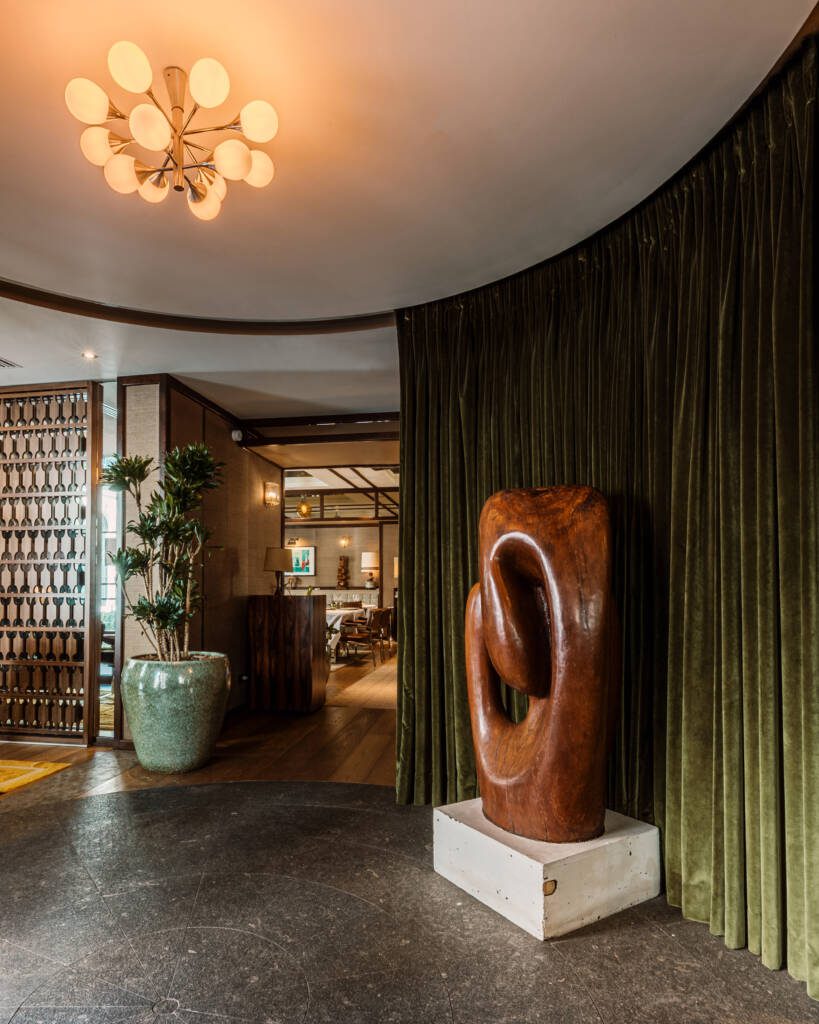
And the design element is not an Instagram friendly touch added by a pay to play interior designer selected by committee. This place has design chic burbling out of surface, which you notice as you walk in, chic reception desk on the left, delightful and tempting lounge/bar on the right. It feels like a place to stay for the most discerning of locals – you are of course the most discerning people in the world.

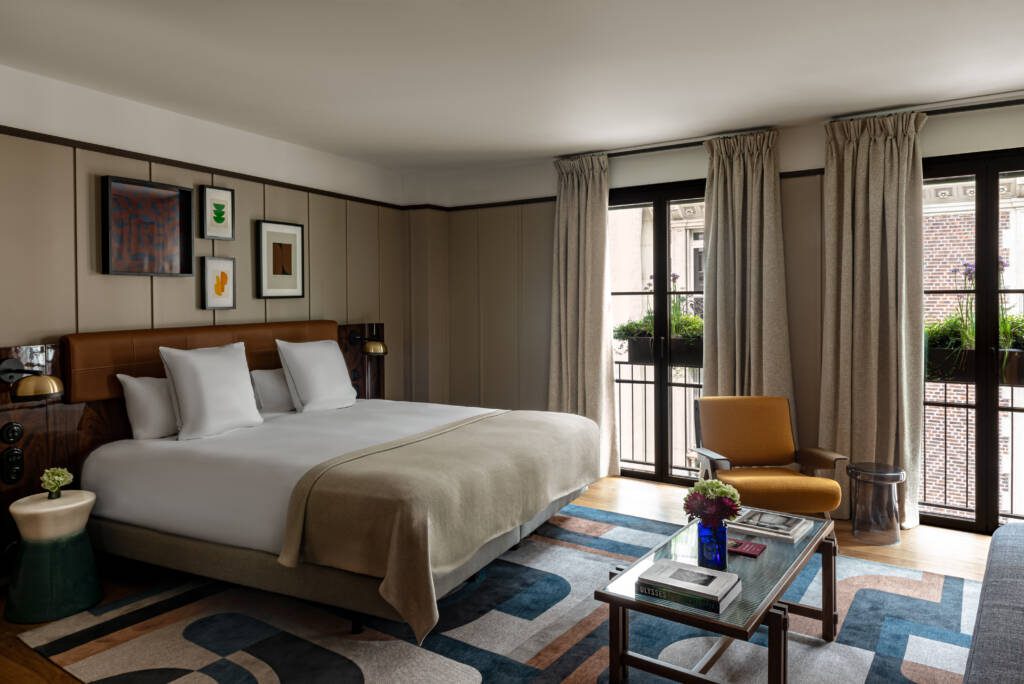
The rooms are a comfortable, contemporary flirtation with 1960s design

Everything here, from the display lamps and prints on the shelves, to the chairs, tables and books, is a thoughtful play on the 1960s, that most celebrated decade of Modernist design and art.

Read more: L’Apogée Courchevel Review

Our room was suitably 60s, also, although translated into a very contemporary comfort. Lots of geometric straight lines, cool patterns on the sofa, 20th century modern furniture, an in-room bar out of Mad Men. It’s quiet, too – despite being a Martini’s throw from the Champs-Elysees, the Norman is on a highly civilised and peaceful side street.

We were pleased to see the bar attracted a mix of the local fashion and design crowd, understated and elegant, and some of the other, equally discerning, guests who were staying in the hotel. This is not a show-off kind of bar, more an intimate “local”.  We didn’t see anyone take a selfie during our entire visit, despite the delightful interior architecture.

The Norman is a stay for a discerning, elegant crowd, offering an education in mid-century design

Hotels have a vibe, not always easy to translate onto paper, and that of the Norman is a place that is intensely comfortable in its skin, its guests, local and international, evidently feeling an intimate collection to the thorough and intellectually based narrative running through the hotel‘s very DNA. If you have style, you’ll love it.

This autumn, Hotel Norman has partnered with DJ Claire-Marie Astruc, who has curated three original playlists; a sonic reflection of the hotel’s spirit. Suites will also include eight vinyl records selected by Claire-Marie, inviting guests into a journey of musical discovery.

hotelnorman.com

Share:
Reading time: 2 min

Moving Target, a visual collaboration between Maryam Eisler and Kenny Schachter

Maryam Eisler speaks with artist, writer, and lecturer Kenny Schachter on text, doubt, and radical honesty within the art world

Follow LUX on Instagram: @luxthemagazine

Maryam Eisler: You’ve spent decades exposing the absurdities of the art world. Has it become more absurd, or are you just better at spotting the performance?

Kenny Schachter: There are always changes in the fabric of the culture, in the machinations of the world. And certainly there have been some significant technological changes over the last ten years. But morality and integrity remain a bell curve.

Human behaviour characterises the art world. The world is small, and the art world is minuscule. Even though things have broadened tremendously through social media, which has really blurred geographical boundaries, the art world still remains a microcosm of the greater social, political and economic landscape. The opportunities are so hard-fought and so limited, and somehow the art world just doesn’t expand. I think a lot of that has to do with the mindset of those who yield  the most influence and authority. They keep it a very small universe, where success affirms success, and there’s very little interest in going beyond that universe, sadly.

ME: You’ve been an artist, dealer, critic, curator, collector and teacher. Which of those roles lies the most – and which tells the truth?

KS: The way I would define myself in 2026, sitting on a park bench with you beside a highway in the Hamptons is: I’m an artist, a writer and a professor, a teacher. I’ve been fifteen years at the University of Zurich, where I serve on the advisory board, and I lecture at the School of Visual Arts, NYU, Yale, Columbia and various other places.

Joseph Beuys said that his greatest legacy in his art career was his teaching, because you’re instilling something, giving something concrete to your students that they can utilise in their lives. But honestly, I also love to write so much because, for me, there’s a very visual, aesthetic quality to putting text down. It has a sculptural, physical presence. I love the way it originates through an ideational concept, then it’s reduced to fragments, then it becomes an outline, and then it takes the form of paragraphs. For me, it has a sculptural effect.

Read more: Miles Aldrige’s 15 Minutes of Fame Polaroid Project

The fact is, I don’t differentiate between teaching, writing and making art. That’s what I do. Even when I’ve had these crazy auction sales out of economic necessity to make a living, I’ve turned them into something else. I sat at Sotheby’s and filmed a documentary, and most recently I did a sale at Phillips and sat there the whole week and made a performance out of it.

People in the art world always silo you. They’re always compartmentalising, always pigeonholing you. Life is not so simple. Blurry boundaries, for me, are tremendously interesting. I don’t differentiate between any facet of what I do. It’s all one and the same. It’s under the rubric of art, and art imbues my life with meaning. Besides my kids, it’s all I care about.

Cognitive Outsourcing (GPT Variant) in patinated bronze, 2026

ME: If you could create an exhibition anonymously, who would be in it? And who definitely wouldn’t be in it?

KS: That’s impossible to answer. My art would be in it! If you come and see the way I live, there are some artists who surround themselves with the work of their peers, some artists who only surround themselves with their own work. My life is wallpapered in art. For me, it’s a window into another experience. Every day I rub my nose against a drawing or a painting.

If you come to my house – and whoever reads this is more than welcome to, if they say hello and please – I honestly mean that. We really need that kind of generosity of spirit today. There’s such a lack of humanity, socially and politically.

My studio, where I work, is surrounded by small works: lots of drawings, small objects, small paintings. Every piece tells a story. It’s some form of personal relationship.

I would basically transform my workspace into an exhibition space without putting my name on it. It would tell a story, and the more willing you were to look and to see, the more that story would unfurl. Art is a slow-burning process that takes time. There is no immediate gratification. People want a quick fix. We’ve been programmed through computers and social media to see things in this constant stream of information, but life is not like that.

As for who wouldn’t be in the show, it would be the most obvious names of people who have just kind of stopped. Someone like Damien Hirst was a great artist, a conceptually brilliant artist, but he just stopped and became a cash-grabbing kind of… He lost the faith, and it became all about the materialism of accumulation and greed. I’m just uninterested. If you go to my workspace or my house, you wouldn’t see the obvious things by the obvious people. I’m not trying to make a statement in and of itself. It’s just very personal and important to me.

Read more: Simon de Pury interviews French artist JR

ME: You’re famous for saying the quiet part out loud. Has radical honesty become easier with age, or does it just get more expensive?

KS: It’s certainly not easy. I’ve had personal threats, physical threats, legal threats. And now that I’ve been trying to help artists more over the past year by calling out certain practices by unscrupulous galleries, my degree of fact-checking has become excruciating.

So I would say it’s gotten a bit harder. When I was drinking more and my behaviour was a little more capricious, I gave less forethought to the process. Now I’m very aware and conscious, as are my editors, because we all bear responsibility personally and equally.

The art world is so rife with opinions, yet so few people will ever express them because the art world is so goddamn transactional. Everyone is so cautious. They’re fearful of alienating wherever the next deal might come from. I always find a way to hustle and get by. I think I’m almost compelled to do what I do because no one really does it in that way. It’s probably the dumbest thing anyone could possibly do, but it’s become a trademark by default.

I never set out to be this investigative character in the art world. But everyone has an opinion at a cocktail party or behind somebody else’s back. I just feel someone has to call to task some of the hypocrisy and disingenuousness of the art world. It’s difficult and gut-wrenching. I’ve foresworn it a million times and said I would never do it again. But I can’t help it.

Turducken, painted and cast in aluminium and rhinestones, 2026

ME: Imagine an archaeologist 500 years from now uncovers our art world. What would surprise them most?

KS: They would just be flummoxed. They’d scratch their head in disbelief and wonder how any system as flawed and imperfect – and hermetically closed – as the art world could exist… and say ‘Why?’

Art is not just self-expression; it’s communication. But it does such an awful job of communicating, which is sad and tragic, because art differentiates humans as a species. No other species on the planet makes art.

Last night I was speaking about how I tragically lost one of my kids. If it wasn’t for art and my children… art has imbued my life with meaning. It’s something that transcends politics, religion, economics. There’s something extraordinarily generous about it – a generosity of spirit that I find lifesaving and extraordinarily significant.

Art can’t exist in a vacuum. Even the most extraordinary Frida Kahlo or Giotto in a forest has no significance. It has to be a shared, mutual experience. There’s a social aspect to it. It can’t exist without that human connection. No AI, no computer, could ever substitute for two people sharing a space together, like we’re doing today.

Read more: Joseph Kosuth in conversation with Maryam Eisler

ME: Is there one myth about success in the art world that even smart people still desperately want to believe?

KS: A thousand. People equate success, in every facet of society, with external markers. We live in a very reductive, zero-sum world where one person advances at the direct, measurable expense of somebody else.

In the art world, success is measured by what gallery you’re showing with, what your last auction price was, whether you sold something at an art fair. And it just has nothing to do with it. The art world is a universe where success affirms success. When you make a body of work that succeeds, the expectation is that you’ll continue in that vein and replicate what came before because it succeeded. To me, that is anathema to what art is about: curiosity, restlessness and a constant challenging of conventions – even conventions from within your own artistic output and expression.

For me, it’s all about the idea. I studied philosophy. I never took an art class until I was teaching one. For me, art is a material expression – giving form to ideas. That’s what I love about it.

ME: Speaking of ideas, you continue to oscillate between writing and creating. Do you think your writing informs your art?

KS: Like I said before, there’s a great history of text in art, whether it’s Braque, Picasso, Schwitters, Barbara Kruger, Richard Prince, Ed Ruscha and a million other artists.

Part of the reason my art career developed sprang from the fact that when no galleries would entertain showing my work, I began embedding my artworks into my writing. My art generally springs from imagery that appears whole cloth in my mind’s eye. I don’t differentiate between a picture of a tree or a flower and the verbal or written expression of those things. For me, it’s just one continuum. Again, the art world loves to compartmentalise and file things away in neat little ways. But I just don’t think life is so simple. We live in a world where there’s so much blurring of different aspects and pursuits.

Why do we always need to categorise things that are beyond categorisation?

ME: Late at night in the studio – your home /studio – what kind of doubt still takes you over?

KS: God, it’s not just at night. It’s morning, noon and night. Sometimes I throw my hands up in the air and think: Who am I fooling? Why am I doing this? Is it vanity? Is it futile?

It’s very hard economically. It’s always a struggle and a hustle, which is part of the fun. I don’t like easy, and I fear complacency. But I’m rife with doubt, neurosis, anxiety – all of those things. I’m always smiling on the surface, but not too far beneath the surface I’m harbouring great doubt all the time.

Kenny as captured by Maryam Eisler during a talk at his exhibition Art Apocalypse (Again), curated by Pamela Willoughby at  SHOOSTER , Sag Harbor Summer 2026

I’m making a sculpture now, vaguely based on Charles Ray, where I’m fighting myself. It’s abstracted – it’s not that self-aggrandising – but it’s like me versus me.

Recently I submitted an article to my editor. When you write, when you make art, when you photograph and you’re behind the camera, you’re by yourself. You’re so isolated. I literally wrote to my editor and said, “Is it okay?” I honestly would not have been taken aback had he replied, “It’s awful. It really needs a lot more work.”

He loved it. But I honestly had no idea whether it was the best thing I’d done or the worst. That’s me versus me. And when I said that to him, it became the basis of a sculpture.

ME: You spend a lifetime creating work, but also a lifetime looking at other people’s work. Is there one work you’re truly jealous of not having created yourself?

KS: I would say Paul Thek. He was an artist who moved between multiple, disparate bodies of work, and he paid an enormous price for it. He lived in Europe for a large part of his career, before there were more accessible means of communication. After a great deal of early success in the ’60s and early ’70s – commercially and institutionally – he lived in Italy, amongst nature and by the seaside. He was out of sight, out of mind.

He fluctuated wildly between disparate bodies of work, and towards the end of his life he was working in a supermarket, for Christ’s sake. He was destitute. I remember being frozen in my tracks by seeing one of his pieces: a shard of encapsulated flesh in a vitrine. The work operated on so many levels. It was a critique of Minimalism, of the austere, fabricated, cold and sterile nature of a Donald Judd sculpture. And it looked literally like a cross-section of human flesh, yet it was handcrafted with wax and various fragments to constitute the visceral nature of flesh.

Read more: Pirelli HangarBicocca in Milan shows Aki Sasamoto and Luciano Fabro

When you’re young, lighting the candle at both ends, it never occurs to you how vulnerable we are – how pronounced and extreme the fragility of life is from one day to the next. There’s a hair that separates repulsion and seduction. I find those meat pieces extraordinarily beautiful. They’re absolute feats of human creativity. They’re harrowing and they instil fear in you, yet they’re so covetable.

Another misconception is that art has to be big. Some of these pieces are six or eight inches – we’ll leave that size reference alone !- but sometimes it’s not the size that matters. It’s the quality and the depth. The depth of the idea.

Paul Thek was absolutely fastidious. And another really important key to any career, which I always tell my students, is that tenacity and perseverance are the keys to success. It’s not having a sale. It’s not being picked up by the right gallery. It’s never giving up. It’s carrying on and being steadfast in the face of rejection – when you get a terrible negative review, when a gallery doesn’t fulfil its obligations, or when you can’t even get a gallery.

The art has to come from this pure place where you just have no choice. The art chooses you.

ME: Last question. If the contemporary art world had to pick one animal as its supreme leader, what would it be?

KS: The art world, as we know it and disdain it? It would be a fucking big pig.

ME: I thought you were going to say a snake.

Me vs. me, in patinated bronze, 2026

KS: No! Pigs are cute! Honestly, being a writer means every time I get screwed or have a negative experience, it becomes material. Last night I mentioned Elon Musk and someone literally stood up and stormed out of my talk. When I get a terrible negative review – I’m not going to deny that the last one didn’t bring a tear to my eye; it was so mean-spirited and personal – you use it as fodder.

My art dealer in Germany once told me I couldn’t paint, that my paintings were god-awful, and not only should I never pursue painting, I shouldn’t pick up a pencil and draw ever again. So I made an art piece out of it. Everything is material, whether you’re a writer, a comedian or anything else in life. You have to stay true to your intentions, and you can’t let anything or anyone get in the way. That’s the mantra I have to carry on.

I’ve had a friend who stole all of my money at a given time. I had a dealer who wouldn’t pay me for sales that had been consummated and for which he had been paid. But you just have to pick yourself up by the bootstraps and carry on. You have to be emboldened by these roadblocks because nothing good is easy. Anything too good to be true is too good to be true.

I love what I do in the field of art, in all of its guises, probably more today than I ever did in my life. I never would have dreamt that I would have half the opportunities I’ve had, and nothing has been given to me. That makes it all the more enjoyable. And to see my kids start to flourish is even more gratifying than my own opportunities. I love to help my students – and anyone who asks, in a gracious fashion, for help or advice, besides “How can I sell my art?”

After the loss of a child especially, helping other people has become very satisfying.

Kenny Schachter’s work will be shown in an upcoming group exhibition at the Busan Museum of Contemporary Art, Korea in December and in a solo show at Alex Berns in Tribeca, NYC in May 2027.

kennyschachter.art

Share:
Reading time: 15 min

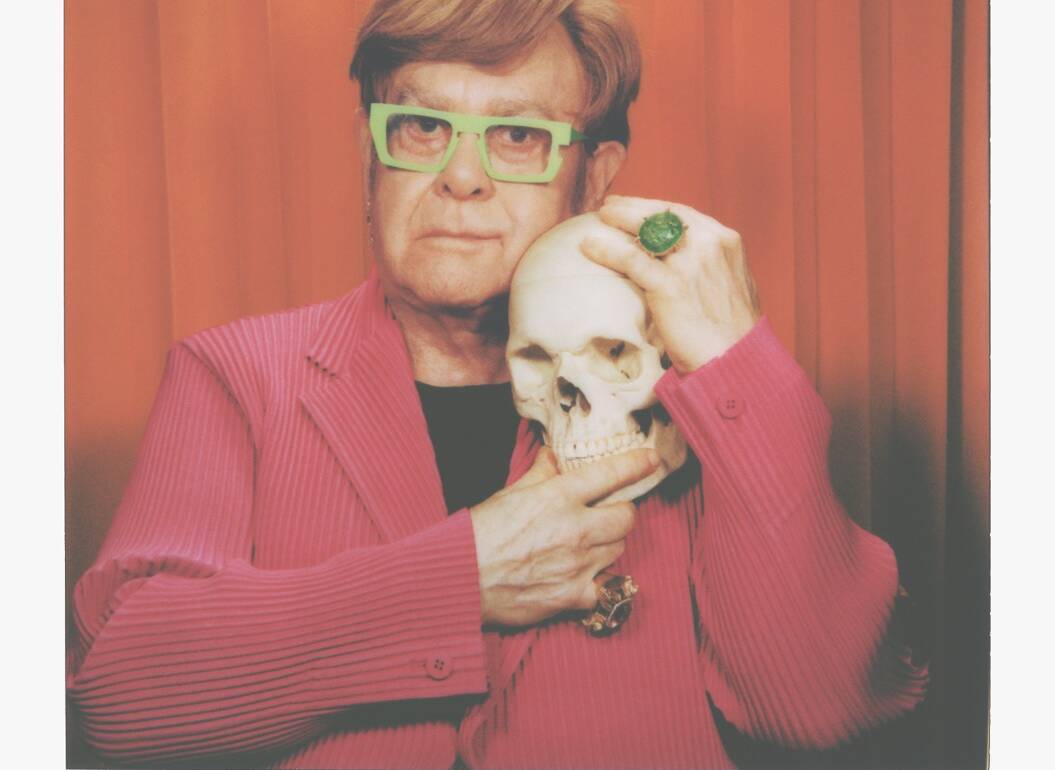
Sir Elton John, musician and collector

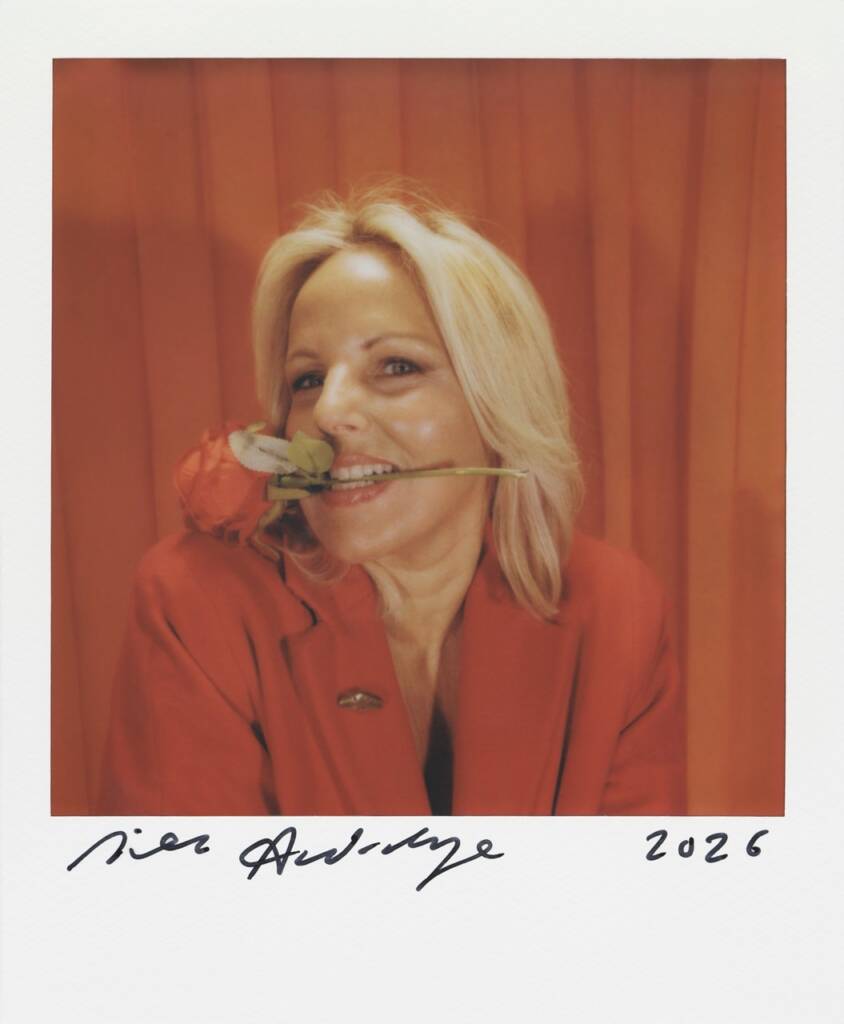
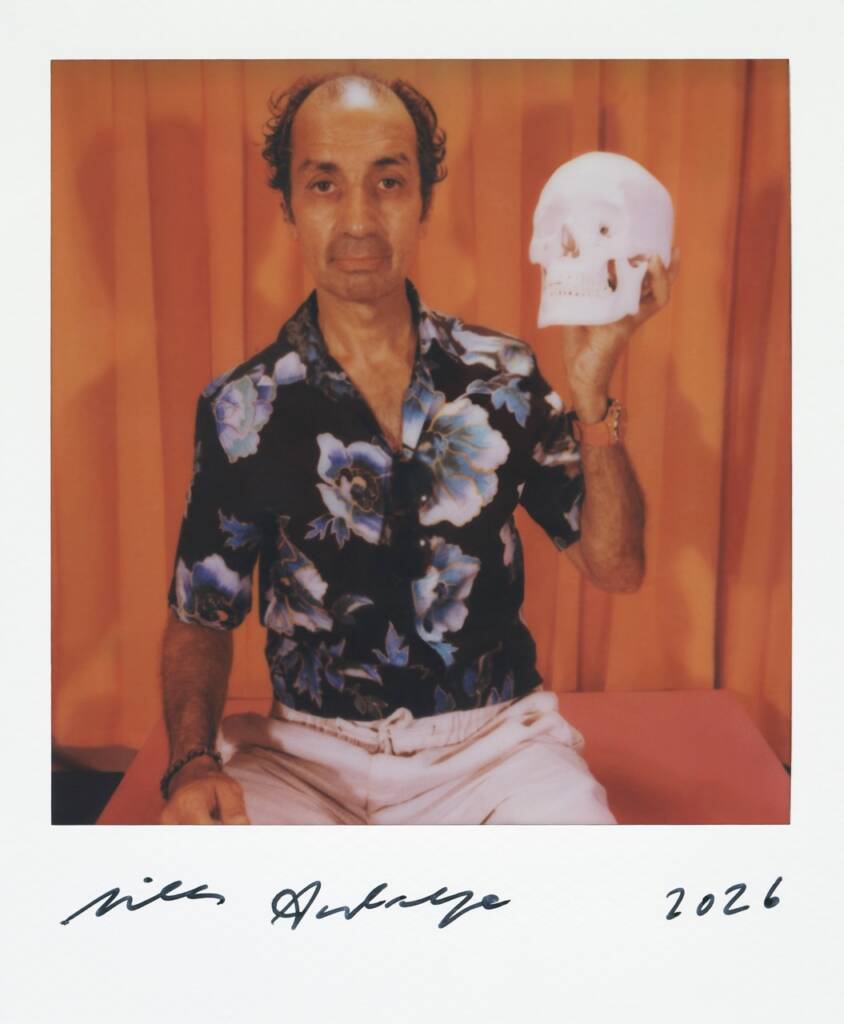
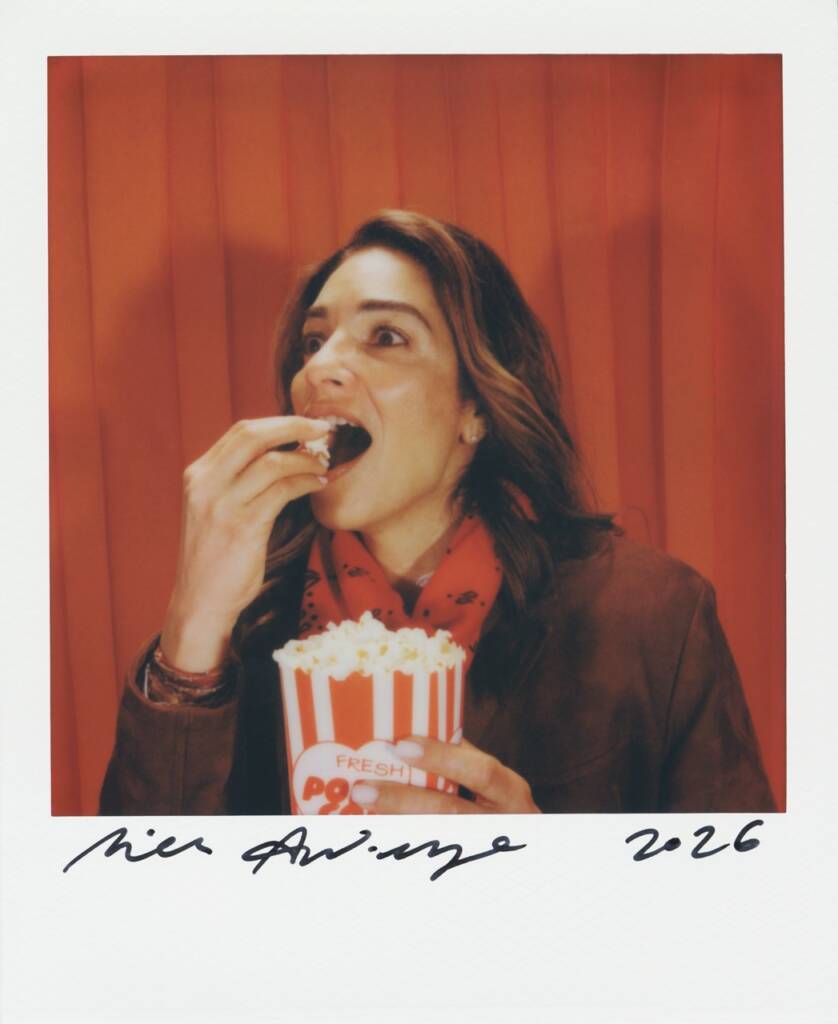
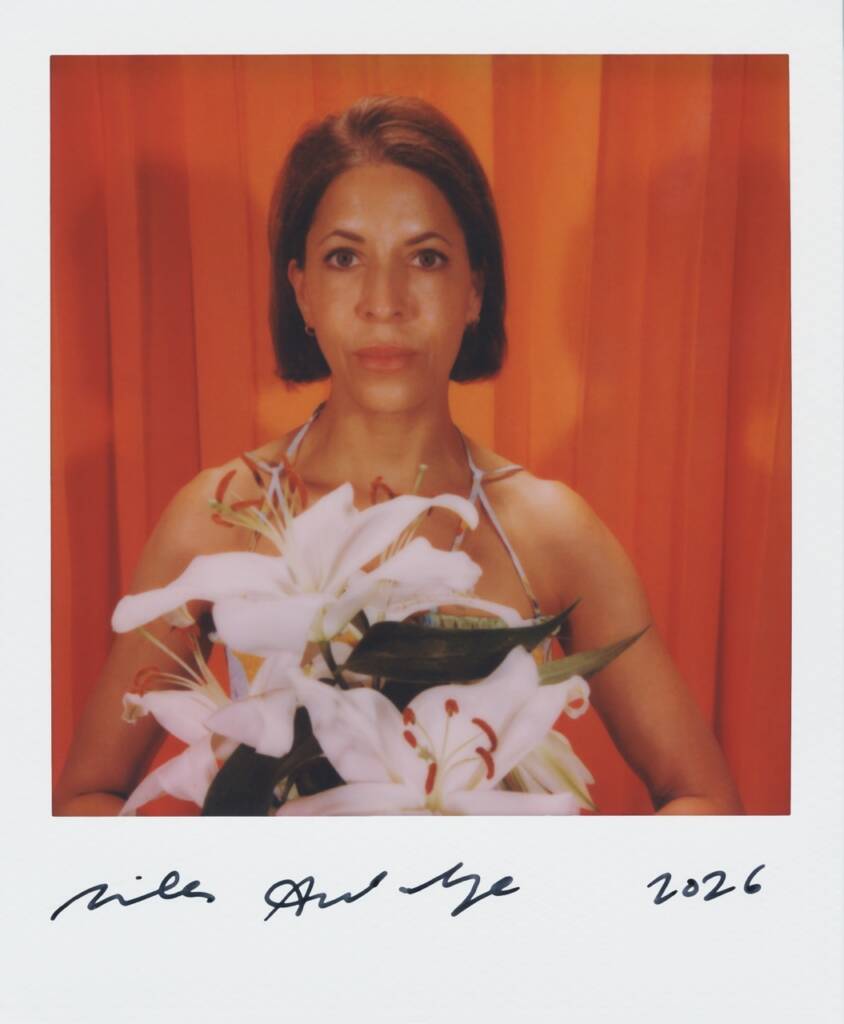
Exclusively for LUX, photographer Miles Aldridge presents a selection of Polaroids of art-scene luminaries, some created during the Venice Biennale 2026. These form part of the artist’s latest and ongoing work, the 15 Minutes of Fame Polaroid Project, which continued at the Park Hyatt during Art Basel Paris

Follow LUX on Instagram: @luxthemagazine

Alex J Wood, artist

Brandei Estes, curator

Read more: Simon de Pury interviews French artist JR

Maurizio Cattelan
, artist

Ellen von Unwerth, artist

Patricia Low, gallerist

Read more: Pirelli HangarBicocca in Milan shows Aki Sasamoto and Luciano Fabro

Darius Sanai, Editor-in-Chief, LUX

Maria Sukkar, collector

Gael Escribe and Céline Rivet Escribe, collectors

Read more: Joseph Kosuth in conversation with Maryam Eisler

India Mahdavi, collector

Umberta Gnutti Beretta, collector

Read more: Spirit Now London selects the winners of its 2026 Acquisition Prize

Michelle Hellman, collector

Clara Zevi, collector

Melissa Ulfane, collector

Miles Aldridge’s solo exhibition, “Entrances and Exits/Entrées et Sorties”, is at the Park Hyatt Paris Vendôme till December 1st.

milesaldridge.com

Share:
Reading time: 1 min


The artist Eleonora and her father, collector Pier Franco Grosso, pictured with The Power of Goodbye, 2026

LUX recently gathered a small group of friends in Paris for an informal lunch salon celebrating the work of artist Eleonora Grosso

Follow LUX on Instagram: @luxthemagazine

The lunch took place in the Le Marta room at Fouquet’s, the storied brasserie on the Champs-Élysées that has drawn artists, writers and filmmakers since 1899, and Barrière group hotel as of 2006. Grosso’s works were on display in the room, so guests could see them up close and talk about them over the course of the afternoon.

Grosso comes from a family steeped in art: she is the daughter of the major collector Pierre Franco Grosso. Her practice stands on its own terms, and the lunch was a chance to look closely at the work and to hear about it from the artist herself.

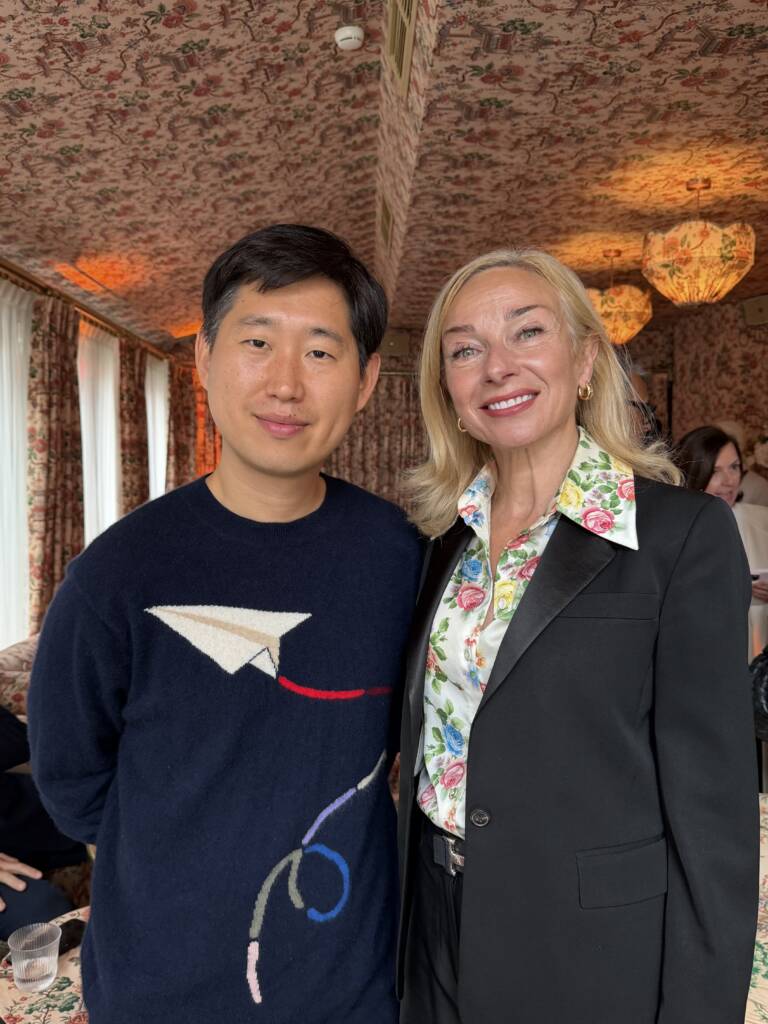
Gallerist Hong Gyu Shin and Samantha Welsh, Leaders and Philanthropists Editor at LUX


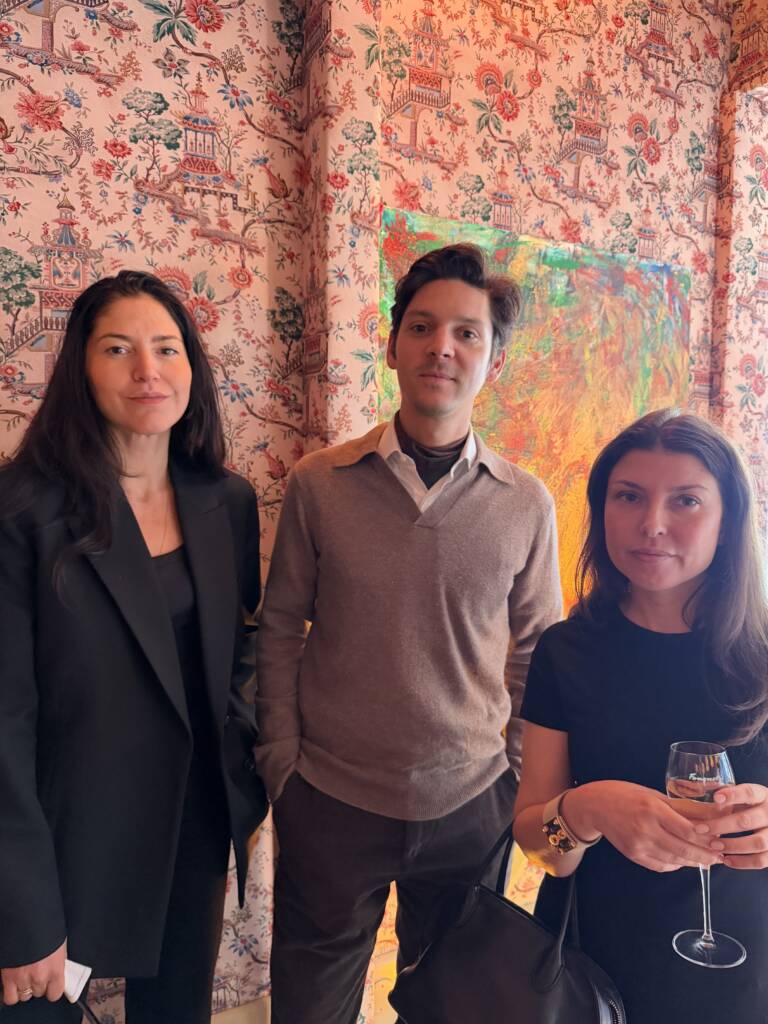
Vogue Editor Schanel Bakouche with Edgar Heuzé and Sophie Guimezanes

The room itself was a pleasure to be in. Le Marta has all the warmth and polish for which Fouquet’s is known, with a rich, detailed interior and the soft light of a Parisian afternoon. It felt intimate without ever feeling small, a space with a sense of occasion that didn’t tip into formality. It made a beautiful backdrop for Grosso’s work, which sat comfortably within it, and gave the whole gathering the feeling of a private Paris salon of another era.

In keeping with the spirit of a salon, the gathering was relaxed, with great conversation. Guests enjoyed an excellent standing lunch, and the format suited the occasion well. Rather than being fixed to a seat at a table, people moved freely around the room, pausing in front of one work and then another and joining different conversations as they went. Some lingered with the artist to talk about a particular piece, while others caught up with old acquaintances or met new ones.

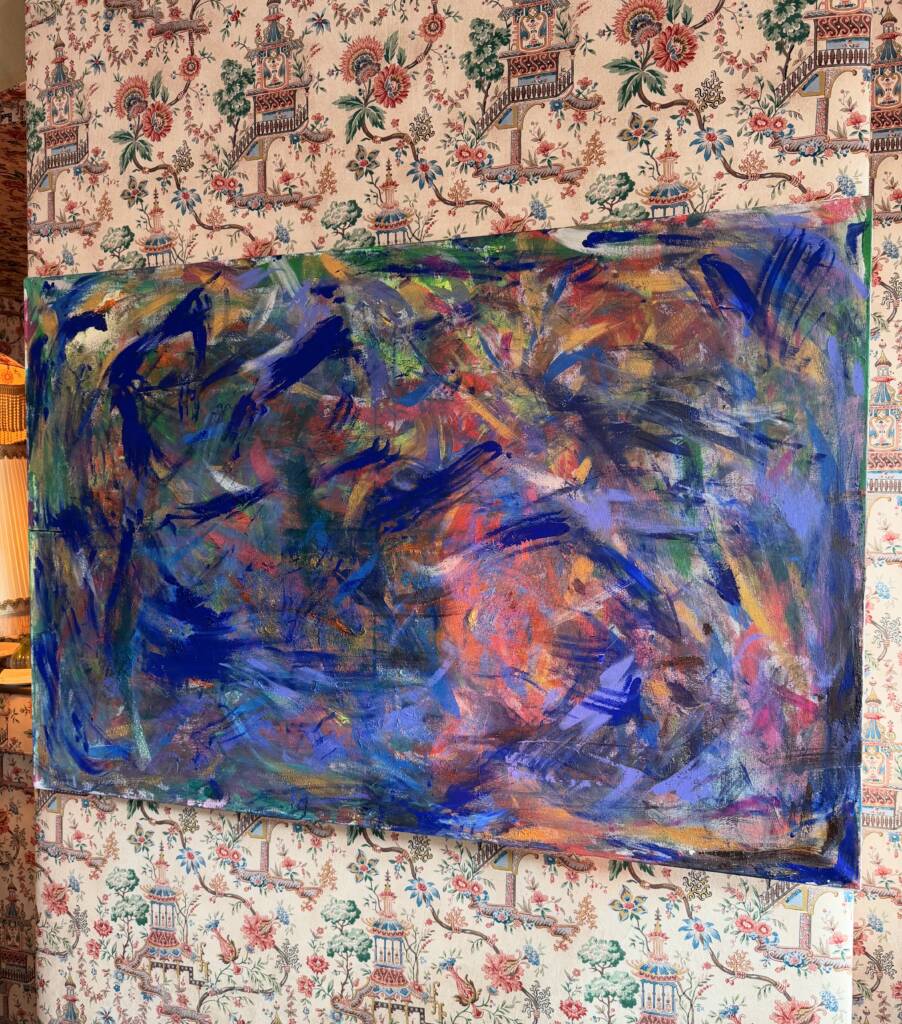
One of Eleonora Grosso’s works on display, I am what I am, 2026

The talk moved easily between the works on the walls and the wider worlds of art, collecting and Paris itself. As the afternoon went on, the room settled into the kind of easy, lively atmosphere that a good salon depends on. It was an afternoon of good company and good food, with the art at the centre.

Writing and photography by Annie Preston

hotelsbarriere.com

Share:
Reading time: 2 min