


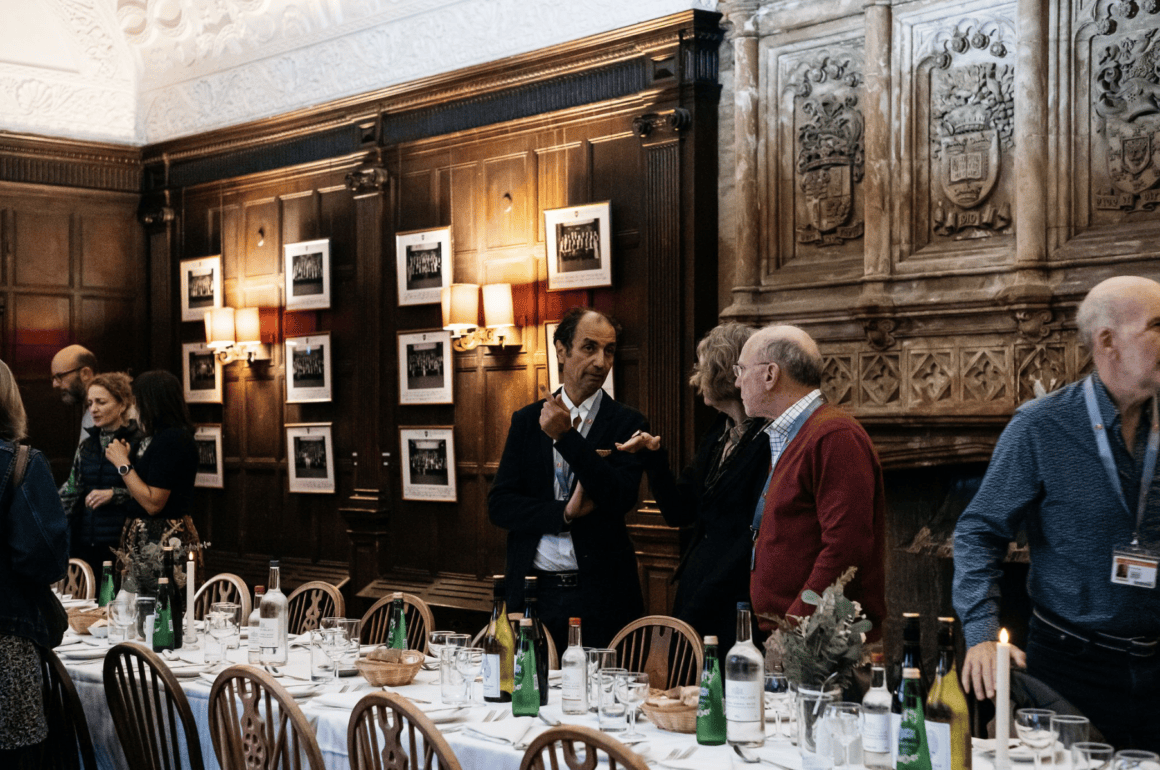

LUX Editor-in-Chief Darius Sanai at dinner at the Oxford Union
Darius Sanai returns to Oxford University to experience an innovative new immersion course into the humanities, ancient and modern, at his alma mater
Returning to university after your experience. Who or what is still there, what has changed? More than that, though, you are in a place that was defined by its people, and by the experiences you had with those people – classes, tutorials, seminars, parties – and none of those experiences can be replicated, even though you are in the same physical space.
Follow LUX on Instagram: @luxthemagazine
Which is what made the new humanities experience at Wadham College, Oxford so engrossing. I attended Wadham as an undergraduate, studying Philosophy, Politics and Economics (PPE). Years later, in 2024, the college launched something called the Wadham Experience, a residential intellectual retreat for leaders.
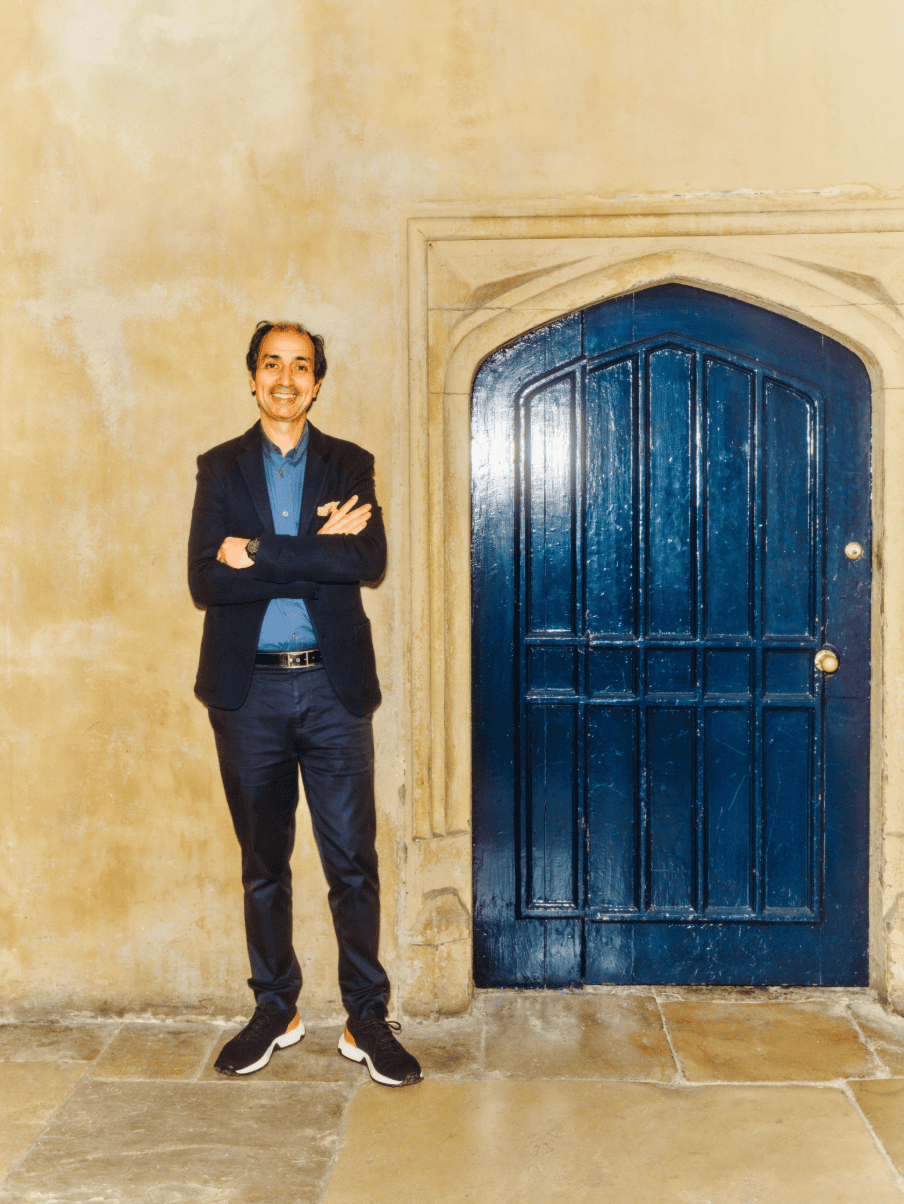
Darius Sanai returns to his alma mater, Wadham College at The University of Oxford
It invites all comers to apply and go through a selection process, which, while rigorous, is nothing like as challenging as getting into the university as a student. Successful applicants are then immersed in classes, seminars, talks, dinners and other experiences, many of which mirror the life of an Oxford student (and some of which do not, as we will see below).
So it was with great curiosity that I sat in a set of rooms at Wadham dating from the early 17th century, facing an Oxford don (academic) speaking about a subject we would have learnt about as undergraduates, with a group of individuals I had just met. It was just the same as the first term as an undergrad – being immersed in the the kind of curated knowledge that only comes with human experience as an academic in this institution.
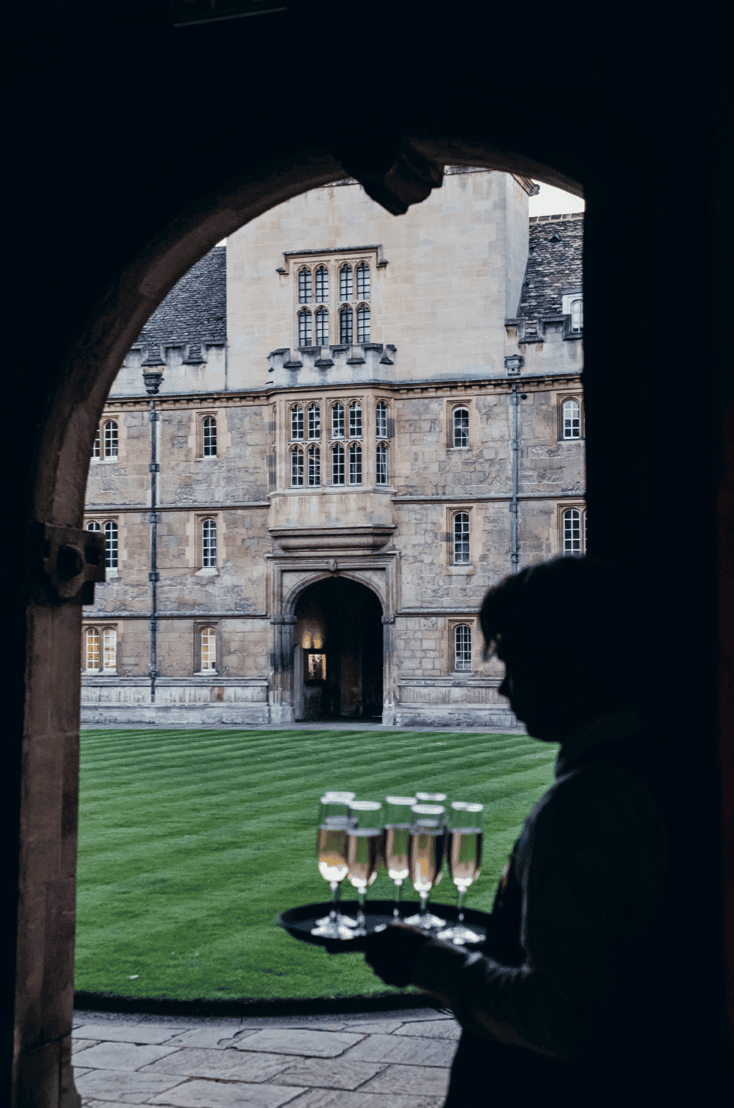
Champagne offered before you make your way across the quad
This was the first morning of the experience, and my fellow “students” – philanthropists, captains of industry and just the curious – were, variously, scribbling notes or listening agog. Polite questions were asked towards the end.
Read more: Mercedes-Maybach S-Class Review
In the coffee break, before coming back to experience more of this new type of Oxford world, I and a couple of other alumni were asked what the difference was between our own sessions on similar topics as undergrads and what we had just seen. Two things, I reflected: I thought the tutor was, if anything, even more engaged and enthused about the process than our (generally brilliant) tutors had been when I was a “real” student.
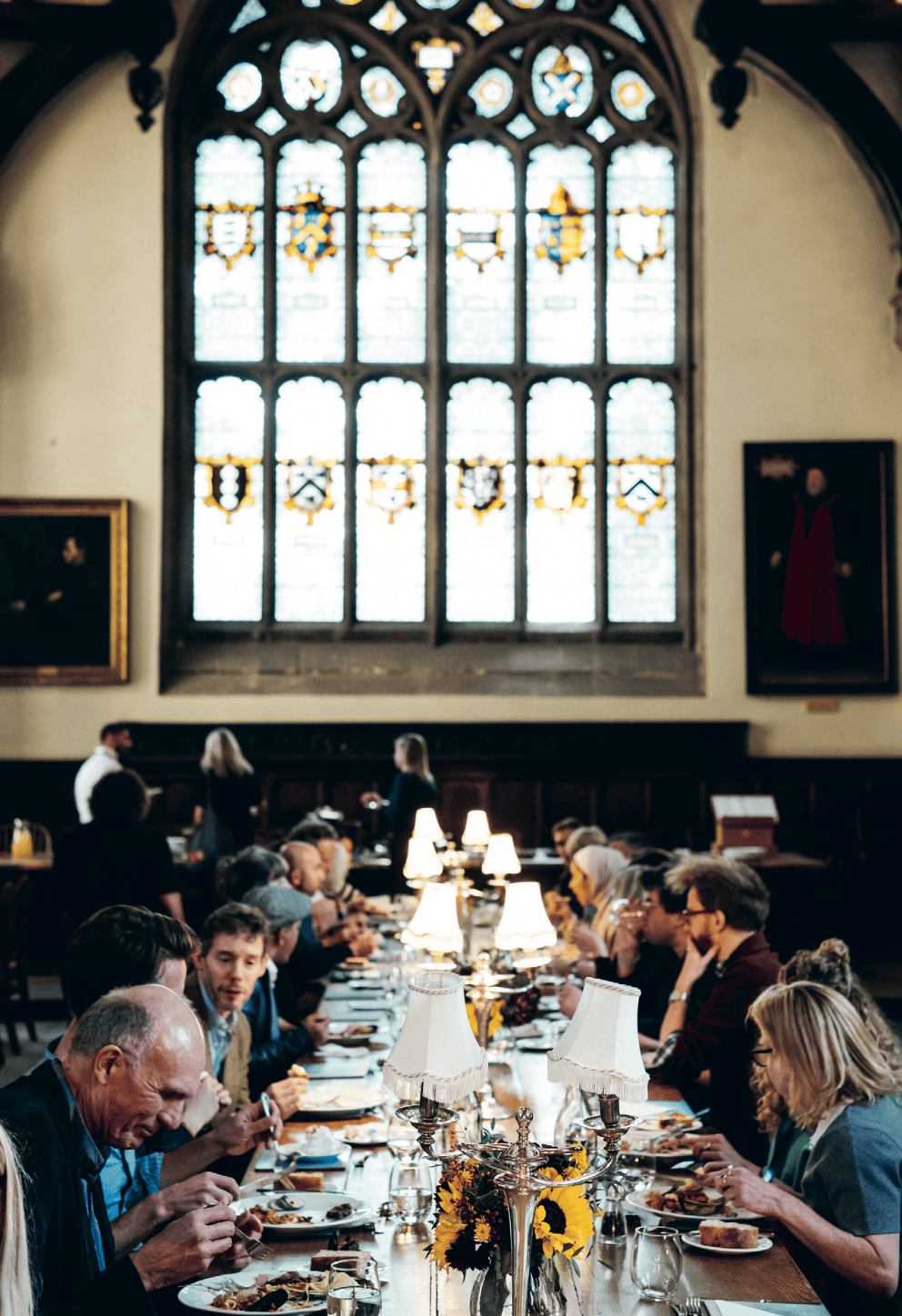
Wadham Experience “students” enjoy dinner with the dons in the college’s Jacobean dining hall
And, secondly, being at Oxford trains you to ask awkward, challenging questions. Despite the fact that the room was full of individuals who were extremely significant in their various fields, the questions were polite, informed and educated, but not challenging, argumentative or awkward. Maybe that would come later.
Learning about the humanities cannot just be done in a tutorial, however august the surroundings. Over the next four days, we were taken around the back rooms of the city’s celebrated Ashmolean Museum and given classes on how to differentiate between objects of different eras, and to guess exactly what the function of various artefacts from Greek and Roman times was, by passing them around a table, wearing white gloves, and examining them. A couple of our “students” proved quite brilliant at this, for the rest of us many of these objects, obvious in retrospect, remained a mystery.
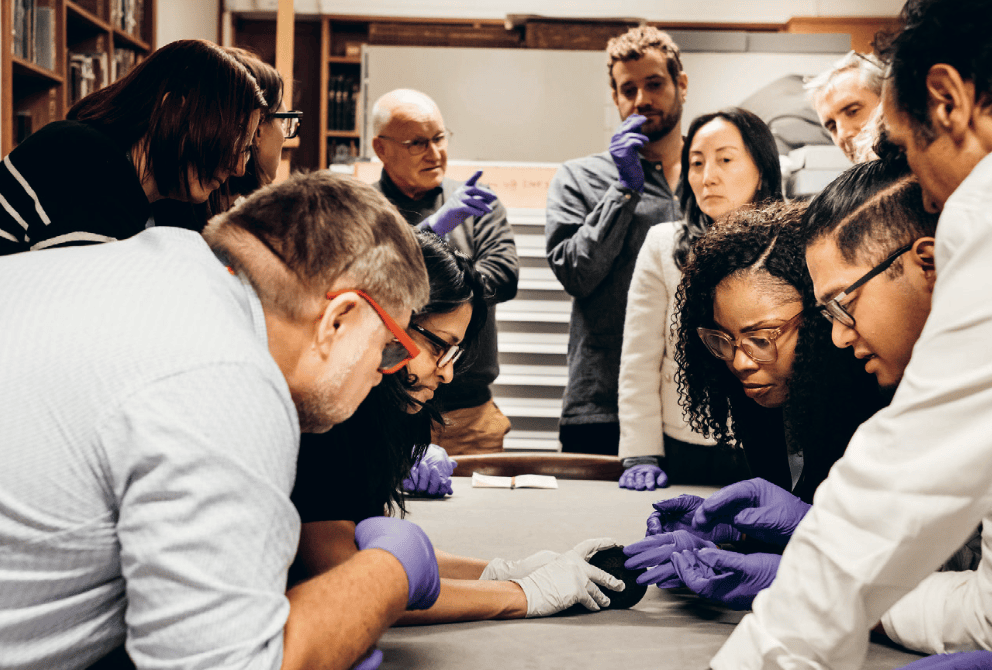
Studying Greek and Roman artefacts at the Ashmolean Museum
We had dinner at the Oxford Union, a phrase that might make the flesh crawl of many Oxford students, when thinking about this famous but divisive institution that has seen Prime Ministers from William Gladstone to Boris Johnson to Benazir Bhutto debate there as students. For the first-time visitor, the most impressive debating society in the world is astonishing, with photographs of all its significant alumni on the walls and its mini Parliament debating chamber alongside.
Read more: We visit the E1 race on the water in Monaco
A highlight of most evenings was dinner in Wadham College Hall, also dating from the early 17th century and adjoined to the beautiful chapel. It’s a serene space that by dint of not being quite as old as some of the college halls, dating one or two centuries before, is almost overlooked in the rarified Oxford world, where being the second best, or the second oldest, just isn’t really good enough.

Taking new approaches to the arts through the Wadham Experience
The Wadham Experience has been created by my old college partly to increase exposure to the importance and brilliance of the humanities at Oxford and, importantly, of course, to raise funds. There was some worrying about whether it would be attractive to ask people to spend this amount of money on something that is not quite a leadership course and too short to be a further education course. In fact, by all reports, it is a victim of its own success, oversubscribed and with corporations asking for a privatised experience of their own.
I think it is successful precisely because it is not a leadership course and nor is it some second-thought sideline into academia by academic staff who have other things to do. Everyone we came across was not just enthusiastic but enthralled by being part of the course: tutors, museum curators, “students” and college staff. For me, the most special aspect was being back in my old college without any of the stress or social anxiety.

The Wadham Experience offers multisensorial classes to its “students”
I stayed in a rather luxurious bedroom in a building overlooking the second quadrangle of the college. From one of the windows I had a view up Parks Road to the leaves of the parks and the back of Trinity College opposite. After dinner, it was like a retreat. And because the college, is, well, a college, your morning commute was across a quadrangle, whose 17th-century clock was probably gifted by Sir Christopher Wren, architect of St Paul’s Cathedral and a Wadham alumnus.
My only caveat is that Wadham College is historically and famously liberal, which can mean sometimes rather alarmingly left wing. The radical traditional liberal and the hyper left do collide in the college, and if you are on the right of the political spectrum, you should be an open-minded type in order to enjoy it properly. But that’s what education – and the humanities – are all about. Or should be.
I shall be returning to this magical experience, if it’s not all booked up by the LUX community.





Recent Comments