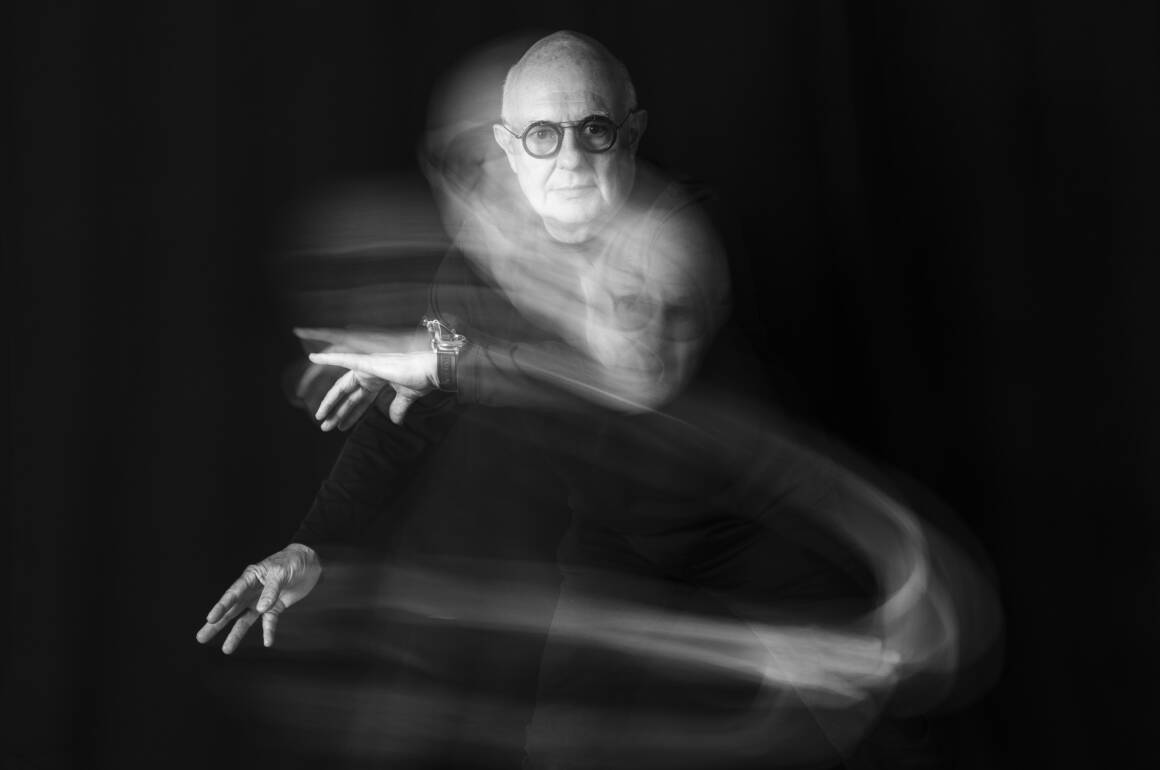
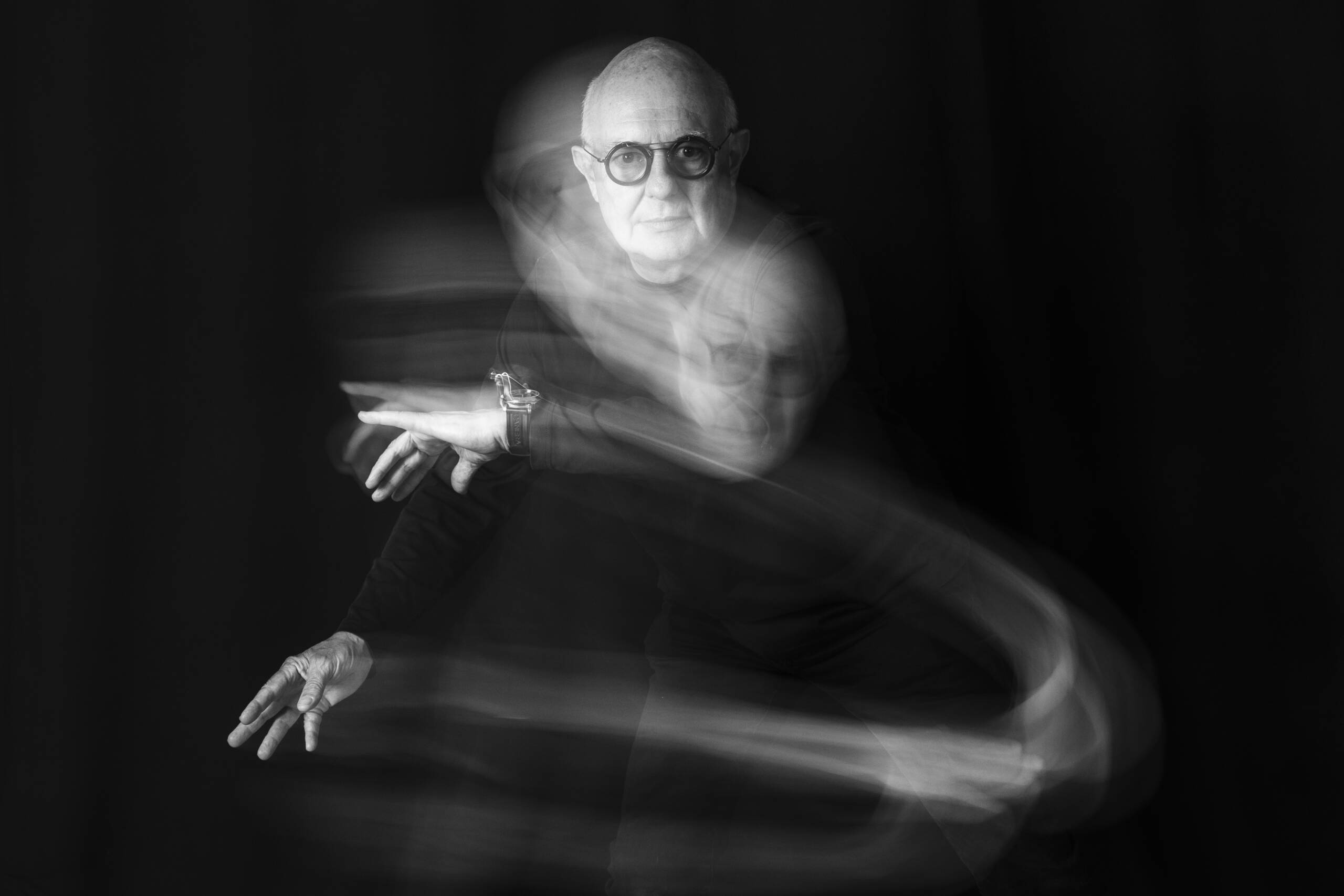
A portrait of Rolf Sachs

Designer, artist, investor and a major force in the European aristocratic social scene, Rolf Sachs is both an enigma and a celebrity in his homeland of Switzerland. He meets his intellectual match in LUX Contributing Editor and collector Rachel Verghis and her distinctly direct questioning style

At the heart of Rolf Sachs’ practice lies the inescapable human impulse to touch. His art does not simply use materials; it plays with them. Paper is crumpled, plastic is warped, metal is punctured, felt is twisted – crafting a physical experience of his work where materials remember what they once were.

Follow LUX on Instagram: @luxthemagazine

Rachel Verghis: In Heu, Wolle, Mist and Ross (2023), you used hay, wool, manure and horsehair. What is your creative process?

Rolf Sachs: This work was created for my show in a 500-year-old barn, and the four monumental vitrines perfectly capture the essence of Alpine culture. For me, no artist can beat nature, like how no sculptor can beat the beauty of a tree. There was also the irony of using manure for an exhibition titled ‘So ein Mist!’, which translates roughly as “what bullshit!” in German. I love the humour in the pieces.
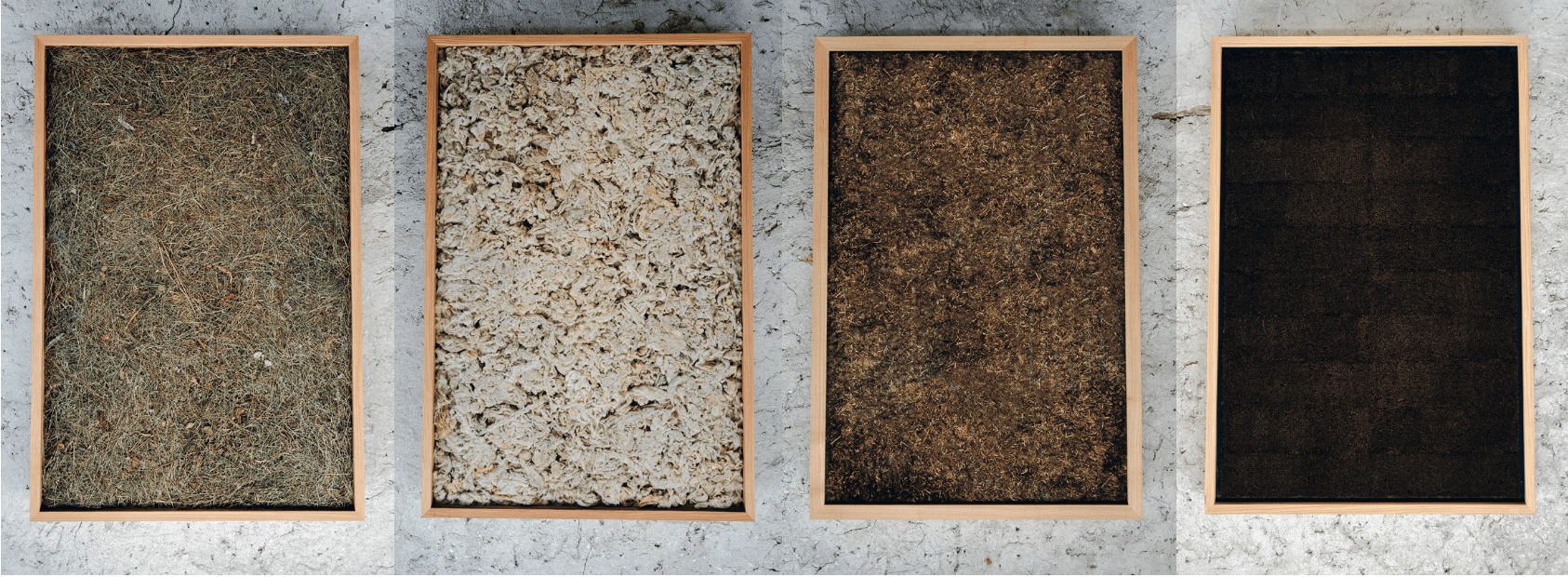
Heu, Wolle, Mist and Ross, 2023, by Rolf Sachs

RV: Melted steel folded into soft shapes is a staple of furniture pieces like your 1990 Unruhe (Restless), contradicting its long history as an industrial material known for its strength. Is steel something you still work with?

RS: I forged this myself in the early 90s, at a time when quite a few artists made decorative steel furniture. I wanted a more conceptual direction. I tried to give this material some dynamism and movement, as if it was dancing. It is a charming, free piece, which really counters the attributes of the material.

RV: In Memory of an Encounter (2025), texture is staged and then sealed under glass. What interests you about denying the touch you’ve so carefully provoked?

RS: It’s not about the physical touching as much as it is about touching the soul. What also interested me was transforming the two dimensional to three dimensional. And, of course, it touches very much on my concept of the “aesthetics of coincidence” – ie, the pure coincidence of it coming together.

Can’t Sit Still, 2006, by Rolf Sachs

RV: You seem to have the most fun with very soft materials, like wax, rubber, resin and silicone. Can you tell me more about Can’t Sit Still (2006)?

RS: I like materials with a soul, with a bit of “wabi-sabi”. I also like objects made of very common materials, like Horgen Glarus chairs, which were my school chairs. They are a plain canvas, without design but a memory of childhood. I then try to empower them with sculptural expression, infuse them with vulnerability of character – they become stronger in every sense.

Read more: A review of BMW’s M5 Touring

RV: What inspired your experiments with metal buckets and light, like Pompidou Fire Bucket (2006) and Rain in a Bucket (2006)?

RS: In these works, the material is actually secondary. It is really the shape I like – my relationship to the utilitarian beauty of the bucket. I put the little holes in so you would imagine a shower – but instead of pouring water, it pours light.

RV: When you borrow a material, like an army blanket, how much of its former life do you want to remain visible or “audible”?
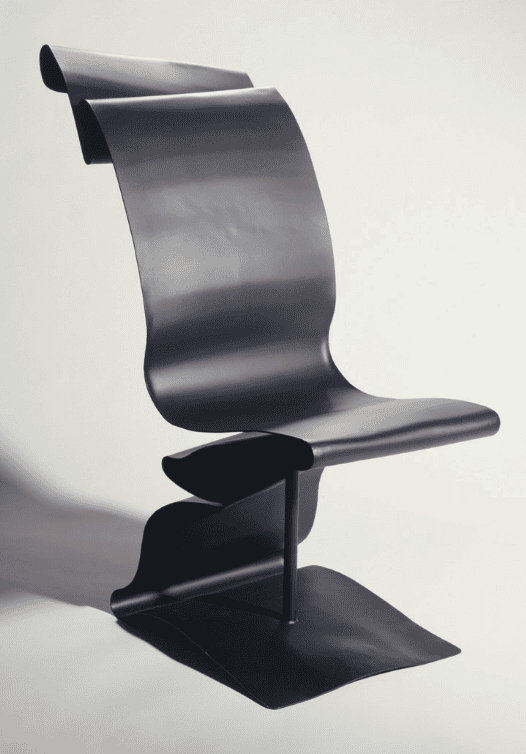
Unruhe (Restless), 1990, by Rolf Sachs

RS: I use fabric that is not usually used in furniture. Army blankets as upholstery evoke memories of military service, for example. I always try to use something in my work that has a little bit more stamina, a little bit more oomph – that, however, conveys an extra sensitivity.

RV: You’ve called your practice empirical. What does “testing” look like in your studio – and what counts as failure?

Read more: Riding with the Porsche 911 C4 GTS Cabriolet

RS: I’m an extremely curious person. I am like a child who is trying new things all the time. With my first froissage [deliberate crumbling of paper] works during Covid, I wrote messages to friends on this paper, boxed and sent them as Christmas cards. The unfolding, the reading, the bringing it back to life is the result of an empirical process. This sits at the centre of my practice now.

RV: What comes first, the material or the object?

Memory of an Encounter, 2025, by Rolf Sachs

RS: The object comes first. A rake is a very simple but beautiful object, which has a huge utilitarian importance in the mountains. I replicated the rake in slate and then in bronze to really give this object – which was once so important but is now fast being replaced by machines – a physical permanence.

RS: Do you still think about taste, or do you design for something slower?

RS: Hopefully, I am a person with taste, but it doesn’t play a role when I do an object. Quite the contrary, you try not to put something out there which has “a” taste or which is the zeitgeist. You might indirectly, but you want to get away from any decorative aspect.

RV: You often combine unconventional materials that seem to intentionally create friction. What does friction offer a life that comfort cannot?

RS: I love friction. I love attraction. As with couples, attraction and friction are the oldest attributes we know. I very often use polar opposites in my objects: warm or cold, if it is sensual or harsh, if it is hard or soft. And comfort is not really in the equation.

rolfsachs.com

Share:
Reading time: 4 min
women looking at art

Masterpiece London, 2019. Photograph by Ben Fisher. Courtesy of Masterpiece

In his first column for LUX, art collector, advisor and chairman of Masterpiece London Philip Hewat-Jaboor discusses the joys of discovering art and design objects through their materials
portrait of a man in black and white

Philip Hewat-Jaboor. Photograph by Danny Evans

I’m always intrigued to discover what brings people to works of art, and what sets their collecting in motion. Over the years, one of the most beguiling ways I’ve found to draw people in, is to look at an artwork’s materials and explore how it has been made. What does the texture and surface of the materials tell us? What meaning and significance do those materials hold? What cultural and historical value do they have? Whether it’s precious stones, marble, porcelain, pigment or wood, it’s interesting to think about how the artist has transformed a raw material into something full-formed and to look for the beauty in that process. Materials transcend disciplines, cross continents, and evolve through time and when it comes to beginning your own collection, it’s a brilliant place to start.

Personally, I’m obsessed by coloured ornamental stones, and by that I mean the stones that were first quarried by the Romans in Egypt and other parts of the Roman Empire, which became incredibly prized as both building materials and materials for making works of art. I take great pleasure in looking at how these materials are used and reused over the course of history. For example, you might be looking at a 18th century vase made out of Egyptian porphyry (my favourite material) but whilst it’s an 18th century object, it was probably made out of a 2nd or 3rd century column that had been abandoned in the Renaissance or whenever, dug up from the excavations in Rome and turned into another object. There’s a wonderful sense of continuity, and doing this kind of research is a fantastic way of not only learning more about the object itself, but also history.

Follow LUX on Instagram: luxthemagazine

There are then the contemporary artists and designers who are thinking about new ways of using ancient materials such as stone. There are designers and artists at David Gill, for example, who are incorporating these wonderful, ancient, coloured stones into contemporary furniture and in doing so, they are bringing new life to the material. In this sense, I’m quite anti the division between traditional and contemporary art because everything looks backwards and forwards. In my opinion, things are either good or bad, stimulating or indifferent, whether they were made yesterday or 5,000 years ago.

ancient sculpture

Galerie Chenel at Masterpiece London 2019, Ben Fisher Photography, courtesy of Masterpiece

It’s also interesting to consider what inspires the rebirth of a particular material. For example, I’ve been thinking about how there’s been a trend for refurbishing kitchens and bathrooms in the last ten years, and incorporating coloured marbles into new designs. There’s also the fact that each slice of marble, not all marbles but many of them, will be totally unique. So if you’re making a limited edition of five coffee tables, each one will be different and I think that’s really appealing to both the creator and the modern consumer.

Read more: Olivier Krug on champagne and music

Lately, there has also been a trend, or at least a growing interest in more sustainable craft processes, but the interesting thing is that many of these artists and designers are already using historic materials, which is in itself sustainable, but in my opinion, it also imbues the contemporary object with more of a soul. For example, Sebastian Brajkovic, a fantastic artist at David Gill Gallery, made a wonderful side-table out of white marble combined with some artificial marble and other bits and pieces. It’s a strikingly contemporary object, but it is modelled on a Roman sarcophagus.

This past year, in particular, has encouraged people to think about how they want to live, and what might bring their lives comfort, which naturally impacts what they are choosing to buy or collect. I personally think being surrounded by beautiful objects is a very important part of life, and can bring people so much joy.

So where to begin with all of this? Visiting museums, galleries, art fairs and even country houses is a fantastic way to discover and pique interest in new eras and disciplines. Exhibitions even have the power to kickstart entire collecting trends. For example, Treasure Houses of Britain was a great show that took place at the National Gallery in Washington in 1985, showcasing paintings, furniture and works of art from British country houses. The exhibition had such an inspirational effect that it launched an Anglo-manic wave in American collecting in the 80s.

When I reflect upon my own collecting journey, I think how fortunate I was that my grandfather was a collector and that he would let me handle his Chinese ceramics collection. This close-up experience with a material is not something you often get at a museum, but with his passion and trust, I had the opportunity to really look at, appreciate and observe the material and craftsmanship.

In the same way, art and design dealers often want to share their passion for their speciality with potential clients. My advice to new collectors is to actively start conversations, ask questions, read, listen, research and build your knowledge. Search for beauty, great craftsmanship, and ultimately, allow yourself to be guided by your instincts.

Philip Hewat-Jaboor is Masterpiece London’s Chairman of the Fair.

This year’s edition of Masterpiece London will take place online with smaller-scale live activations in London in June. For updates and online events, visit: masterpiecefair.com

Share:
Reading time: 4 min