‘Penfolds itself was established in 1844, and is thus a heritage brand as old as some of the finest European wine houses’

Luxury brands don’t come around very often in the rarefied world of fine wine. Penfolds Grange, now 75 years old, has established a foremost place among the vinous legends

To what extent is the world of luxury determined by heritage? Until recently, you could have convincingly argued that all luxury brands were heritage brands: from Hermès to Patek Philippe to Château Latour, they have been around for centuries.

Follow LUX on Instagram: @luxthemagazine

But then came the disruptors – new luxury brands such as Richard Mille and Alaïa. In sectors where innovation plays its part, the role of new luxury is even stronger: Pagani and Koenigsegg have shaken the world of supercars.

But has not the world of wine, where innovation arguably plays less of a role than historic vineyards, remained a heritage preserve? Up to a point. To the pantheon of centuries-old greats such as Romanée-Conti and Château Margaux, a new fine-wine luxury brand has been established that commands respect and desirability among top collectors.

Max Schubert created the iconic Grange 75 years ago, from the Shiraz (Syrah) grape variety

Penfolds Grange is not new in absolute terms – the first vintages were produced in the 1950s, but that makes it relatively new in the wine world, and all the more remarkable for its ascent to that pantheon of greats. It helps, of course, that Penfolds itself was established in 1844, and is thus a heritage brand as old as some of the finest European wine houses.

Luxury is an industry in which marketing can be even more important than quality to establishing reputations. But for a fine wine, quality is paramount. There’s no getting away from what’s in the glass. Also, consistency: if you create one great vintage then nine average ones, you won’t find a place in collectors’ cellars.

Read more: Riding with the Porsche 911 C4 GTS Cabriolet

Grange is innovative for the wine world. It is made from Shiraz grapes, known as Syrah in France, which, in the Rhône valley, makes the celebrated Syrah wines of Côte-Rôtie and Hermitage. But unlike most of the world’s great wines, Grange is not created from grapes grown from the same plots of land each year.

It is a blend of the best grapes chosen each year by the winemaker – wine-world legend Peter Gago, who was inducted into the prestigious Decanter Hall of Fame in 2021 and received a Lifetime Achievement Award at the influential Meininger Awards this year.
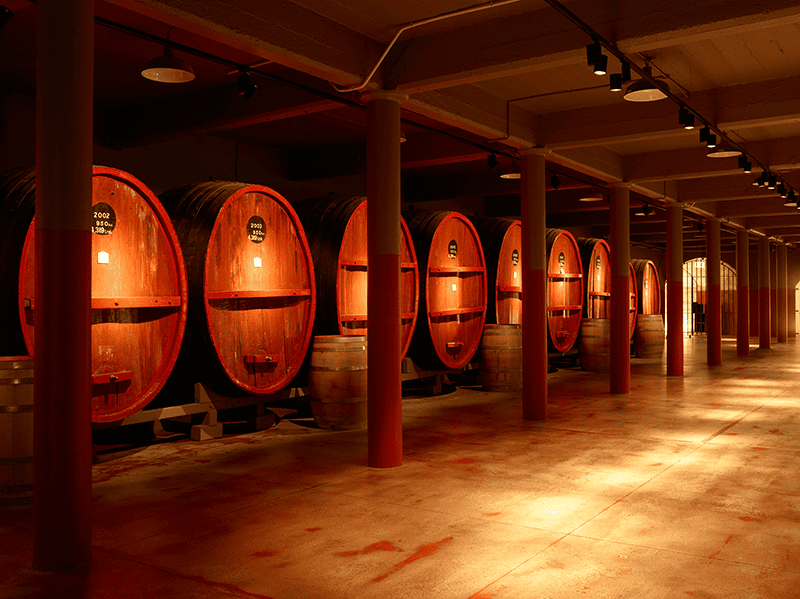
The Penfolds barrels

Coming from different plots each year ensures quality but also an intriguing variation.

Grange is Australian and expensive – older vintages fetch thousands of pounds, dollars and euros per bottle – and it is, of course, unusual in not coming from the same plot of land every year. But what does it taste like?

Grange is an ethereal, hard-to-pin-down wine, with power but also a lightness of touch and delicacy, which, added to its complexity, make it utterly captivating for collectors.

Read more: We visit the E1 race on the water in Monaco

On its 75th anniversary this year, Gago commented in characteristically sharp, colloquial style to LUX, “Grange, three quarters of a century young. Without a vintage miss. Annually attempting across treasured South Australian vineyards to best reflect what Mother Nature sends our way. So far, so good. Respectful of the proven Grange stylistic template, every year we try harder … to make a better vintage than the legendary ’52, ’53, ’55, ’63, ’71, ’76, ’86, ’90, ’96, 2010 … The tweaking continues – in vineyard, in winery!”

Oh, and good luck in tracking down a bottle of that 1952. A true luxury item indeed.
penfolds.com

Share:
Reading time: 3 min

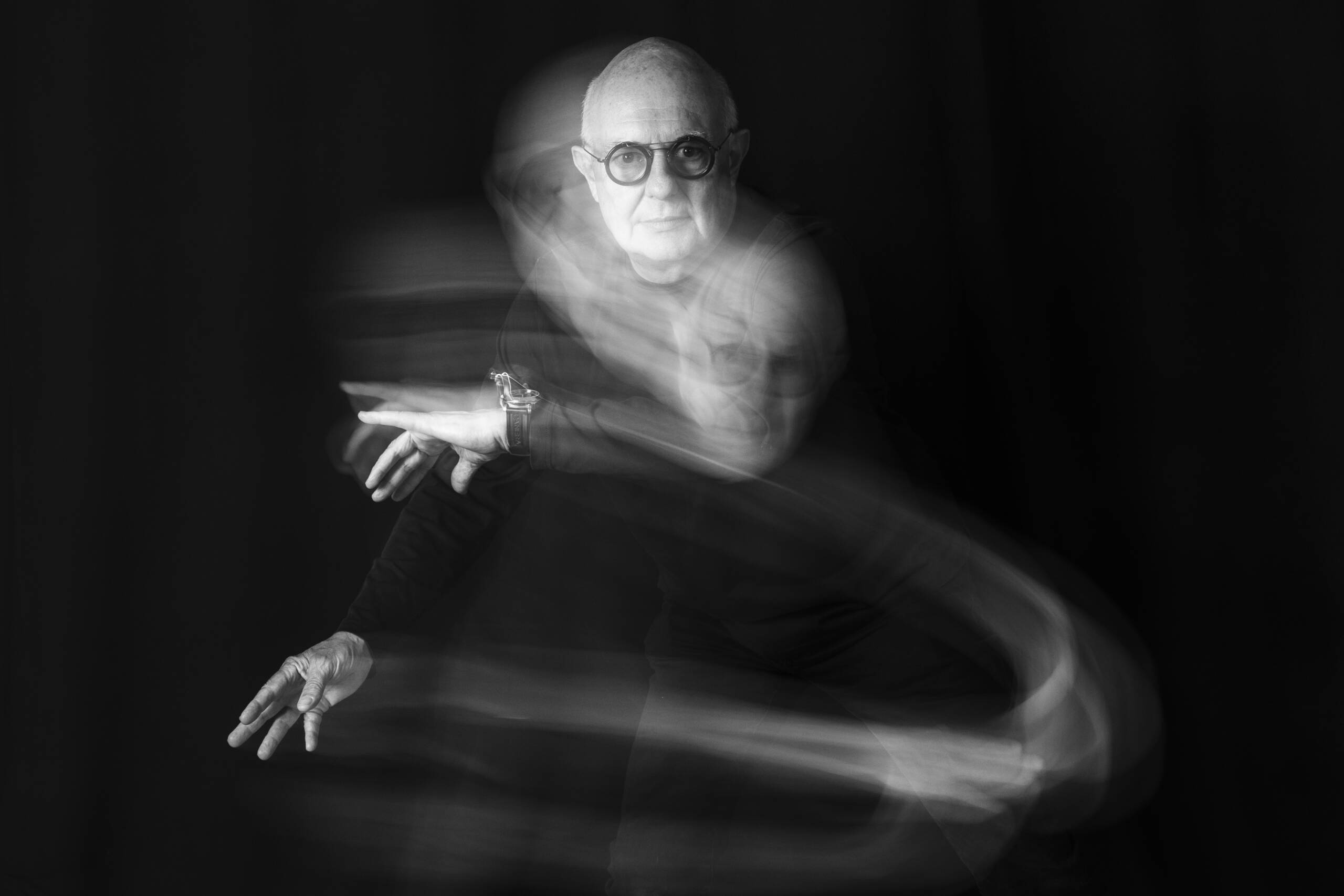
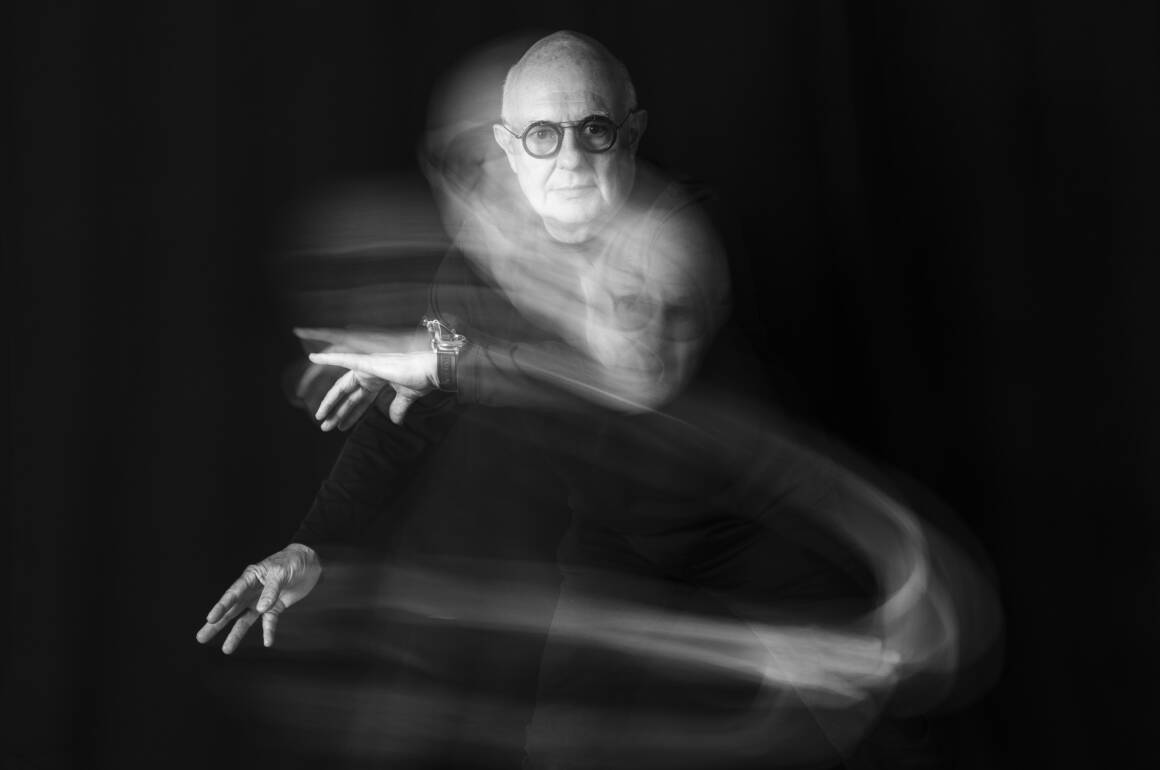
A portrait of Rolf Sachs

Designer, artist, investor and a major force in the European aristocratic social scene, Rolf Sachs is both an enigma and a celebrity in his homeland of Switzerland. He meets his intellectual match in LUX Contributing Editor and collector Rachel Verghis and her distinctly direct questioning style

At the heart of Rolf Sachs’ practice lies the inescapable human impulse to touch. His art does not simply use materials; it plays with them. Paper is crumpled, plastic is warped, metal is punctured, felt is twisted – crafting a physical experience of his work where materials remember what they once were.

Follow LUX on Instagram: @luxthemagazine

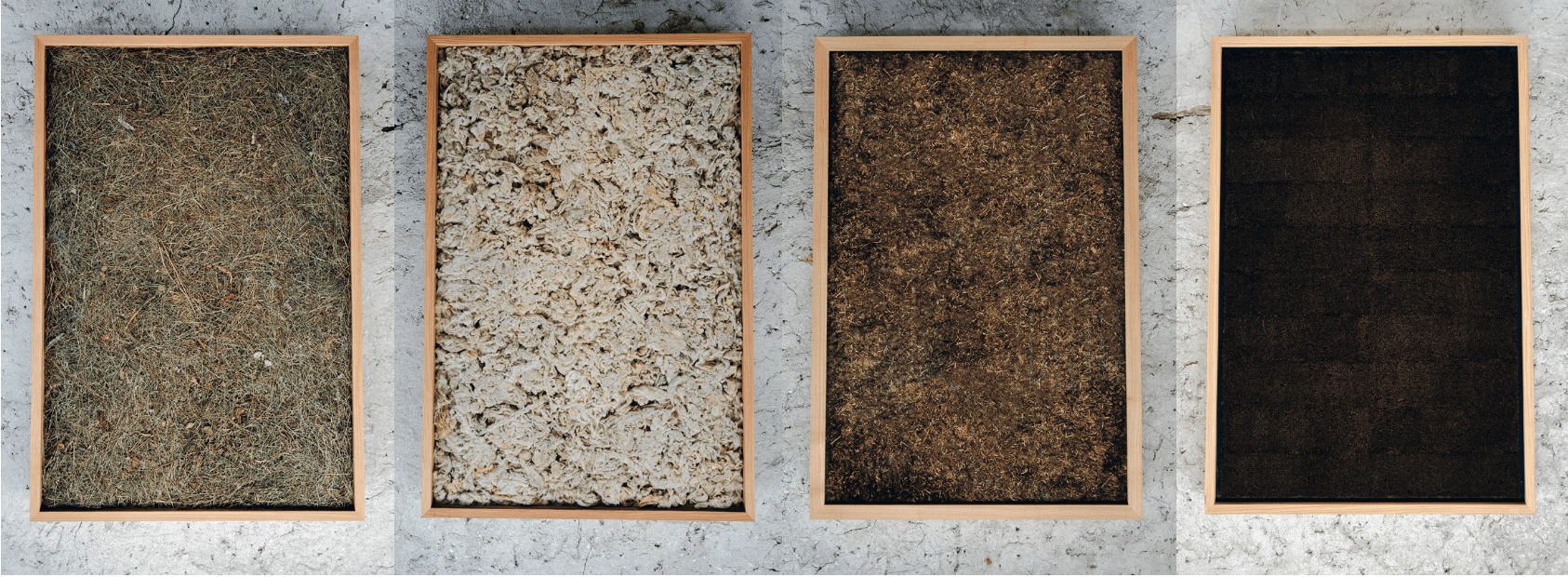
Rachel Verghis: In Heu, Wolle, Mist and Ross (2023), you used hay, wool, manure and horsehair. What is your creative process?

Rolf Sachs: This work was created for my show in a 500-year-old barn, and the four monumental vitrines perfectly capture the essence of Alpine culture. For me, no artist can beat nature, like how no sculptor can beat the beauty of a tree. There was also the irony of using manure for an exhibition titled ‘So ein Mist!’, which translates roughly as “what bullshit!” in German. I love the humour in the pieces.

Heu, Wolle, Mist and Ross, 2023, by Rolf Sachs

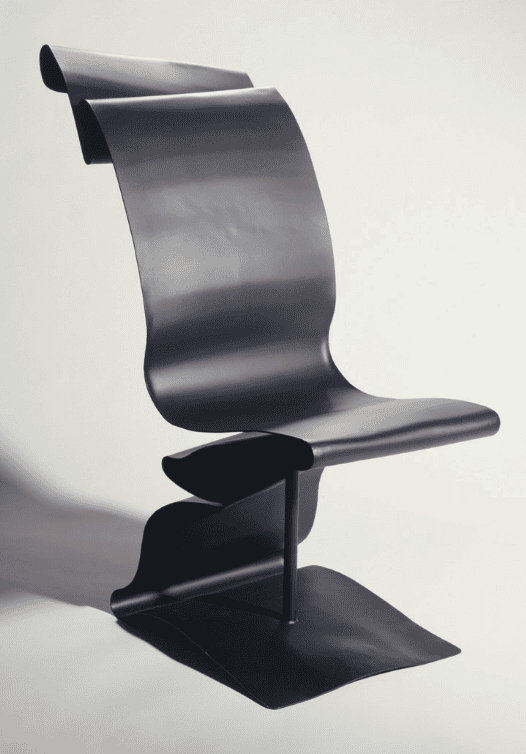
RV: Melted steel folded into soft shapes is a staple of furniture pieces like your 1990 Unruhe (Restless), contradicting its long history as an industrial material known for its strength. Is steel something you still work with?

RS: I forged this myself in the early 90s, at a time when quite a few artists made decorative steel furniture. I wanted a more conceptual direction. I tried to give this material some dynamism and movement, as if it was dancing. It is a charming, free piece, which really counters the attributes of the material.

RV: In Memory of an Encounter (2025), texture is staged and then sealed under glass. What interests you about denying the touch you’ve so carefully provoked?

RS: It’s not about the physical touching as much as it is about touching the soul. What also interested me was transforming the two dimensional to three dimensional. And, of course, it touches very much on my concept of the “aesthetics of coincidence” – ie, the pure coincidence of it coming together.

Can’t Sit Still, 2006, by Rolf Sachs

RV: You seem to have the most fun with very soft materials, like wax, rubber, resin and silicone. Can you tell me more about Can’t Sit Still (2006)?

RS: I like materials with a soul, with a bit of “wabi-sabi”. I also like objects made of very common materials, like Horgen Glarus chairs, which were my school chairs. They are a plain canvas, without design but a memory of childhood. I then try to empower them with sculptural expression, infuse them with vulnerability of character – they become stronger in every sense.

Read more: A review of BMW’s M5 Touring

RV: What inspired your experiments with metal buckets and light, like Pompidou Fire Bucket (2006) and Rain in a Bucket (2006)?

RS: In these works, the material is actually secondary. It is really the shape I like – my relationship to the utilitarian beauty of the bucket. I put the little holes in so you would imagine a shower – but instead of pouring water, it pours light.

RV: When you borrow a material, like an army blanket, how much of its former life do you want to remain visible or “audible”?

Unruhe (Restless), 1990, by Rolf Sachs

RS: I use fabric that is not usually used in furniture. Army blankets as upholstery evoke memories of military service, for example. I always try to use something in my work that has a little bit more stamina, a little bit more oomph – that, however, conveys an extra sensitivity.

RV: You’ve called your practice empirical. What does “testing” look like in your studio – and what counts as failure?

Read more: Riding with the Porsche 911 C4 GTS Cabriolet

RS: I’m an extremely curious person. I am like a child who is trying new things all the time. With my first froissage [deliberate crumbling of paper] works during Covid, I wrote messages to friends on this paper, boxed and sent them as Christmas cards. The unfolding, the reading, the bringing it back to life is the result of an empirical process. This sits at the centre of my practice now.

RV: What comes first, the material or the object?

Memory of an Encounter, 2025, by Rolf Sachs

RS: The object comes first. A rake is a very simple but beautiful object, which has a huge utilitarian importance in the mountains. I replicated the rake in slate and then in bronze to really give this object – which was once so important but is now fast being replaced by machines – a physical permanence.

RS: Do you still think about taste, or do you design for something slower?

RS: Hopefully, I am a person with taste, but it doesn’t play a role when I do an object. Quite the contrary, you try not to put something out there which has “a” taste or which is the zeitgeist. You might indirectly, but you want to get away from any decorative aspect.

RV: You often combine unconventional materials that seem to intentionally create friction. What does friction offer a life that comfort cannot?

RS: I love friction. I love attraction. As with couples, attraction and friction are the oldest attributes we know. I very often use polar opposites in my objects: warm or cold, if it is sensual or harsh, if it is hard or soft. And comfort is not really in the equation.

rolfsachs.com

Share:
Reading time: 4 min