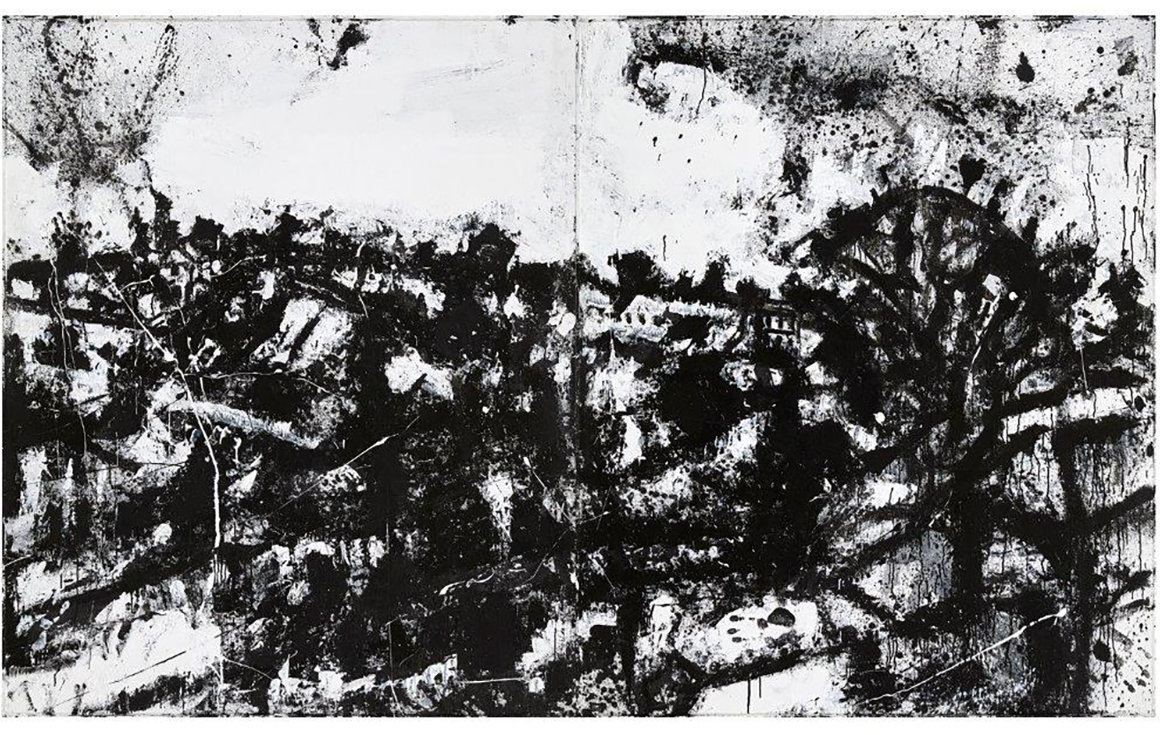
Abstract black and white landscape painting by British artist John Virtue

John Virtue Landscape No.174 (1990 – 1992) acrylic emulsion charcoal gouache pencil black ink shellac on board. 181 x 298cm Courtesy of Albion Barn

This September, Fortnum & Mason in collaboration with art collector Frank Cohen will present an in-store exhibition of British landscape artist John Virtue. LUX Digital Editor Millie Walton explains why she’s already looking forward to it

John Virtue is no ordinary landscape painter. And I say that for all of those who are reading this and thinking landscape painter means traditional means boring. I am normally one of those people.

Follow LUX on Instagram: the.official.lux.magazine

Abstract black and white painting by british artist John Virtue

John Virtue Untitled No.1 (2012-17) acrylic on canvas 183 x 183cm Courtesy of Albion Barn

For starters, Virtue’s paintings are monochromatic (i.e. no sunshine, flowers, cows, quaint farm buildings or windmills). They’re moody, turbulent, textured. His depictions of London are heavy, drizzling scenes of a kind of shadow city, bereft of all the usual iconic shapes. I’d go as far to say, it’s more of a mood than a landscape, and it’s one that any viewer – with or without knowledge of art history, or in fact, of London – can feel. A visual poetry.

Read more: India’s most significant modernist painter S.H.Raza at Piramal Museum of Art, Mumbai

Trained at Slade School of Fine Art, Virtue now resides in North Norfolk where he gleans inspiration from the harsh, flat, stretching expanses, whipped by wind and rain. Mixing swathes of white acrylic paint with black ink and shellac, his paintings are charged with the energy of the weather, dripping with the un-predictability and almost frightening power.

Ink painting of wood landscape by British artist John Virtue

John Virtue Landscape No.43 (1986-87) black ink shellac gouache on paper laid on board 147 x 220 cm Courtesy of Albion Barn

The juxtaposition of these huge, dark canvases set amongst Fortnum & Mason’s gleaming colours and grandeur will be an intriguing one.

Fortnum’s X Frank 2018 is curated by Robert Upstone and runs from 10th September to 20th October at Fortnum & Mason, Piccadilly. For more information on the exhibition visit: fortnumandmason.com/events/fortnums-x-frank-2018


Share:
Reading time: 1 min
contemporary facade of brass curving lines

Dramatic architecture by Paris-based architect Didier Poignant has created a spectacular contemporary hotel out of a cognac ageing warehouse

A former warehouse in the heart of the town of Cognac is set to reopen this year as a luxury hotel. Emma Love gets an exclusive preview of the dramatic Hôtel Chais Monnet

It’s no secret that cognac has become cool. Where once the French brandy – determined as such by being made specifically in the Cognac region in southwest France – had a fusty reputation as an old man’s after-dinner tipple of choice, now the 390 cognac houses producing the stuff seemingly can’t make enough of it (the Hennessy label, owned by LVMH, recently opened a new bottling plant to keep up with demand and increase annual production). The fact that it’s a huge hit in China where it’s seen as a status symbol of wealth, and in the US, where it’s synonymous with rap music, are undoubtedly part of the reason why five bottles of the amber-hued spirit are sold every second somewhere in the world. And just as cognac the spirit has gone through a cultural shift, now the historic town where it’s produced is finding itself in the global spotlight, too.

Follow LUX on Instagram: the.official.lux.magazine

Last year Tony Conigliaro, a mixologist and major influence on London’s cocktail scene (he is behind the legendary bar 69 Colebrooke Row) opened Luciole, a bar with a cognac-based cocktail menu and this summer, the game-changing Hôtel Chais Monnet will open its doors in a former cognac warehouse, set in two hectares of land in the centre of town. Backed by British investor Javad Marandi, who is also the owner of the Soho Farmhouse in Oxfordshire, the hotel will house 92 rooms and suites, plus 13 apartments. “Here in the town we’ve been waiting for this for a long time,” said mayor Michel Gourinchas. “We’ve asked ourselves a number of times what we could do with this site and thanks to this hotel we’ll be able to see a reality of what’s possible in a way that’s in the best interests of our town, its inhabitants, and tourists.”

sleek contemporary interiors of spa relaxtion room with tiled floor and day beds

Luxury interiors depicting a marble and wooden hallway with hanging contemporary lights

The public areas of the newly designed Hôtel Chais Monnet, such as the spa (top image) and the hallways, combine cool contemporary design with some original features of the former Monnet warehouse

The site itself has a unique history. The original 19th-century property was once owned by cognac trader Antoine de Salignac who, in 1838, founded the Society of Cognac Vine-growers, a community of several hundred small-vine growers who wanted to pool their strength to have sufficient stock to sell at the same time. Towards the end of that century, the shareholders asked Jean-Gabriel Monnet to manage the society and as part of the role, he and his family moved into the stately mansion and warehouse, naming it Chais JG Monnet. His son, also named Jean Monnet, left school aged 16 to follow in his father’s footsteps, travelling to Germany and America to sell cognac. He went on to become a political economist and diplomat, and an influential proponent of European unity (he is considered one of the founding fathers of the European Union). Later, the site was bought by the LVMH group, and then sold back to the town of Cognac in 2006.

grand interiors of a luxury sitting room with wood panelled ceilings, sofas, chairs, a fireplace and soft lighting

The next chapter in the property’s life looks very different – quite literally. Today, Hôtel Chais Monnet comprises seven original and three new buildings, all designed or remodelled by Didier Poignant of Ertim Architects in Paris. Looking at the hotel, what’s perhaps most striking is the way that the old and modern have been fused together, and how cognac references are subtly employed throughout. “I have never worked on, or seen a hotel like this in France,” says Poignant. “Transforming a historic cognac warehouse with such a large site in a town is very rare. For this reason, it is such a special project.”

Read more: Street artist Alec Monopoly on the purpose of art and wearing a disguise

At the heart of the property are a pair of new Les Ceps glass buildings surrounded by a twisting metallic structure inspired by grape vines. These house some of the rooms (the rest are in an original building, where the cognac was once aged) on the upper levels; on the ground floor of one there is a spa and wellness centre with seven treatment rooms, an indoor/ outdoor swimming pool, a hammam, jacuzzi and gym. The third new building is a series of apartments, which can be rented from three nights to a couple of weeks. The former old barrel-repair warehouse has been turned into a jazz bar with vaulted ceilings, Chesterfield sofas and a piano in one corner. As you’d expect, it will be stocked with a large selection of cognacs, from bottles by the small, lesser known houses to the famous Louis XIII from Rémy Martin.

Architectural render of luxury hotel bedroom with cream walls and large double bed

Render of one of the bedrooms

There are two restaurants within the old ‘Chai Cathedral’: a relaxed French brasserie and a more formal fine-dining offering which has old barrels, once used for cognac ageing, at the entrance. The chef chosen to head up the kitchen of the latter is Sébastian Broda, best known for his light, Mediterranean cooking at Michelin-starred Le Park 45 within Le Grand Hotel Cannes. “What matters,” explains hotel director, Arnaud Bamvens, “is that Sébastien Broda is a name of tomorrow. In his kitchen, which upholds a gastronomy of excellence, we can find his humility, his passion for cooking, and his interest in local produce. We want a cuisine of land and sea, rather than one or the other.” The hotel also has a private cinema, cigar lounge, kid’s club, a rooftop garden bar for summer sundowners, and a series of rooms dedicated to re-telling the story of Chais Monnet so far. The multipurpose ballroom (for up to 220 people) and four seminar rooms are suitable for meetings and events.

Architectural render of a glass entrance linking two warehouses

Render of the glass-encased entrance linking the two original warehouses

Of course, one of the biggest reasons for staying here will be the draw of visiting some of the many cognac houses that are on the doorstep, but the hotel is equally keen to promote the region’s many other attractions. The cobbled streets, the perfectly manicured gardens and traditional architecture, and the Charente river that runs through it, all point to a slower paced, more charmed life.

Read more: andBeyond CEO Joss Kent on creating luxury in the wilderness

“Cognac has a small bar scene but it has a lot of potential,” says Conigliaro, who decided to open a bar in the town with Guillaume Le Dorner, the former bar manager of 69 Colebrook Row, when he returned home to France. It was a smart move, and one that might encourage more drinking of cognac in the town itself (according to figures released in 2016, 97 per cent of cognac is exported, bringing the country 3 billion euros in annual revenue). With the cultural redevelopment of the nearby city of Bordeaux, it means a whole new part of France is opening up to the luxury traveller.

Large indoor swimming pool surrounded by white marble

The hotel’s swimming pool and (below) one of the 21 suites that will be available

interiors of luxury suite decorated in contemporary style with cream and wood furnishings

Four must-visit cognac houses

Meukow

Meukow was founded in 1862 by two brothers, August and Karl Meukow. They first visited Cognac on behalf of the Tsar of Russia, who hired them to buy French brandy supplies for the imperial court at St Petersburg. Look out for Meukow Extra, made from a blend of the very oldest eaux-de-vies in the Paradis Cellar. meukowcognac.com

Domaines Francis Abécassis

Domaines Francis Abécassis is a young cognac house with 220 hectares of vines. It is owned and run by Francis Abécassis and his daughter Elodie, who take a contemporary approach to producing classic cognac, such as in ABK6, blended from a selection of old eaux-de-vies.  abecassis-cognac.com

Camus

One of the largest independent, family-owned cognac houses, as well as one of the largest landowners in the sought-after Borderies cru. Headed up by fifth generation owner Cyril Camus, the house recently launched a new addition to its Borderies range, Camus XO Borderies Family Reserve. camus.fr

Otard

Established by Baron Jean-Baptiste Otard in 1795, this house is known for its medieval residence and its distinctive teardrop shaped bottles. The one to buy is Fortis et Fidelis, created in homage to the house’s founder and featuring the Otard coat of arms motif on the bottle. baronotard.com

For more information and updates on Hôtel Chais Monnet visit: chaismonnethotel.com 

Share:
Reading time: 7 min
Street art painting by Los Angeles based artist Alec Monopoly depicting TAG Heuer's CEO Jean-Claude Biver
Street artist Alec Monopoly wearing hat and scarf covering half of his face

The artist in his signature (dis)guise in Hong Kong

Street artist Alec Monopoly’s distinctive creations are a blend of subversive graffiti culture and post-pop colour. And he has now been tasked with rejuvenating the culture at watch brand TAG Heuer. Nathalie Breitschwerdt catches up with the elusive – and anonymous – LA-based graffiti genius.

The manufacture of luxury watch brand TAG Heuer consists of a series of modern buildings on the edge of La Chaux-de-Fonds, in western Switzerland. The town is built on a US-style grid system, seemingly at odds with the rolling forested hills of the Jura that surround it.

Inside, it’s as you would expect a high-end watch factory to be. A sanitized workshop floor contains rows of technicians piecing together different watch components; other rooms contain test laboratories and machines for finishing the timepieces.

Walk from the workshop through some connecting corridors to the corporate offices, however, and you are greeted with an extraordinary sight. It is a glass-walled room with paints, canvases and strikingly colourful artworks, finished and in progress.

There was no artist at work on the day we visited – he was back in his home city of New York – but Alec Monopoly is no ordinary artist in-residence. Not long ago, his art was illegal. A graffiti artist, his trade involved tagging (painting) buildings – other people’s buildings – with his distinctive design. Monopoly developed a cult following on Instagram, and was then discovered by pioneering, maverick watch CEO Jean-Claude Biver. A key player in the revival of the luxury watch industry and now head of the LVMH watch division (which includes TAG Heuer), Biver made Monopoly a brand ambassador, launching the partnership at Art Basel Miami. Explaining why the artist would be given his own studio up in the Swiss mountains, Biver explained that Monopoly would play a key role in updating the brand for the new generation. “The most important thing is that Alec will be our art provocateur,” Biver said. “He will bring his influence inside the company. He will infuse the culture of TAG Heuer. That is the real job.”

Follow LUX on Instagram: the.official.lux.magazine

Monopoly’s real identity is still a secret: he hides his face behind a red bandana. But his post-Roy Lichtenstein takes on pop culture characters (and specifically the banker from the Monopoly board game) give him a universal and instantly recognisable appeal – as does his nuanced take on the world’s economic system.

Monopoly’s artworks are now appearing in TAG Heuer stores around the world, and he is more likely to be courted than taken to court by the property world now.

Street art painting by Los Angeles based artist Alec Monopoly depicting TAG Heuer's CEO Jean-Claude Biver

Alec Monopoly’s depiction of TAG Heuer ’s CEO Jean-Claude Biver at Art Basel Miami

LUX: When did you start making street art?
Alec Monopoly: I have been painting on the streets of New York since I was 12 years old. Growing up in the city, I loved skateboarding and the graffiti culture in the city. In 2008, I moved to Los Angeles and that’s when I started integrating my artwork into street art. I was a graffiti artist before and that’s when I became a street artist.

LUX: How has the perception of street art changed since you first started?
Alec Monopoly: It’s changed big time. It’s become more accepted into pop culture recently, whereas before it was much more frowned upon. In the early days especially, graffiti was looked on as pollution and destruction, but now it’s transforming the grey walls of cities into things of beauty. If you look at the Miami Design District and Wynwood, it’s changed a dangerous neighbourhood with abandoned buildings and actually turned it into something beautiful. Take a look at the Wynwood Walls where some of the best artists in the world come to paint; it’s a great example of how street art has been accepted into society.

Read more: Megan Balch & Jaime Barker, Founders of Flagpole on their inspirations and creative process

LUX: Tell us about your fascination with the Monopoly Man.
Alec Monopoly: I started painting the Monopoly Man in 2008 when the economy started to dip. I was playing the game Monopoly, which I love, and was watching the news where I saw Bernie Madoff being arrested. I remember thinking how ironic that situation was, as he sort of looked like the Monopoly Man. There was so much meaning to it. People really connect with the Monopoly Man, so that’s when I started painting him for fun in the street. Originally it was for fun, but it also became more real due to the situation. That’s when I started spreading more intricate characters into my paintings, like Robert De Niro, Twiggy and Jack Nicholson.

Large scale mural by Alec Monopoly on the side of a building in Miami's design district

An Alec Monopoly creation in Miami’s Design District

LUX: Why do you think your artwork is in such high demand?
Alec Monopoly: People can really connect with my work. I create a lot of work that has a positive message; it’s fun and brings happiness to people. A lot of people have found that my work is inspirational. Having the Monopoly Man with bags of money and seeing him run with them, it’s kind of like a good luck charm, which you see in the offices of CEOs. Now, I draw a lot of inspiration from life: travelling, meeting new people, experiencing new things. I truly live through my artwork and express who I am as a character, as a person, through my paintings. I think it’s important for an artist to express themselves through their work in a way where people can see life through their eyes – my eyes.

LUX: Are there certain places in the world that are “street art hubs”?
Alec Monopoly: I would say there are different cities where street art is more popular. Berlin would be one of the top cities for emerging street artists and for street art in general because it’s more accepted into the culture there. I would say LA is great due to the massive walls throughout the city and then, of course, Miami Wynwood is the Mecca of street art, for now.

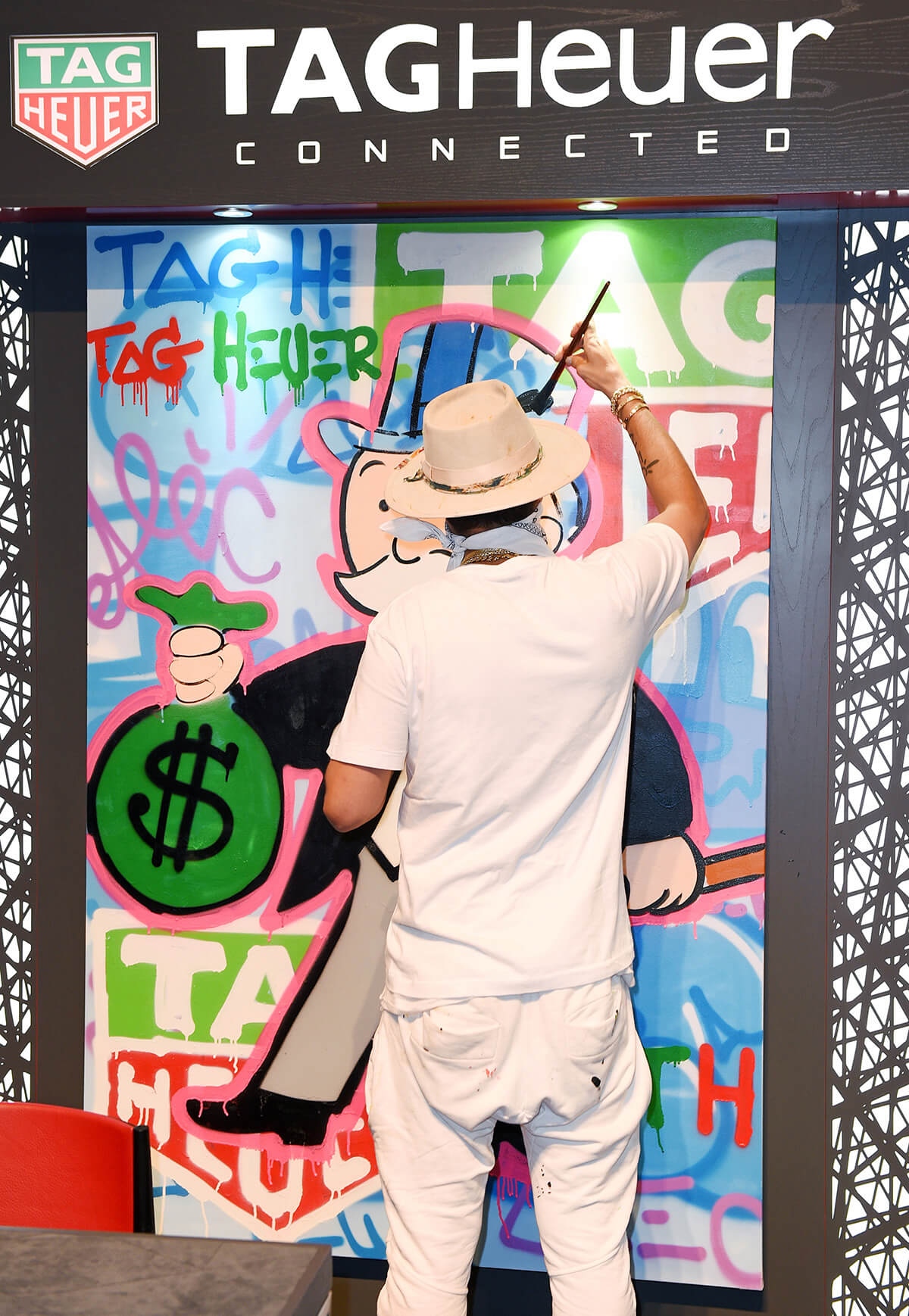
Street artist Alec Monopoly painting TAG Heuer onto wall

Alec Monopoly tags for TAG at a pop-up store in California

LUX: You’re a brand ambassador for TAG Heuer. How did that come about?
Alec Monopoly: It came about through an organic relationship with Mr Biver. We met in the south of France in my studio and created a relationship. I was really taken aback by him – he’s a genius. He’s like the Steve Jobs of the watch industry. Hearing him talk and his passion, we really connected as I have a great passion for watches myself. My dream has always been to create a watch with my artwork in the dial. We really saw eye to eye with the collaboration and it’s been an amazing journey for both of us. All the watches sold out immediately!

LUX: Is it strange for a street artist to be associated with a luxury brand or do you see it as a step in the right direction?
Alec Monopoly: I definitely think it’s a step in a positive direction. I’m very picky who I do brand collaborations with, but I think TAG is the perfect fit. It’s the perfect vehicle to pursue one of my dreams, which was to put my art inside a watch. I was very happy to do it.

Read more: Luxury in the treetops at Chewton Glen

LUX: Anonymity and graffiti seem to go hand-in-hand for street artists such as Banksy and yourself. Why is that important to you?
Alec Monopoly: For me, it represents the freedom to keep painting in the streets where I would like to paint. I paint in some places where it’s kind of a grey area with regards to the law, so it’s important to remain anonymous. It’s kind of fun too; I can take my hat, my mask and my jewellery off and no one really knows who I am – it’s kind of nice to have that double life. It’s very interesting that when I cover my face people recognise me and when I don’t, people have no idea who I am. It’s the weirdest thing!

LUX: How do you define art and its purpose?
Alec Monopoly: I see art as very important for culture. It’s a way of seeing what’s going on in that part of history and what’s going on in the world. For me, it’s a form of therapy and expression, but it also brings happiness to other people’s lives. When I’m painting one of these graffiti walls, I’m transforming that neighbourhood through bright colours. People driving by, kids growing up there – I try to bring them as much happiness as possible. I’ve met kids who started painting their own versions of the wall and creating their own art, which is really inspirational to me.

LUX: What do you do when not making art?
Alec Monopoly: Honestly, I’m always creating art. Yesterday I was at the beach and started making these drawings in the sand – I can’t even relax when I’m at the beach! I love art, it’s who I am.

View Alec Monopoly’s portfolio of work at alecmonopoly.com and Tag Heuer’s collections at tagheuer.com

Share:
Reading time: 8 min
Model wearing blue and yellow off the shoulder swimsuit lying on a pebbled beach
Model poses on beach wearing blue bikini and light blue jumper

Flagpole Summer 18 Collection

New York based swimwear label, Flagpole is a Cali-surfer girl’s dream. Clean lines, block colours and bikinis that won’t fall off every time you dive into the sea. LUX asks co-founders Megan Balch and Jamie Barker how they do it.

Colour portrait of Jaime Barker and Megan Bolch Flagpole NYC founders

Jaime Barker and Megan Balch

1. Describe the Flagpole woman.

The Flagpole woman loves to travel, always active in her pursuit for exploration. She is sophisticated, practical and embraces a sporty edge to her style. She appreciates quality in all aspects of her life.

2. How does the collaborative design process work?

We have the same taste but very different strengths in our designing. We like to choose the colour palette together and with that, the collection really starts to come together. It’s the blend of Megan’s focus on functionality and Jaime’s artistic vision that gives Flagpoleits signature design.

Follow LUX on Instagram: the.official.lux.magazine

3. What’s inspiring you at the moment?

It’s almost always architecture. We just returned from a trip to Chicago bursting with ideas and appreciation from their skyline.

Model poses in yellow bandana bikini top and blue striped full length skirt

The Lori top with Frida skirt from the Flagpole Summer 18 Collection

4. What comes first, functionality or style?

Honestly, it’s a combination. They are not mutually exclusive. Without artistic vision, Flagpole would not have its voice. Without functionality, it would not have its progress. We must have both to embrace and succeed in our story. So when we approach a new concept, both are simultaneously in conversation.

Read more: The ultimate mid-week escape at The Royal Crescent hotel, Bath

5. Your collections always have a distinct colour palette. How do you decide on the shades?

Colour is something we both find very emotional. We spend a lot of time working to find the perfect colour combinations that speak to what we want to feel in our collection. The painstaking process of balancing warm and cool tones is honestly one of the most exciting and aggravating stages. But we will work until we both feel that every shade is perfect.

Model wearing blue and yellow off the shoulder swimsuit lying on a pebbled beach

The Gia one-piece from the Flagpole Summer 18 Collection

6. What’s next for the brand?

There are so many things in the works we can’t wait to share with the world. One we can say, and are excited to announce, is that this summer we’ll be launching our Men’s line!

View the collections and buy online at flagpolenyc.com

Share:
Reading time: 2 min
vibrant abstract painting of Sienne Port by S.H. Raza

S.H. Raza, Sienne Port, Oil on canvas; 1960. Image courtesy: Piramal Museum of Art

The first major exhibition of Sayed Haider Raza since his death in 2016, S.H. Raza: Traversing Terrains explores five decades of the painter’s work from the early 1940s to the late 1990s, tracing his development and influence as both artist and philosopher.

Follow LUX on Instagram: the.official.lux.magazine

abstract painting of a church against a yellow sky by S.H Raza

S.H Raza; Eglise et Calvaire Breton; Oil on Canvas; 1956. Image courtesy: Piramal Museum of Art

‘The most tenacious memory of my childhood is the fear and fascination of Indian forests,’ Raza said in an interview 2001. ‘We lived near the source of the Narmada river in the centre of the dense forests of Madhya Pradesh. Nights in the forests were hallucinating; sometimes the only humanising influence was the dancing of the Gond tribes…’

Read more: Why you should check into Chewton Glen this month

As such, the scenes Raza often depicts are full of life, movement, memory, Indian iconography, nature, philosophy, music and poetry. They’re otherworldly, sometimes strange and chaotic, sometimes precise and ordered, fusing together the landscapes of France (where he lived after being awarded painting scholarship at the École Nationale Supérieure des Beaux-Arts in Paris) with the feverish colours and unique aesthetics of India.

Abstract painting of a coastal town by Indian modernist painter S.H.Raza

S.H. Raza; Benares; 1944; Watercolour on paper. Image courtesy: Piramal Museum of Art

In 1947 ( the same year that India gained independence), Raza co-founded the Bombay Progressive Artists’ Group, advocating an avant-garde style (Fauvist colours, Cubist forms, Expressionist brushwork) with Indian subject matters and themes.

This expansive retrospective provides an intriguing and important insight not only into the artist’s career and life, but also into the progression of Mumbai’s art scene.

‘S.H. Raza: Traversing Terrains’  runs until 28 October 2018 at the Piramal Museum of Art, Mumbai.  For more information on the exhibition visit piramalmuseum.com/exhibitions/current/sh-raza-traversing-terrains


Share:
Reading time: 1 min
Chewton Glen hotel main house pictured in the summer light
Entrance way to Chewton Glen with pink roses surrounding gates

Chewton Glen is at its most beautiful in the summer

Why should I go now?

English summers: you can’t beat them. Especially when you’re staying in a luxury treehouse, overhanging a lush, sun-bathed valley. Right now, the grounds are at their most verdant, buzzing with bees and butterflies, but unlike the manicured lawns of the main hotel, which are pretty in an orderly kind of way, the treehouses are hidden deep within the wild woods. This is the land of barking deers, swooping owls, fairytales.

luxury treehouse hidden amongst the treetops at Chewton Glen Hotel

Chewton Glen’s 14 luxury treehouses are hidden away from the main house, amongst the trees

What’s the lowdown?

The main house dates back to the early eighteenth century and much has been done to preserve an air of old-school elegance; think mahogany antiques, classic paintings, a grand piano, plush carpets, conservatories, and croquet lawns.

luxury restaurant with tables inside a modern conservatory

The Dining Room restaurant Summer House seating area

The Dining Room restaurant is smart without being fussy both in terms of the interiors and the menu. Dishes are seasonal, fresh and delicately flavoured making the most of local produce. There are – rather intimidatingly – over 1900 wines to choose from, but fortunately, the sommelier is well used to guests’ bewilderment and gently guides us through the menu. For a more relaxed atmosphere, The Kitchen (a short buggy ride away) serves wood fired pizzas, salads and burgers; this is also where guests can take cookery lessons.

Follow LUX on Instagram: the.official.lux.magazine

The Spa is an extravagant expanse encompassing an ozone-treated indoor pool surrounded by Grecian columns, hydrotherapy pools, aromatherapy saunas, crystal steam rooms, an outdoor terrace lined with sun-beds and its own restaurant where spa-goers munch salads in robes and slippers – even the changing rooms are impressive with piles of fluffy white towels, REN toiletries and their own hot tubs. The 60minute facial using Natura Bissé products is deeply relaxing, leaving my skin as soft and bright as if it were new, which, after multiple rounds of exfoliation, masks, and massaging, it practically is. My partner emerges in a dream-like state from a full-body massage, claiming that he’s “never felt so calm!” A statement, which does well to sum up the hotel’s general seduction.

Glimpse of a pretty outdoor swimming pool surrounded by plush sun loungers

The outdoor swimming pool sits within Chewton Glen’s pretty gardens

When the weather’s hot it would be a shame not to make the most of the hotel’s 130-acre grounds. There’s an extremely pretty outdoor swimming pool, a golf course, tennis courts, archery, falconry and plenty of walking routes, some of which meander along the coastline.

Getting Horizontal

We’re in a treehouse loft suite – a short walk or buggy ride away from the main house with its own check-in and carpark. The style is contemporary, but homely with a kitchen area (well stocked with free snacks, soft drinks and on arrival, a half bottle of Taittinger champagne), a wood-burner, sofa, and large windows all along the front which open out onto the balcony and fill the space with natural light.

contemporary interiors of a sitting room cross kitchen decorated in pale creams and purples with a large sofa and modern light fitting

The kitchen/dining area of the newest and largest treehouse: The Yews

Read more: British Polo Day’s Tom Hudson on polo’s international appeal

Upstairs, there’s a twin loft for kids whilst the master bedroom on the ground floor connects to a spacious bathroom complete with shower and bathtub. The balcony overhangs a wild valley with outdoor furnishing and a hot tub which really comes into its own when the sunsets. It has the same kind of romance as a luxury safari camp in Africa – without the wild animals.

Flipside

The treehouses are designed as secluded retreats, and in the summer when the branches of the trees are lush with leaves you really do feel like you’re in the middle of nowhere (at most, you might catch a glimpse of a rosy face through the steam of a hot tub on a neighbouring balcony), but it may be a different story come autumn. That said, we rather like the idea of snuggling up in front of the fire with a mug of homemade hot chocolate…

Rates: From £850 for a Treehouse Studio Suite (approx. €950 / $1,100)

To book your stay visit: chewtonglen.com

Millie Walton

Share:
Reading time: 3 min
polo players in action on the field

British Polo Day 2017 at Black Bear Polo Club, Henley-on-Thames

British Polo Day’s unique approach to an international, invitation only, global polo platform has cemented the brand as one of the most sought after events on the social calendar. Partnering with the likes of Bentley, VistaJet and Chelsea Barracks, the events see some of the world’s most interesting individuals gather to celebrate polo in dreamy locations around the world. LUX Editor Kitty Harris speaks with Co-Founder and Director Tom Hudson about the inception of the idea and the history of horsemanship
Tom Hudson British Polo Day Founder pictured with CEO Ben Vestey outside ancient building

Tom Hudson (right) with BPD’s CEO Ben Vestey

LUX: How did the inception of British Polo Day come about?
Tom Hudson: In 2008 I moved to Dubai along with a whole wave of friends from school, university and the Army, who all seemed to be moving out at the same time. I began playing polo at a brand-new club that had been built in the desert and became friends with the Habtoor family who were the local polo patrons. At the time not, many people watched the sport. I grew up in Windsor, next to Guards Polo Club which often draws thousands of people to watch, and pitched the idea for hosting an exhibition, where we would bring out the best British players to ride against the best Gulf players. Our first event was in February 2009 and we expected about 200 people. More than a thousand turned up, and British Polo Day was born. Since then, we have held 65 British Polo Days in more than 15 countries across all 5 continents and have raised more than $2m for good causes in the process.

Follow LUX on Instagram: the.official.lux.magazine

LUX: Why was it important for British markets to have access to Dubai?
Tom Hudson: I think in a post-Brexit world, Britain needs to look to its friends further afield and Dubai is a natural gateway to the East with many British Expats living there. It has a familiarity about it, especially with the financial freezone having a legal system based on English law. Above all, the Emiratis are incredibly hospitable and like things that are quintessentially British.

British Polo Day – Dubai 2018 from British Polo Day on Vimeo.

LUX: What is it about polo that captures its audiences and players?
Tom Hudson: Polo is the world’s oldest sport, and there is a famous saying said to have originated in ancient Persia that “the game of kings will always be the king of games”. I think the history and heritage resonates everywhere it is played, whether that is India with the Maharajas or China, harking back to the Tang dynasty. As the only mode of transport for more than 2000 years, horsemanship is celebrated in almost every culture, and polo allows one to demonstrate strength, speed and stamina. The Ralph Lauren adverts have not done the game any harm either!

luxury hospitality tent with tables of guests and large sculpture of a horse at the centre

Luxury hospitality at last year’s British Polo Day event at Henley-on-Thames

LUX: British Polo Day has been described as an international members club, with the intention of building lasting relationships. How does this work as a business model?
Tom Hudson: British Polo Day was founded with the aim of bringing people together and forging friendships with our hosts in their home countries. By working with mutually complimentary but non-competing companies, partners can club together and co-invest in the platform that would otherwise cost them much more to do themselves. There is also the network effect around their clients. If one partner invites 10 clients, but 10 partners each invite 10 clients, then there are 100 potential clients for them all to meet and introduce to each other.

Read more: Geoffrey Kent on how to pack for an adventure

LUX: How do you go about selecting the right partners for the brand?
Tom Hudson: We are meticulous in only bringing in companies and, more importantly, people who are a good fit and who buy into our long-term vision. We have 2000 years of combined heritage across our partner base and we check with our existing partners before bringing a new company in.

LUX: What are some of the challenges you face organising international British Polo Day events?
Tom Hudson: People often talk about the founding or inception of an idea as if it is the hard part, however I think it’s turning the vision into a reality that is the biggest challenge, and riding out the bumps on the way. It was one thing to throw one event in Dubai in 2009, but quite another to deliver the events globally to the same standard for 10 years straight. For that I have to thank the British Polo Day team and my great friend and partner Ben Vestey. Ben played in the first ever British Polo Day in India and immediately saw the potential, leaving his job soon after and investing in the growth of British Polo Day.

Founder of British Polo Day Tom Hudson with Sir Richard Branson

Tom Hudson with Sir Richard Branson at a British Polo Day event

LUX: Much of your advertising is by word of mouth from your guests. Supporters include key figures in government, aristocracy, diplomats and arty types too. How would you describe the ultimate British Polo Day guest?
Tom Hudson: We look for those who are not only interesting, but also interested in others. From entrepreneurs like Sir Richard Branson and Elon Musk, to Arab Sheikhs, American influencers with millions of followers, through to Indian industrialists and Chinese couture designers, we’ve hosted them all. We pride ourselves in the magic and eclectic mix and are always striving to introduce people who we think will get along and find that chemistry. We’ve even had our first wedding and baby from a couple who met at a British Polo Day!

Read more: 6 reasons to buy a Richard Mille McLaren watch

LUX: British Polo Day now travels to 8 destinations a year, what does the future hold?
Tom Hudson: We used to think that the more events and countries the merrier, with many polo clubs inviting us to host British Polo Days, but recently we have decided to stick to our core countries and concentrate on quality over quantity. Ben and I both have young families, and we would love our children to witness some of the amazing experiences that we have been lucky enough to enjoy through British Polo Day.

LUX: Where do you go to escape?
Tom Hudson: I’m fortunate that Jess, my wife, works with some of the best luxury holiday destinations in the world, so recent holidays have been on Velaa Private Island and Royal Mansour in Marrakech.

Share:
Reading time: 5 min
lone traveller stands on the top of stones overlooking mountains

Image by Oliver Schwendener

After years of exploring the remotest corners of the globe, Geoffrey Kent has perfected the art of being prepared. Here the Abercrombie & Kent Founder reveals his travel essentials – and what to avoid on your next trip

Young Geoffrey Kent standing by the front of a truck

Young adventurer Geoffrey Kent

I’m never without my Louis Vuitton briefcase

Good hand luggage is vital. If you are travelling commercially, carry your need-to-have items with you and not in the hold. I always check my luggage as it comes out so fast these days but I’m never without my Louis Vuitton briefcase. It’s a Président Classeur from 1972 that’s been all over the world with me. I guess you could say it’s become my signature piece. I love that you can fling it in the back of a truck or helicopter luggage hold without it getting dented. No matter what I’ve done to it or where I’ve taken it – it always looks good.

Follow LUX on Instagram: the.official.lux.magazine

In a pinch, I’ve used it as weights for my daily workout when staying in a tent in the middle of nowhere. Fully packed, it weighs about 11kg. I’ve also used it to get out of many a hole – figuratively and literally. In Tanzania when my Land Cruiser got stuck on a dirt track, I put my case down in the mud, placed the jack on top and jacked the vehicle out. It’s indestructible. Little did I know, when I bought it nearly 50 years ago, that it would still be going strong half a century later. Talk about a future heirloom…

Or my Iridium satellite phone

Louis Pasteur said that “chance favours the prepared”, and once – in 1975 – I spent a night in jail in Juba, Sudan. The Southern Sudanese army were holding some of my clients hostage and, against all advice, I had flown in to rescue them. I sat in that stale, dank cell wondering how on earth I’d fix the situation when I didn’t even have a phone… All ended well, but I’ll never forget that night.

Read more: The ultimate mid-week escape at The Royal Crescent hotel, Bath

Nowadays I also carry my iPhone. Google Maps has been a game changer in terms of navigating the world. On my first ever solo journey, I carried a large, folding Shell map. Now all this information is available at the touch of a screen, making even the farthest corners of Earth more accessible.

I pack shoes that work for any occasion

For a good grounding, Merrell’s ‘Vibram Traction’ boots are the perfect blend of casual cool and clever high-performance tech. Extraordinarily light, they are equally at home in the bush and on a mountainside. The rubber sole provides stability and durability. Having grown up running barefoot wild around the Aberdares in Kenya, shoes are a bit of a nuisance, but Merrell’s trainers have been designed for barefoot running so are the perfect holiday shoe for me. I also pack Hugo Boss and Gucci pairs for smart events when away too.

cashmere touch screen gloves

Touch-screen gloves from Geoffrey Kent’s Safari Collection

I like to stay connected – even in the most extreme climates

When journeying to colder climes, my Geoffrey Kent Safari touch-screen gloves are invaluable. My favourite app is Instagram. I do it religiously and hate missing out on a photo opportunity when fumbling to take off gloves. Made from a mix of wool and cashmere, these have conductive pads on the forefinger and thumb to allow you to use your device without removing them.

I try to leave the smallest impact possible

On a less material note, a philanthropic outlook is vital. How can you positively impact lives and livelihoods in the communities where you travel? Examining how we can contribute to animal conservation will ensure longevity of those populations. For example, point blank refuse to partake in elephant riding, painting or any activity in which the animals are forced to ‘perform’ in any way. These activities are not natural, and the training required is detrimental to this species’ wellbeing. Travelling with conscience is the only way we can insure a sustainable future.

Read more: 6 reasons to buy a Richard Mille McLaren watch

Abercrombie and Kent founder Geoffrey Kent and his wife Otavia

Geoffrey Kent and his wife Otavia

I love to travel with a companion

My wife Otavia shares my sense of adventure and desire to explore. She often accompanies me on the Inspiring Expeditions I lead. We’re off to Corsica next, then will be circling the globe by private jet, before ending the year with the Emperor penguins at the South Pole.

Geoffrey Kent has just launched the Geoffrey Kent Safari Collection, a range of timeless, high-performance, luxury travel apparel and luggage for today’s adventurer. Visit www.geoffreykentsafari.com for further information.

Share:
Reading time: 4 min
yellow sportscar manufacturing process in workshop with engineer working on engine
still life image of Richard Mille watch with black strap and large rectangular face

The RM 11-03 McLaren watch

It costs as much as a McLaren 570S and will turn just as many heads. We love the RM 11-03 McLaren Automatic Flyback Chronograph with a desire that is almost unhinged – this is why you will too. 

1. It feels like a supercar.

Unlike many high-end watch-car collaborations, where a motoring logo is stuck onto what is basically an existing watch design, the 11-03 was designed jointly by McLaren Design Director Rob Melville and Richard Mille Engineer Fabrice Namura. It uses the same materials and coatings used by the British high-performance car brand, and while big, is incredibly light.

2. It looks fabulous.

Collaborative watches can be hit and miss; at worst, a mish-mash of two completely different design philosophies. The 11-03 is actually beautiful, a tough achievement for a big watch.

yellow sportscar manufacturing process in workshop with engineer working on engine

The production facility at McLaren in the UK

3. You’ll not see anyone else wearing one.

Only 500 are being made, worldwide, and the first ones are only available to McLaren Ultimate Series clients; afterwards, they’ll be available at Richard Mille stores.

4. It’s not a Patek Philippe.

If you buy one of these, you’re likely to have at least a couple of Pateks as well, just as a McLaren P1 owner is likely also to have a few Ferraris. But, just like buying a P1, or an F1, purchasing a 11-03 shows a certain breezy panache and originality.

detail photograph of watch manufacturing process

The manufacture of the RM 11-03 McLaren watch case

5. It’s wearable.

You may have a platinum dress watch also costing as much as a high-end sports car, and you’ll wear that a couple of times a year under a dinner jacket, for fear of scratching or bashing it. The 11-03 is not just lightweight; it’s made with hi-tech materials like top-grade titanium, and you can wear it to play tennis, fish on your boat or hike in Alaska. And it’ll be fine.

6. It’s beautiful.

Did we say that already? But it just is.

For more information visit: richardmille.com

Share:
Reading time: 1 min
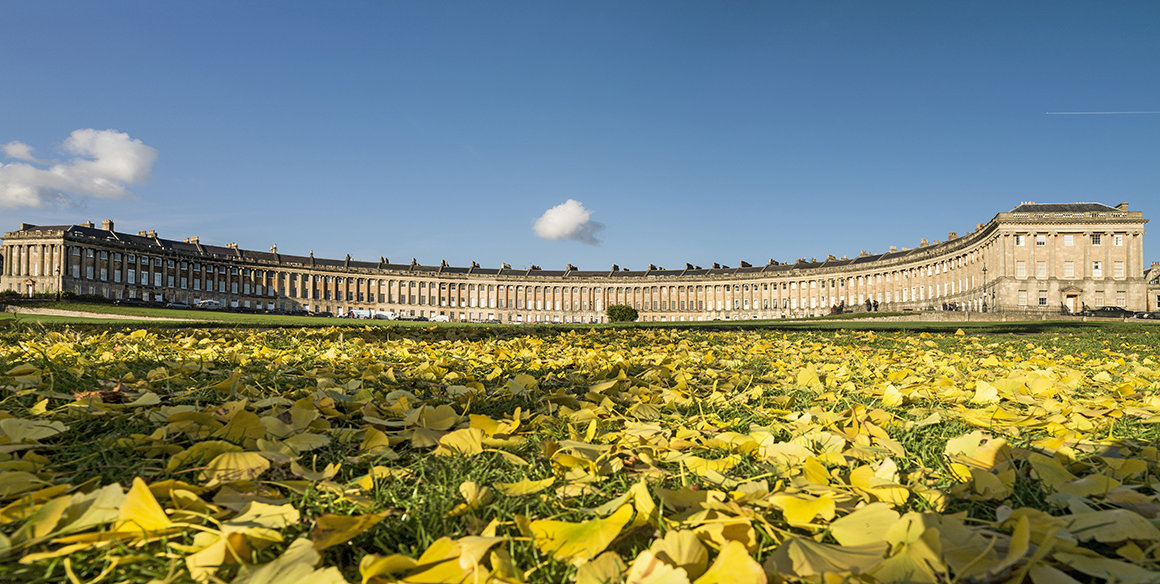
curved Georgian building with columns and lawn scattered with yellow leaves

The impressive facade of The Royal Crescent Hotel, Bath

English country house hotels are wonderful, but it can be a challenge to get to them from the capital; and they can be teeming with families at weekends. LUX Managing Editor Serena Hamilton experiences the best of both worlds with a midweek break to the Royal Crescent, a hotel in the historic city of Bath with a country feel – and just over an hour in a first class carriage from London’s Paddington Station (and the Heathrow Express train)

Finding a hotel that’s not a million miles from London for a mid-week break isn’t as easy you’d think. Whilst there are a lot of beautiful hotels in the UK, many of them are hidden deep in the countryside so that when you arrive at the train station you still have to travel to get there, which is a big deal when you’re only going away for a couple of nights.

luxury outdoor seating area with tables and unmbrellas

The Taittinger Spa Garden is just one of the few outdoor relaxation spaces at the hotel

The Royal Crescent is located right in the heart of Bath – from door to door it took us just over two hours. Spread across two tall, columned Georgian townhouses, the hotel is immediately striking and hides a beautiful, pristine garden dotted with statues and benches tucked into secluded corners – perfect for long, lazy afternoons reading in the low dappled sunlight. The buildings themselves are steeped in history and much has been done to preserve the ancient grandeur; think sweeping staircases, classical busts, antique furnishings, chandeliers, and exquisite oil paintings.

Follow LUX on Instagram: the.official.lux.magazine

We stayed in one of the spacious Master Bedrooms which featured a huge marble bathroom, and its own elegantly decorated living area, which was especially useful as we needed to do some work, but with staggering views over the city, it was a very pleasant and relaxing place to do so. We loved the bright interiors, which felt decadent and luxurious without being stuffy or overdone.

Luxury modern interiors of hotel restaurant with white tablecloths and purple seats

The award-winning Dower House Restaurant

Dinner at The Dower House restaurant was a real treat with tables overlooking the leafy gardens or the choice to dine alfresco on warm evenings.The roasted stone bass with crispy wild mushroom, confit pink fir, brown shrimp, pistachio paste and crumb comes highly recommended as does the slow cooked duck egg to start. We were very impressed by the charming sommelier Jean-Marc Leitao who expertly guided us through the wine list. The Montagu Bar also serves food and has a lovely laid-back atmosphere. Perhaps seduced by the nostalgia of the surrounding old-age glamour, we chose prawn cocktail as one of our small plates, which turned out to be one of our favourite dishes during the stay.

Read more: andBeyond CEO Joss Kent on creating luxury in the wilderness

luxury indoor pool surrounded by light stone walls

The Relaxation Pool at The Spa & Bathhouse

The Spa & Bath House is one of the hotel’s big draws. Located opposite the main hotel, across the courtyard and gardens, it feels like an escape its own right. The main communal area includes a  12-metre indoor relaxation pool, a vitality pool with massage jets, sauna and steam room. The Royal Crescent Signature Spa Treatment, known as the ‘Hero’, was a real highlight targeting the back, face and scalp. Afterwards, guests tend to relax in the tranquil Taittinger Spa Garden where you can order drinks, snacks, afternoon tea and of course, champagne.

Whilst the hotel is extremely conveniently located – a short walk from most of the heritage sites and shopping areas – it still manages to feel secluded and serene. We returned to London, after only two nights, feeling refreshed, rejuvenated, and better equipped for the week ahead.

Rates start from £330 per night (approx. $450/ €400). Book your mid-week getaway: royalcrescent.co.uk

Share:
Reading time: 3 min