The Balmoral
Clyde Auditorium

Clyde Auditorium – Seating 3,000, it is also referred to as “The Armadillo” by Glaswegians

Edinburgh is Scotland’s capital, Glasgow is its biggest city. Ahead of this year’s vote on independence, RJ MALONE explores what each has to offer in terms of hospitality and soul

Glasgow, Scotland’s biggest city and Britain’s second city after London (at least, until the Scots decide whether or not they wish to remain part of Britain later this year), is often gifted with slightly backhanded epithets. “Gritty”, “real”, “friendly” and, worst of all, “down-to-earth”, for example, compared with Edinburgh, Scotland’s capital 40 miles down the M8 motorway, which is “beautiful”, “historic” or “traditional”.

I rather like spending time in Glasgow. It doesn’t have the visual drama of Edinburgh’s Castle as viewed from Prince’s Street, or the tourist-postcard dream come true of the Royal Mile. But it does have plenty of striking architecture around its university, West End and central areas, a fizzing cultural program, and some fantastic, and well-priced, restaurants if you like seafood, simply rendered.

To experience the city properly, you either need to stay in a place where you can escape from its very real harshness – no creative cultural program can obliterate the bands of rain sweeping on crystal clear air from the Atlantic, whatever the month – or revel in it.

The first of these is the Hotel du Vin, One Devonshire Gardens. Fans of the boutique town hotel group will be familiar with its cleverly designed, gourmand-friendly, contemporary-cosy properties around the UK; but this is another level altogether. The group’s only effectively five-star outpost (only the vagaries of staircase connections between the grand townhouses that comprise the hotel rob it of an official five-star rating), it is on the edge of the city’s restaurant-and-bar-packed West End. Step inside and you shut the wind, rain and streetscape out, both visually and physically.

Hotel Du Vin

Hotel du Vin – The iconic hotel is known for both its service and style

It’s all about a series of grand drawing rooms, created with a very contemporary blend of pared-back chic and ornate swank. My bedroom, facing an internal courtyard, was all about swoothing swathes of drape and fabric, and a bedroom that felt like you had been whisked into a 19th-century boudoir (but with no mustiness or dustiness; everything was perfectly up-to-date). The best part of the stay, though, was an evening spent in the bar: this was another ornate drawing room, with sofas and chaises longues and coffee tables, with a bar along one side. The lighting, so often the killer in bars in drawing rooms (there’s usually too much of it and you expect your maiden aunt to drop in for tea and biscuits, not very seductive), was just dark enough. The array of single-malt Scotches would have kept a whiskiphile going for weeks; the wine list was peppered with interesting red Burgundies and new-wave new-world points; I enjoyed some local Scottish craft beer, while picking at a very pleasant board of charcuterie.

Glasgow’s heyday was at the height of the industrial revolution, when it was a port, centre of commerce and ideas, and shipbuilding centre: a sort of 19th century version of contemporary Shanghai. Its more recent reinvention involves some interesting architecture also, and a way to both see and experience it is at another of my favoured hotels in the city, the Crowne Plaza Glasgow. This sits in the middle of a new cultural and conference area, a former industrial zone across the curiously quiet Clyde river (the great shipyards were further downstream, where the waterway is mightier) from the BBC’s new Scottish headquarters, and next to a mini-Sydney Opera House known as the Clyde Auditoriam, designed by awardwinning architect Sir Norman Foster. At night, the area has a kind of Twilight Zone beauty about it, and I enjoyed sitting in the silent efficiency of my corner suite, which had a double outlook, drinking a Schiehallion beer, looking out across the river and over to the outline of the Southern uplands beyond, feeling like we are on the edge of Europe. The bar, downstairs, is pretty lively too, in a very Glasgow way.

Edinburgh has a much more formal way about it, and a far more formal beauty. I prefer the cheerful gruffness of a semicomprehensible Glaswegian taxi driver to the clipped and chipped service of an Edinburgh driver, but that’s personal. And if you are going to see Edinburgh, there is one place to see it from: its grandest hotel, the Balmoral, which sits directly adjacent to Waverley Station, diagonally facing the Castle, and at one end of Prince’s Street. Prince’s Street itself is a shopping boulevard flanked by unremarkable retail in grand stone buildings on one side, but the gardens on the other side, dropping into a dip, and then rising up to the great rock hill on which the Castle is perched, give the impression of being on the edge of the sea, the Castle a fortress rising beyond.

The Balmoral

View From The Balmoral with views of the Edinburgh Castle by night

My room had a view of all this, and an enormous amount of space besides, a mark of this grand edifice of a hotel. A small measure of Highland Park 12-year-old whisky with a single cube of ice made from Highland Spring water (why put chlorinated tap water in your whisky, in the form of a melting ice cube?) enhanced the view.

The public areas of the Balmoral are a tourist attraction in themselves; the domed Palm Court a place where locals and tourists congregate for afternoon tea, Ritz-style (be sure to book in advance) and no doubt talk of places where palm trees don’t need central heating in order to grow properly. More my style was the spa, where a chatty therapist gave me a very effective scrub and massage, amid generously proportioned surroundings.

Share:
Reading time: 5 min

art-baselArt Basel Hong Kong is trying to create the same buzz for Asia’s burgeoning collector scene as its parent fair, Art Basel, does in Europe. MAGNUS RENFREW, director of Asia for Art Basel, explains the challenges involved in a fluctuating Asian art market

Over the past six or seven years, the Asian art market has developed considerably. Historically, the market had been quite auction driven, particularly between 2006 and 2008 when there was a sudden big increase in interest for Chinese art. There had also been a lack of curatorial and critical frameworks, which the market had moved to replace. The perception was that an expensive work must be important, which is somewhat back to front.

Marnie Weber Log Lady & Dirty Bunny, 2009 Simon Lee Gallery

Marnie Weber – Log Lady & Dirty Bunny, 2009
Simon Lee Gallery

However, in the last few years, things have changed. The turning point came after 2009 when the prices dropped for some of the artists that had been doing well at auctions. Those artists had adopted the attitude of “make hay while the sun shines” and worked with many different galleries, sometimes consigning works directly to auction.

Artists and collectors have grown to appreciate the importance of the gallery system and its role in promoting the practice of artists, not just selling objects. The galleries we are interested in build the career of the artist for the long term, not just to make a quick buck. They have an agency role to protect the interest of artists for the long term, ensuring there are not too many works going out into the market, that the quality of the work is consistent, try to help put their work in major institutions and institutional shows like biennales and finally try to sell the work to genuine collectors, not speculators.

I think that the art market is far more sophisticated now. It isn’t just about buying a big name artist, but the right period, the right subject matter and purchasing an artist that is growing in critical and curatorial stature. Asia is a very dynamic environment and it is an audience that learns extraordinarily quickly. There is a new generation of collectors who really want to collect from galleries and are passionate about collecting, rather than investing.

artbasel.com/hongkong

One and J. Gallery One of the first galleries to focus primarily on young contemporary Korean artists

One and J. Gallery – One of the first galleries to focus primarily on young contemporary Korean artists

Laurent Grasso Visibility is a trap, 2012 Edouard Malingue Gallery

Laurent Grasso
Visibility is a trap, 2012
Edouard Malingue Gallery

Susumu Koshimizu Paper, 2013 Gallery Yamaki

Susumu Koshimizu – Paper, 2013
Gallery Yamaki

‘Paper Rain Parade’ Hong Kong artist Angela Su performs during Art Basel Hong Kong in 2013

‘Paper Rain Parade’
Hong Kong artist Angela Su performs during Art Basel
Hong Kong in 2013

Doug Aitken You/You, 2012 303 Gallery

Doug Aitken – You/You, 2012
303 Gallery

Melora Kuhn Her permanent mark on him, 2014 Galerie Eigen+Art

Melora Kuhn – Her permanent mark on him, 2014
Galerie Eigen+Art

Antony Gormley Feeling Material XXXV, 2008 White Cube

Antony Gormley – Feeling Material XXXV, 2008, White Cube

Share:
Reading time: 2 min
Marc Chagall, Dos à dos, 1984

Marc Chagall, Dos à dos, 1984

Marc Chagall’s star still shines bright today: the Russian-French Modernist is coveted by collectors and connoisseurs alike. Our columnist explains why JEAN-DAVID MALAT

opera1Personally, Marc Chagall is by far my favourite Modern artist. His paintings are somewhat like dreams and they remind me of my childhood: indeed, my grandfather was Polish and my grandmother’s family originally from Russia. Growing up, I listened to their stories and traditional tales and, in my mind, these resembled the colourful and oneiric scenes depicted by Chagall.

I think that up to today, he has influenced a lot of Israeli and Russian contemporary artist. He stayed true to his own style all his life. And even Picasso – who is known for being very critical of fellow artists – was a lover of Chagall’s works. I believe it is all down to the combination of colours, and the love and family values he put into his paintings. These are unique.

And the market seems to have picked up on this too. The presence of artworks by the late Master Painter in every major Modern Art auction around the world since the mid-2000s illustrates the recognition that his art has gained on the art market and with art collectors alike. An example of how this artist’s value on the art market has been reinforced since 2005 can be observed in the results of “La Femme du Peintre” (1970). In 1996, this 100 x 65 cm oil on canvas was auctioned at Sotheby’s New York for USD 650,000 (within the estimated USD 600,000 – 800,000). In 2012, the exact same painting was auctioned again at Sotheby’s New York. It was then sold for a hammer price of USD 1,800,000. That’s almost three times more than in 1996, the kind of trend more usually seen by living artists these days. This tendency is due to the fact that the demand for quality paintings by the Master Chagall keeps getting higher, while fewer and fewer pieces are available on the market.

Marc Chagall,Le coq sur fond Noir, 1968

Marc Chagall,Le coq sur fond Noir, 1968

To this day, the record price for a Chagall artwork to sell at an auction was at the August 2013 Christie’s New York sale, when “Les trois acrobates” (1926) sold for USD 11,500,000; well above the estimate between USD 6,000,000 – 9,000,000.

Considering all of the above, it is no surprise that the art market statistics website artprice.com has evaluated that USD 100 invested in 1999 in a Marc Chagall work will have an average value of 178 USD in September 2013.

But beyond that, the world’s most respected art institutions are constantly paying tribute to his great heritage: In 2013, two major UK institutions hosted Chagall exhibitions – Tate Liverpool and Manchester Jewish Museum – that looked into the Jewish heritage and modernist influences that shaped his career; while the Grand Palais in Paris hosted an exhibition of self-portraits at the Musée National Marc Chagall in Nice.

As for 2014, the first major retrospective in Spain devoted to Chagall will take place at the Museo Thyssen-Bornemisza in Madrid, curated by President of the Comité Chagall, Jean-Louis Prat.

At Opera Gallery, we have been sourcing artworks by Chagall for our collectors since around 2003-2004. And thanks to our international network, we have access to numerous Chagalls, via international collectors.

Marc Chagall,Maries au village,1969

Marc Chagall,Maries au village,1969

In 2006, we hosted our first Chagall solo exhibition in London, which was extremely well-received by our public and collectors. Later, in 2011, we had a Chagall exhibition in Opera Gallery Monaco, then in Geneva. And in May 2013, we decided to bring our collection to Asia and hosted a large retrospective exhibition in Opera Gallery Hong Kong.

It is with great pride that we will also be hosting a retrospective in London, opening on the 15 May 2014 and with which we aim to highlight the prominent role the Russian painter played within the history of art; and also to reinforce even further his value and recognition on the current art market.

Jean-David Malat is Director of the international Opera Gallery group. The Opera Gallery’s Chagall retrospective shows in London in May 2014 and in Singapore in autumn 2014.

Share:
Reading time: 3 min

It may be the most ancient of all building materials but it’s holding its own in the modern world. go back to basics with these stunning pieces that prove you just can’t beat the power and beauty of nature.

Share:
Reading time: 1 min

formula-one1Ahead of the new Formula 1 season, CAROLINE DAVIES caught up with two of its stars, Mercedes AMG Petronas driver Lewis Hamilton and team boss Ross Brawn, at an IWC exhibit. Brawn has since announced his retirement, but we’re running the interview anyway

LUX Regarding the tyre controversies, why would a company produce tyres that don’t grip? Isn’t that like producing watches that aren’t on time?

Ross Brawn That is a delicate topic. When you only have one supplier as we do in Formula 1 then the tyre supplier can work on one end of the scale or the other. If they only supply tyres that don’t deteriorate then they run the risk of the tyres becoming too predictable. It’s about finding the balance between a tyre that is extremely durable and never wears out and the other end, which is very soft, very fast but only has a limited life.

Just finding that right point is quite a challenge for Pirelli as they have some elements of Formula 1 pushing them in one direction and some pushing them in the other. They will never do a tyre that suits every team because each team looks for a particular thing. I think Pirelli can do whatever is required and Formula 1 needs to decide which they need. Perhaps we have gone a little too much towards the entertainment with all the pit stops, which can confuse the fans, and it needs to come back a little bit, but not go all the way.

LUX Lewis, you’ve recently joined IWC. How’s the watch collection coming?

Lewis Hamilton I’ve collected watches for a while, but I’m only just beginning my IWC watches collection…

LUX Are there any similarities in the details of watchmaking and a Formula 1 driver?

LH Timing is everything for a Formula 1 driver. We are constantly developing and improving, chasing time throughout the year. Time means points so that’s what we are working towards. All the different materials we use – carbon fibre, aluminium, titanium – and the processes we use are now used to make brilliant watches.

LUX Engines are changing in the coming season. How’s this going to affect Formula 1?

RB I think for a number of years the engine has not been a strong factor. Sometime ago the engines were frozen so there hasn’t been any development on them. Formula 1 tends to be thought of as a competition between the cars and not so much between the engines. This year we have a fresh start. It is a very important change. At the moment we have V8 engines, but next season we are having some small capacity turbocharged hybrid engines. These are becoming more common in the automotive industry and we get a lot of ‘energy recovering’ from them. We will have the same power and performance for 100 kilos of fuel as we had for 150 kilos before. The efficiency improvement is enormous and that is going to feed back into our daily lives in terms of the types of cars we drive and the sort of engines we have. Formula 1 is getting relevant again. I think we are going to see a discussion about the drivers, the cars and the engines, which is a good thing. It is also bringing in new companies as they see that relevance. In 2015, Honda will be returning to Formula 1 and certainly they wouldn’t have done that before with the previous engines. It is a good step.

formula-one3

LUX We have seen materials used in car manufacturing cross into watchmaking. Which materials will move next and why do they work well in watches?

RB I think it is an interesting area of synergy. We are using them because of physical properties, which may not be totally relevant for a watch, but are very interesting in terms of the technology and the aesthetics. One of the obvious areas is carbon fibre. A huge percentage of cars are carbon fibre and that is now becoming similar in watches. I think that the synergy is developing. It is at an early stage presently, but there are a lot of interesting materials. It adds another aspect to the watch as well as pure design.

LUX How do you know when the chemistry is right in a dream team?

RB I think sharing the same goals, when everybody works together. At Mercedes we had a very strong principle in our team that we didn’t have a blame culture. If something went wrong it went wrong for everybody and when things went well they went well for everybody. We worked together as a team. It is a combination of everyone working with attention to detail at every level of the company. It is a reason it succeeds. We had two fantastic drivers who worked well together with the right spirit, which translated through the whole team.

LUX Lewis, would you rather have a vintage IWC or a vintage Mercedes?

LH I like driving, but I would rather both. A vintage Mercedes would be a Gullwing. I’ll have to wait and see which vintage classic IWC watch I should get.

Share:
Reading time: 4 min

The Hedonism Issue 01/2014

Footwear from Mary Ching’s Chinese Whispers collection

Share:
Reading time: 1 min

There’s a whole lot more to Bali than makeshift beach bars and hippy zone-outs. Make like a dude with ANDREA SEIFERT’s guide to the island’s spectacular cocktail hotspots

1. KAKILIMA BY THE SEA, CANGGU

This charming, family-friendly seaside spot in Canggu sits on an expansive grassy lawn that gently slopes down to meet the sparkling water. Fast becoming known as the hotspot for sundowners, the postcard-perfect sunsets have to be seen to be believed and are best enjoyed with a pitcher of Kakilima’s signature sangria. The extensive menu of Mediterranean-inspired fare offers beautifully presented tapas, fresh seafood, an excellent mahi-mahi burger and the best pork ribs in town. On weekends, you’ll find acoustic live music and a crackling bonfire to add to the atmosphere.

bali1

2. TOWNHOUSE, SEMINYAK

Renowned New York nightlife impresario Mark Baker has brought a hip, new multi-concept five-story space that is drawing Bali’s in crowd day and night. Raw food enthusiasts and art lovers can peruse the ground floor photo gallery and organic juice bar and then slip up to the roof garden terrace to take in the 360 degree panoramic views. Dinner is served at Bistro, a welcome precursor to bespoke cocktails and dancing in the sleek, opulent third and fourth floor lounge. thetownhousebali.com

bali3 bali2 bali4

3. OLD MAN’S, CANGGU

Old Man’s is a barefoot beach bar with a view of one of the busiest surf breaks in Bali, which just happens to be called Old Man’s. Bamboo, surfboards, Lucas Grogan murals, dogs and kids make this quite the interesting scene. Pop in any time for an easy menu of staples for the beach – baby coconut juices with bircher muesli in the morning, and a mixture of Balinese and Western favourites to fill you up once out of the surf. Live music, sunset DJs and a relaxed vibe will have you dancing here for hours. facebook.com/oldmansbali

bali5

4. MOTEL MEXICOLA, SEMINYAK

Head south of the border to a quirky, rainbow-hued riot of Latin tunes and tasty tacos. Every night at Motel Mexicola is a fiesta in the retro tropical surrounds, filled with candle shrines, floral table clothes, bright artworks, rosaries, knickknacks, and twinkly lanterns. Food is as flavourful as the decor, and it doesn’t get any more authentic than the pork rib, a special recipe handed down to Chef Silverio by his Mexican granny. This is a place for merriment and margaritas. motelmexicolabali.com

bali56

5. BARBACOA, SEMINYAK

Hungry carnivores come to South American fusion bar/restaurant Barbacoa to feast on whole lamb and suckling pig, slow-roasted for eight hours over an open fire. The menu also features lighter options like Peruvian snapper ceviche and grilled octopus, which can be washed down with a cold bottle of white from their wine cellar. The grand, airy fit-out marries urban exposed brick with colourful floor tiling, and the mezzanine level is home to a tequila bar with low Chesterfields overlooking the serenity of a rice paddy field, a rare sight in urbanised Seminyak. barbacoabali.com

bali7

Share:
Reading time: 2 min
The business model proves how important close bonds are to achieving success

The business model proves how important close bonds are to achieving success

For family-run objet d’art purveyor and producer Lotus Arts de Vivre, it is all about relationships – and not just within the family. YUEN LIN KOH catches up with the von Buerens

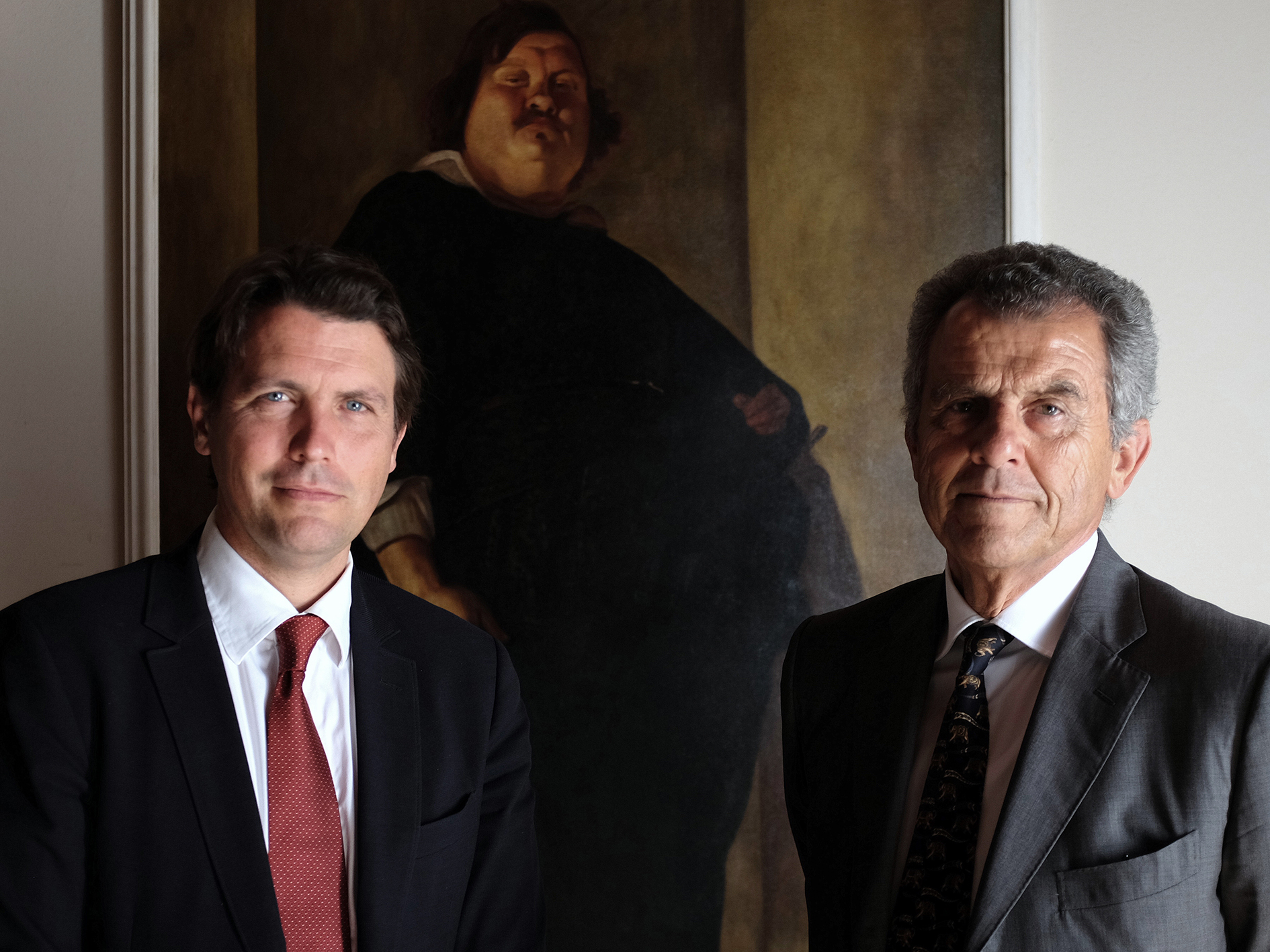
Their sprawling family home, hidden in the high-rise jungle of Sukhumvit 23 district of Bangkok, has for decades been a sanctuary for travellers from near and far. Rolf von Bueren, now 73, a prominent industrialist who arrived in Thailand from Germany in 1962, and his wife Helen – also of the same age and of Thai and Scottish parentage, are the hospitable couple who lavished dinners and parties on friends visiting Thailand from around the world. Witnessing and interacting with a cosmopolitan mix of guests passing through their doors as young children, elder son Sri and younger son Niklas von Bueren – the second generation of the family – perhaps understand better than anyone else that the world, huge with different and divergent cultures, can also be very small.

After all, the von Buerens were as cosmopolitan as it gets for a family living in Thailand during the sixties. Despite being seen as foreigners, given their European blood, they embraced traditional Thai culture with fervent passion. Their home, sitting on grounds purchased by Helen’s family close to a century ago, is a vision of classicism. Nine hardwood houses with soaring peaked roofs and generous wooden decks rise from the verdant 1.5 acre plot, and are connected by a maze of wood and stone paths meandering across a garden lush with tropical flora. When locals were looking to shed that heritage while they were moving forward with times, Rolf embraced it as someone enthralled with this new culture he was experiencing. The Catholic later even converted to Buddhism. His passion for Thai culture – which is passed on to his children and distinctly showcased in Lotus Arts de Vivre pieces – makes the von Buerens perfect ambassadors of the graces of the Thai culture. Yet at the same time, they are also familiar with the fashions and aesthetics of the European culture.

Sri and Niklas’ cosmopolitan views and tastes were also nurtured through their many journeys around the region. “We were always travelling to Indonesia, India and other destinations all around the Asian region even before they were fashionable,” recalls Niklas, now 41 years of age. “Father of course, was the disciplinarian. But the most valuable thing he taught us was curiosity. He has a curious mind and is always interested in art and culture, and would constantly be making us learn and enjoy other cultures, be it trying new things, eating new foods, visiting temples… All that learning was quite boring when we were young, you know, but today we know that this curiosity is the root of all of Lotus Arts de Vivre’s new developments.”

This galuchat (stingray leather) elephant stool has a touch of silver sterling to make it shine

This galuchat (stingray leather) elephant stool has a touch of silver sterling to make it shine

For the benefit of the uninitiated, Lotus Arts de Vivre – though with a history of just 30 years – is one of the most revered names in the niche jewellery business of producing one-off pieces. In fact, it is one of the largest producers of single-piece jewellery in the world. Their statement pieces, adorned by members of high society and royalty alike stretching from Palm Beach and New York to London and Cannes to Beijing and back to Bangkok, are sought after worldwide. Elizabeth Taylor, Gore Vidal and even Gianni Versace are just some personalities who have fallen under its spell.

Each unique piece is inspired by nature and crafted from a fantastical combination of wonderous materials – from humble coconut shell to innovations of gold-fused glass, from sparkling diamonds, rubies and emeralds to iridescent scarab wings. Sumptuously textured, riotously colourful, outrageously glamorous and exquisitely graceful, they are pieces not to be carelessly worn by all and sundry. With the pieces from Lotus Arts de Vivre, you have to carry it with all your personality, lest it outshines you.

They are also producers of fantastical homeware – ranging from gold-leaf and lacquer-lined ostrich egg containers and black onyx and silver toothpick holders in the form of a miniature porcupine, to stools clad in stingray skin and a magnificent mahogany eagle that took 17 artisans and more than a year to carve and cast with 99 pounds of sterling silver.

For all its sophistication, Lotus Arts de Vivre has amateurish beginnings. It was set up as a mother’s way of keeping herself busy when her children had left the country to study abroad. Though of course, the von Buerens didn’t just set up a shop at any place; they placed themselves strategically at what is now the Four Seasons Bangkok. It was 1983 and the hotel, then the Bangkok Peninsula, was the place for anybody who is anybody to see and be seen. “My father encouraged my mother to start the first shop through selling pieces that have been purveyed and collected through their travels. But my mother is not a businesswoman – if anything, she didn’t want to carry on with this!” reveals Niklas.

Abalone Shell Bowl - The sterling silver grasshopper features onyx stones for eyes

Abalone Shell Bowl – The sterling silver grasshopper features onyx stones for eyes

Even though he and his brother were sent to boarding school in the United Kingdom when they were about 10-years-old, it is clear that unbreakable bonds with the family have been fostered even in their tender ages. Without the slightest bit of pressure from their parents, both Sri and Niklas eventually joined the company, in their own time. Sri, now 45, went on to study gold and silversmithing after his studies in the United Kingdom. “It was after I returned that we started our own jewellery workship; it then slowly morphed into a retail business. It was really run very much as a hobby until about 10 years ago, but a lot of the philosophy still stands, in that it is inspired by travel around the region, by places such as China, India, Japan, Indonesia and of course, Thailand.”

Niklas himself went to business school and entered the banking industry upon graduation. Spending four years in the finance industry, he saw the family operation very differently. Where others saw exoticism, he saw Unique Selling Points. Joining the company in 1998, after the economic crisis, he made it his mission to market the brand globally in a time when Asian aesthetics were not widely appreciated.

Together, the brothers injected new vigour into the company and created a brand – a name known today for its inimitable style that applies delicate, time-honed traditional craftsmanship to bold, innovative designs from a distinctly young spirit.

Through exhibitions, events, dinners – each month sees an average of two events, one held in Bangkok and another internationally – and naturally, their personal connections, the von Buerens keep their global audience enthralled with their unique sense of style. It’s a work that sends the entire family to different parts of the world: as Niklas speaks to us from their home office in Bangkok, Sri is at Mozaic Beach Club, one of the two boutiques in Bali where their pieces are sold – and attending Jeremy Irons’ Indonesian screening of his environmental documentary, “Trashed”. In the meantime, Rolf and Helen are in Europe talking to a carpet purveyor for their other retail business, Theatre of Indulgence, before moving off to London for an exhibition with Couture Lab, an impossibly chic retailer of exquisite luxuries, founded by Carmen Busquets, previously a major investor and board member of Net-à-Porter.

Dragon Ring - A key symbol of Chinese mythology, this dragon features diamonds, citrine and pink tourmaline

Dragon Ring – A key symbol of Chinese mythology, this dragon features diamonds, citrine and pink tourmaline

But their work is not just about spreading the word. It is really all about the pieces they produce. “Over the last 30 years, we have probably created some 10,000 pieces,” shares Niklas. “We are in the midst of doing a large format coffee table book, and in the process have spoken about our favourite pieces – as it turns out, some of the pieces dearest to each of us are custom orders for our clients. These pieces are special to us because there is a sentimental story behind each commission, and each piece holds a profound meaning for them. To us, the profound meaning comes from the fact that these people have entrusted us to create this for them.

“Our pieces are predominantly one-offs, 50 to us is a big number. Each piece – even those that are not bespoke – has a story behind it.”

And it’s not just a story of the wearer that it tells. Working with Her Majesty Queen Sirikit’s SUPPORT Foundation, Lotus Arts de Vivre collaborates with silk embroiderers of Thailand. The von Buerens family also takes years to cultivate relationships with master craftsmen such as a Chinese cinnabar lacquer artist based in a place five hours outside of Beijing; maki-e painters in Noto, Japan; and even Indonesian ivory carvers, now preserving their skills through carving coconut shells. Each meticulously crafted piece is a many-fold story of traditional craftsmen from Asia, each lending his unique touch to the piece, and in turn, leaving a little piece of his own story in it.

Each piece also tells very much a story of the von Buerens – their taste for Old World charms, their rich globetrotting life, their all-embracing spirit, their sense of wonderment. Their principle of being true to themselves extends to beyond the immediate family, now expanded with Niklas and Sri becoming fathers themselves. This is because every patron, every craftsman and everyone from the team of over 200 is considered family. Niklas for one is quick to declare that theirs is not a closed operation limited by blood ties – kindred spirits who hold the same values are also welcome to join them in Lotus Arts de Vivre’s journey into the future.

“It is the network that we created over the 30 years which has opened us to business opportunities – it’s an interesting way to move forward. We never really plan to go into something, we just naturally go into it because our customers were looking for these services or products.”

And perhaps therein lies the beauty of keeping things in the family. The brand isn’t developed – it is nurtured; the company isn’t developed, it grows organically. Certainly there are challenges to working with family members – even staying under the same roof can be a trial for some of us – but for the von Buerens, the pros outweigh the cons. “And it allows me to spend more time with my kids!” beams the usually-stern Niklas. And that alone, for anybody who understands the joy of a family, is priceless.

lotusartsdevivre.com

Share:
Reading time: 8 min

London Fashion Week is an increasingly unmissable item on the global style calendar. With the help of Tom Ford and friends, DARIUS SANAI celebrates its unstoppable rise

For decades, it was a curious anomaly. London, the creative hub of the globe, the capital of the country that gave the world Alexander McQueen, Dizzee Rascal, The Clash, Damien Hirst, Jonathan Ive, Michael Caine, Vivienne Westwood, Anna Wintour, The Beatles, Corinne Day and Jessie J, had no fashion industry to speak of.

There were plenty of brilliant designers – who, like McQueen, were snapped up by big houses from Paris or Milan or New York, because that’s where the industry and the money was, and where the shows were. London was somewhere you went when the fashion shows were over.

Wander through the shows and the parties at London Fashion Week this February and you would be forgiven for wondering if London, not Paris or Milan, is now the engine of the global fashion industry. The shows – scattered around the centre of a city so bursting with creativity that Fashion Week is always just one of lots of things going on simultaneously – have an energy, panache and confidence that looks sharply to the future. Parties are not just attended by the requisite beautiful, glamorous and wealthy, and the nowmandatory celebs (from A to G list, depending on the party) but by aneverrotating phalanx of creative types who make their own fashion, sometimes literally. London has the buzz: Paris, immediately afterwards last September, felt a little sedate by comparison.

The numbers don’t lie and despite the tide of brands showing in London, Paris and Milan are still the fashion industry powerhouses: London is still dwarfed in terms of its commercial clout. But for creative buzz allied with a rising commercial significance, London, once ignored, is now a destination.

What catalysed the change? Alexandra Shulman, Editor-in-Chief of Vogue in the UK, tells me, “London Fashion Week is an example of how successful something can become when you can combine great talent with first rate organisation and support. British designers are currently playing a major part in the international fashion world and the collections they are showing are both inspiring and successful on a commercial level.”

Meanwhile Tom Ford, the thinking man’s style guru, and a designer who made significant waves when he decided to show in London, says, “I am so happy to be showing my menswear and womenswear collections in London. It is one of the most influential cities in the world for fashion. The design schools are exceptional, and the street style and youth culture have started some of the most important global trends ever. My design studio is based in the UK and I am pleased to help support the British fashion industry.”

But you don’t need to take their word for it: just wear it instead. London doesn’t have a constricting style; Erdem, Simone Rocha, Nicholas Kirkwood, Burberry or Tom Ford? All of them? Or get a ticket to a show or a party: at the last LFW in September, I bumped into Erin O’Connor, Poppy Delevingne, Roland Mouret, Antonio Berardi and Philip Treacy at the Claridge’s ‘preparty’, amid a buzz of anticipation rarely seen anywhere else in the world. Meanwhile at the Browns Focus party the next day, where the high-octane mood was fuelled by high-octane tequila cocktails, the guests were not famous, just brilliantly and creatively put together, a perfect walking, dancing uber-street-style Instagram. A hop and a skip away at Longchamp’s dazzling opening party, Kate Moss, Georgia May Jagger, Lily Cole, Mick Jagger and Otis Ferry created a kind of pop-up Studio 54 on Regent Street.

London has always known how to party. Now, everyone’s paying attention.

londonfashionweek.co.uk

Share:
Reading time: 3 min
Christa Dichgans - Peru, Lithograph

Christa Dichgans – Peru, Lithograph

Art is becoming a luxury good for the elite: but if it does so, it will die. R.J. MALONE takes the view that we need more ventures like the House of Fairy Tales, aimed at redressing the balance

Gavin Turk

Gavin Turk

Art is expensive these days. And that’s a problem if you’re young, or not one of the global hyper-wealthy, or both. Cue a tide of initiatives by philanthropists, collectors, and sometimes artists themselves, aimed at getting art to a wider audience.

But what about participating, rather than just appreciating? Few do it better than the London-based House of Fairy Tales, which has the active backing of blue-chip names like Gavin Turk, one of the enfants terribles of the Britart movement, Sir Peter Blake, and Jarvis Cocker, lead singer of 1990s cult arthouse band Pulp, among many others.

Based in a part of East London that was once ‘gritty’ and is now ‘edgy’, House of Fairy Tales, run by Turk and his wife Deborah Curtis, uses the money it raises by selling fabulous artworks to fund activities from circuses to workshops.

Turk tells LUX, “Working with the House of Fairy Tales gets me collaborating with ‘young unknowns’ from an array of different backgrounds in many diverse ways; I’m able to share my experiences and at the same time learn a lot about myself. I’ve travelled all over the country from Shakespeare’s Theatre in Stratford to Newlyn Art Gallery in Cornwall via numerous festivals including Glastonbury and Edinburgh. In the future, I’m looking forward to seeing the Art Circus in Canning Town and working on influencing various public housing and social developments.”

Cornelia Parker, one of Europe’s leading sculptors and another key figure in House of Fairy Tales, tells us, “Since I have had my daughter, I realise how important it is to invest in the future of her generation’s creativity. Cultural capital, after all, is our biggest export.”

While Cocker, of ‘Let’s All Meet Up in the Year 2000’ fame, says simply, “The House Of Fairy Tales is the most magical place. I wish I had been able to go there when I was a lad.”

Perhaps the last word should go to Matthew Slotover, co-founder and director of the Frieze Art Fair, who has done more than anyone to raise the profile of contemporary art while simultaneously maintaining its credibility. Taking a break after the latest Frieze, Matthew tells us, “The House of Fairy Tales is an extraordinary project. It engages young people in the arts with a level of imagination that could only have come from artists. It is truly exceptional and I fully endorse their work.”

houseoffairytales.org

Stephen Walter - A Night on the Isle of Everyday Nightmares, Lithograph

Stephen Walter – A Night on the Isle of Everyday Nightmares, Lithograph

Nigel Peake - The Night the Wanderer was Misled, Lithograph

Nigel Peake – The Night the Wanderer was Misled, Lithograph

Susan Stockwell - Red Road Butterfly, Screenprint

Susan Stockwell – Red Road Butterfly, Screenprint

Heidi Whitman - Tink’s Night, Lithograph

Heidi Whitman – Tink’s Night, Lithograph

Josh Knowles - (Sketch for) Industrial Dream Mandala, Lithograph with hand finish

Josh Knowles – (Sketch for) Industrial Dream Mandala, Lithograph with hand finish

Andrew Rae - Map of the Inner World, Lithograph

Andrew Rae – Map of the Inner World, Lithograph

Share:
Reading time: 2 min
Page 148 of 156« First...102030147148149150...Last »